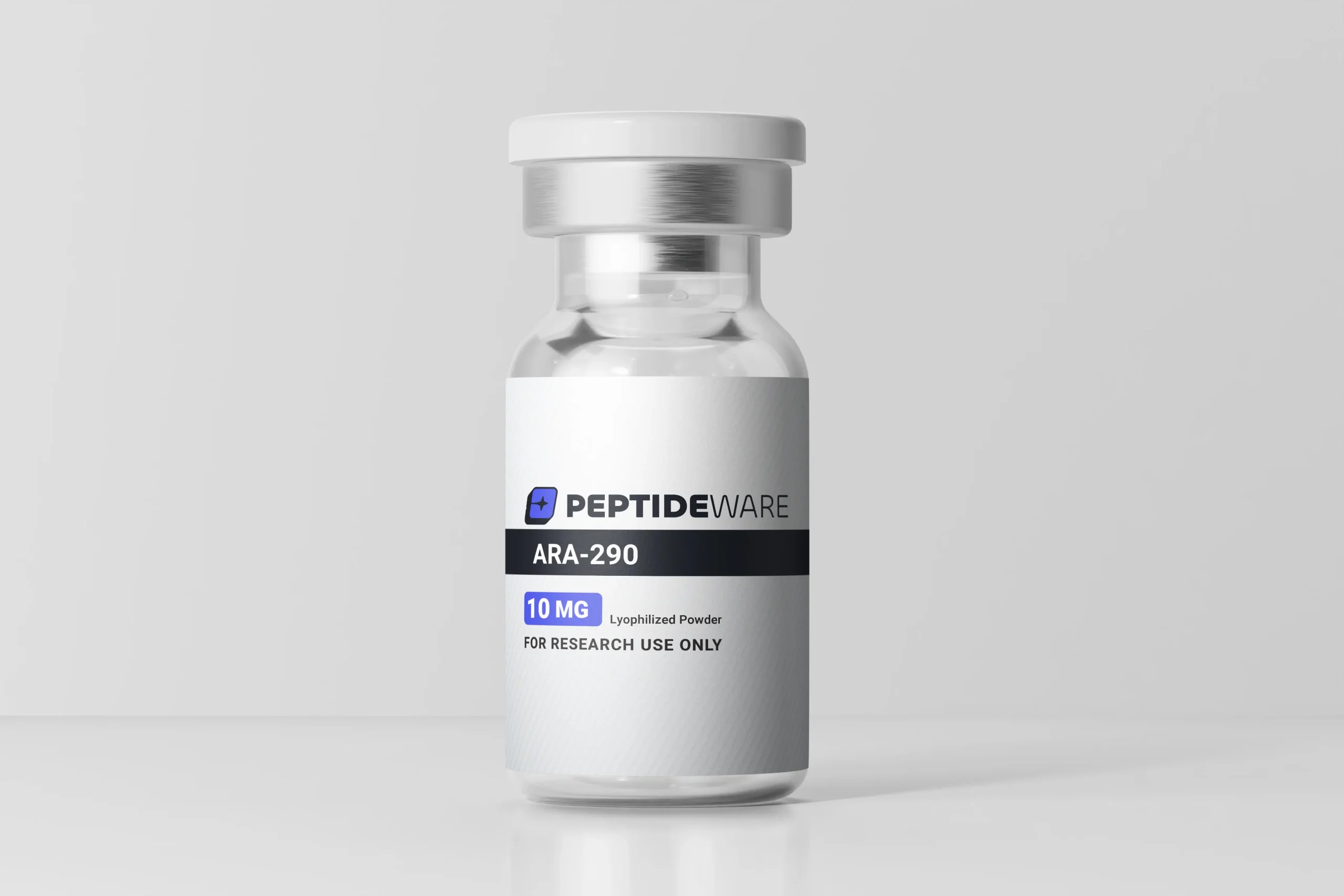
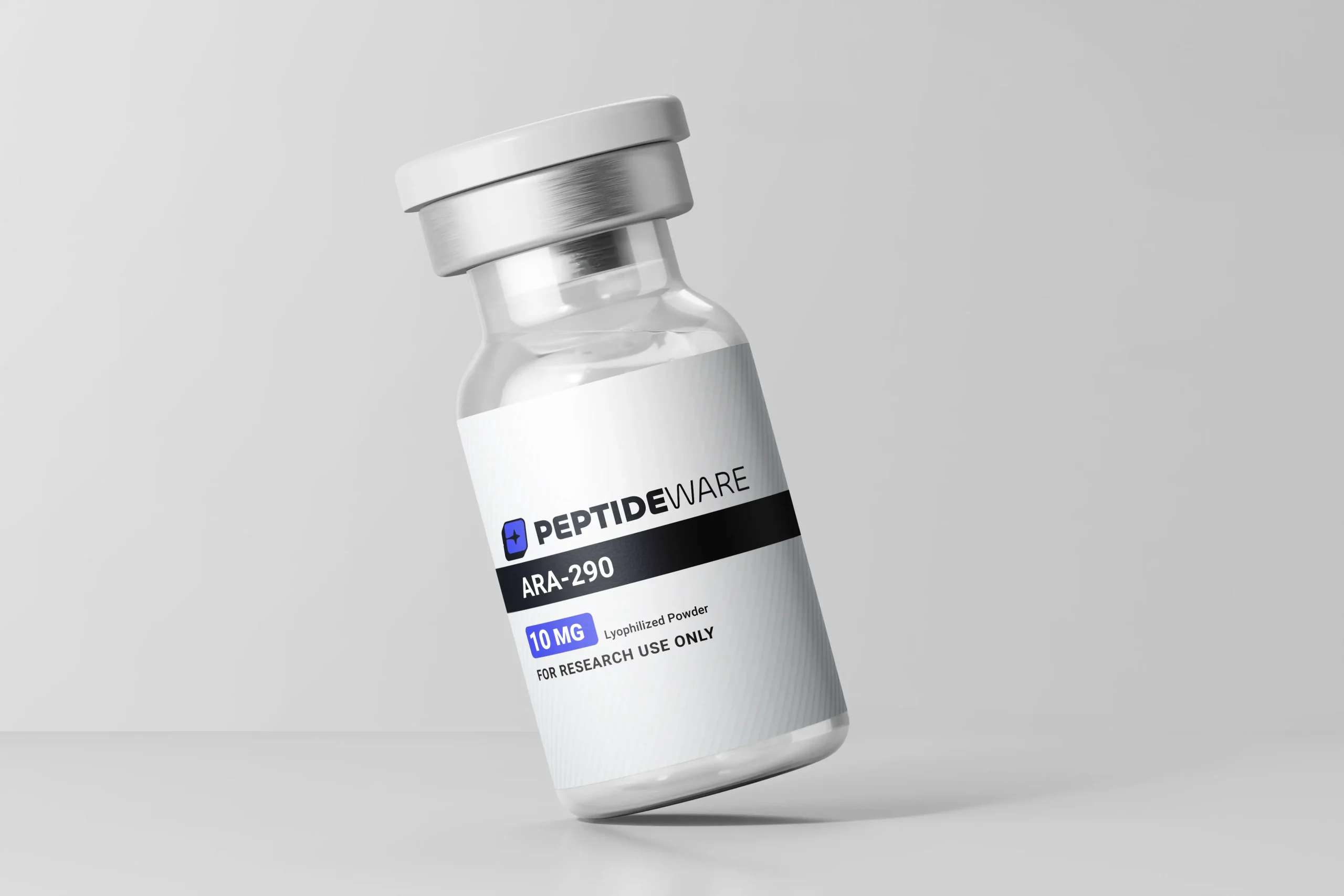
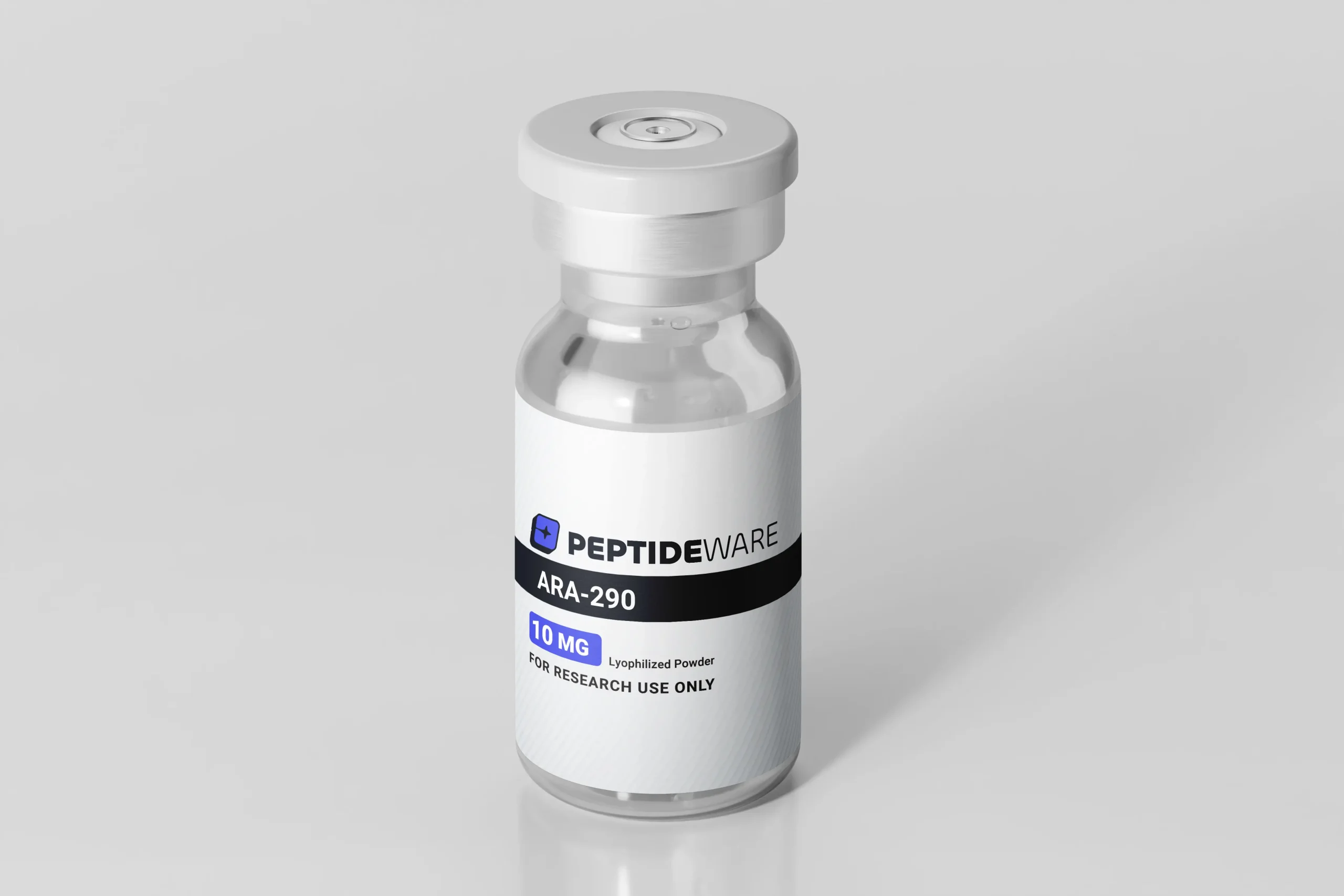


Description
What Is ARA-290?
ARA-290 (Cibinetide) is an 11-amino-acid peptide derived from EPO helix-B domain. It isolates tissue-protective and anti-inflammatory properties without hematopoietic effects. Investigated in clinical trials for neuropathic pain. HPLC-verified at 99%+ purity with COA.
Why Researchers Choose ARA-290
- EPO-Derived Tissue-Protective Peptide — An 11-amino acid peptide from Erythropoietin’s helix-B domain, engineered to isolate neuroprotective and anti-inflammatory research pathways.
- No Hematological Effects — Published studies suggest ARA-290 activates tissue-protective signaling without stimulating red blood cell production, eliminating a major confounding variable in research protocols.
- Unique IRR/βcR Targeting Mechanism — Selectively engages the Innate Repair Receptor (EPO-R/CD131 heterocomplex), a pathway distinct from classical EPO receptor signaling.
- ≥99% Purity, Full Sequence Verified — pyroGlu-Glu-Gln-Leu-Glu-Arg-Ala-Leu-Asn-Ser-Ser confirmed via independent HPLC and mass spectrometry. COA available.
- Extensively Studied Research Compound — PubMed-indexed under ARA-290 and Cibinetide, with preclinical and clinical-stage literature covering small fiber neuropathy, metabolic syndrome, and allodynia models.
Frequently Asked Questions
What is ARA-290?
ARA-290, also known as Cibinetide, is an 11-amino acid peptide derived from EPO that activates the Innate Repair Receptor (IRR/βcR) without stimulating erythropoiesis. It is investigated for neuroprotection, tissue protection, and anti-inflammatory research. This product is for laboratory research only.
How do I reconstitute ARA-290?
Add 2 mL of bacteriostatic water to the 10 mg lyophilized vial for a 5 mg/mL concentration. Standard reconstitution protocol applies. See our Reconstitution 101 guide for detailed instructions.
How is purity verified?
Each batch is verified at ≥99% purity via HPLC analysis and mass spectrometry, which confirms molecular weight and the full 11-amino acid sequence. A Certificate of Analysis (COA) is available for every lot.
What are the recommended storage conditions?
Lyophilized: store at -20°C for long-term preservation or 2–8°C for short-term use. Reconstituted solution: keep at 2–8°C and use within 28 days. Avoid repeated freeze-thaw cycles.
How does ARA-290 differ from EPO?
ARA-290 selectively activates the tissue-protective IRR/βcR pathway without triggering the classical EPO receptor responsible for red blood cell production. Preclinical research indicates no hematological effects, allowing researchers to investigate neuroprotection without elevated hematocrit as a confounding variable.
What published research exists on ARA-290?
ARA-290 is indexed on PubMed under both ARA-290 and Cibinetide. Published literature covers small fiber neuropathy, metabolic syndrome, corneal nerve regeneration, and sarcoidosis models. References include both preclinical and clinical-stage research, provided for educational purposes only.
Can ARA-290 be used in combination research protocols?
Yes. ARA-290 operates through the unique IRR/βcR receptor pathway, which does not overlap with most other peptide mechanisms. Published studies suggest this makes it suitable for multi-compound research designs targeting complementary signaling pathways.
Further Reading
Mechanism: The Innate Repair Receptor (IRR)
The pharmacological value of ARA-290 lies in its high specificity for the Innate Repair Receptor (IRR).
-
Selective Binding: Unlike native EPO, which binds to homodimeric receptors to stimulate red blood cell production, ARA-290 selectively binds to the EPO-R/CD131 heterocomplex. This receptor complex is typically upregulated on cell surfaces only during times of metabolic stress or tissue injury.
-
Non-Hematopoietic Action: A critical advantage of ARA-290 in research models is its non-hematopoietic profile. It initiates tissue repair signaling cascades without stimulating erythropoiesis (red blood cell production). This allows researchers to investigate high-dose neuroprotection without the confounding variable of elevated hematocrit or increased blood viscosity.
Primary Research Targets
ARA-290 is currently the subject of extensive investigation in the following areas:
-
Small Fiber Neuropathy (SFN): Preclinical studies explore the peptide’s ability to promote nerve fiber regeneration. Research focuses on the quantification of intraepidermal nerve fiber density (IENFD) following administration.
-
Allodynia & Pain Modulation: In animal models of neuropathic pain (including Sarcoidosis-associated neuropathy), ARA-290 is observed to influence nociceptive thresholds, potentially reducing mechanical allodynia.
-
Metabolic Syndrome: Investigations suggest the peptide may antagonize inflammatory cytokines (such as TNF-alpha), offering a pathway for researching inflammation-induced insulin resistance.
This research peptide undergoes rigorous quality control and stability testing to ensure maximum integrity for scientific applications. Each batch is manufactured under strict laboratory conditions and verified through independent laboratory analysis.⚠️ FOR RESEARCH PURPOSES ONLY
This product is strictly for in-vitro laboratory research, analysis, and development. It is not intended for human consumption, injection, or therapeutic use. ARA-290 (Cibinetide) is not a drug, dietary supplement, or food. All statements regarding the physiological mechanisms of this peptide are based on preclinical animal and cell-culture studies and are provided for educational and informational purposes only.
Technical Specifications
-
Sequence: pyroGlu-Glu-Gln-Leu-Glu-Arg-Ala-Leu-Asn-Ser-Ser
-
Purity: ≥99% (HPLC Verified)
-
Molecular Weight: ~1257 g/mol
-
CAS Number: 1208243-50-8
-
Form: Lyophilized White Powder
Handling & Storage Protocol
While ARA-290 exhibits good stability, standard peptide handling protocols apply to ensure experimental integrity.
-
Reconstitution: Reconstitute with Bacteriostatic Water (0.9% Benzyl Alcohol) to ensure sterility.
-
Storage: Store lyophilized vials at -20°C. Once reconstituted, the solution should be stored at 4°C and used within 28 days to prevent degradation.