

Description
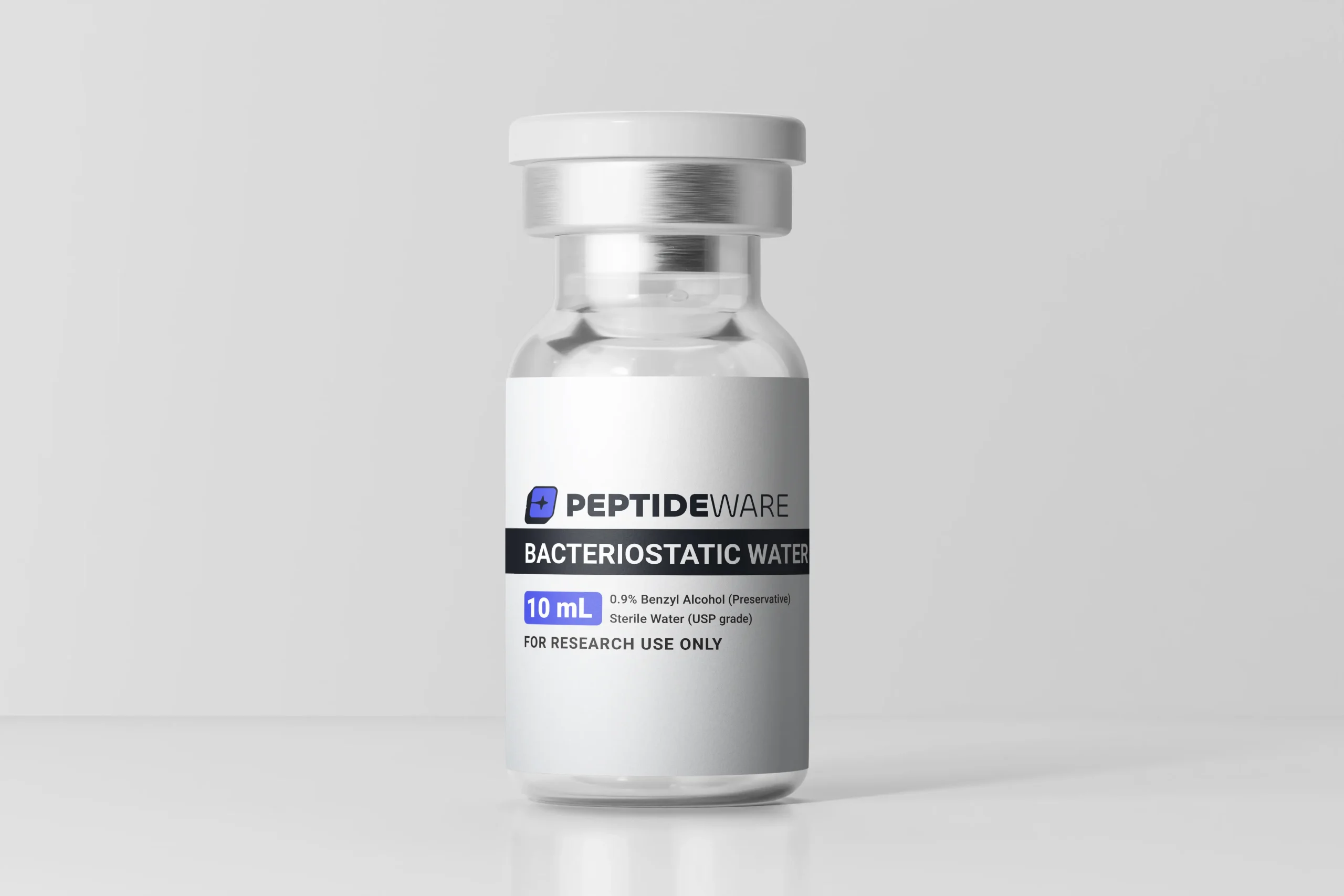
Why Researchers Choose Bacteriostatic Water 10mL
- USP-Standard Formulation: Sterile, non-pyrogenic water meeting United States Pharmacopeia standards for laboratory-grade solvents.
- 0.9% Benzyl Alcohol Preservative: Actively inhibits bacterial growth, allowing safe repeated withdrawals from a single vial — unlike sterile water for injection, which must be discarded after one use.
- Essential Reconstitution Solvent: The required solvent for reconstituting all lyophilized peptides. Bacteriostatic water maintains peptide stability while providing multi-use sterility.
- Universal Compatibility: Compatible with every peptide in the Peptideware catalog — from standard hydrophilic compounds (BPC-157, TB-500) to high-concentration blends (GLOW, KLOW).
- Multi-Use Format: The 10mL volume supports reconstitution of multiple vials within the 28-day active window, ideal for researchers working with several compounds simultaneously.
Frequently Asked Questions
What is bacteriostatic water, and why is it needed for peptide research?
Bacteriostatic water (BAC water) is sterile water containing 0.9% benzyl alcohol as a preservative. It is the standard solvent for reconstituting lyophilized (freeze-dried) peptides into solution. The benzyl alcohol inhibits bacterial growth, which is critical because peptide solutions provide an environment where microorganisms could otherwise proliferate and compromise research results.
How does bacteriostatic water differ from sterile water for injection?
The key difference is the benzyl alcohol preservative. Sterile water for injection contains no preservative and must be used immediately after opening — any remainder must be discarded. Bacteriostatic water can be punctured multiple times over its 28-day active window while maintaining sterility, making it far more practical and economical for research protocols involving multiple reconstitutions.
What is the shelf life after first puncture?
Once the rubber stopper is punctured for the first time, the bacteriostatic properties are validated for approximately 28 days when stored refrigerated at 2–8°C. Any solution remaining after 28 days should be discarded, as preservative efficacy can no longer be guaranteed.
How much bacteriostatic water should I use per peptide vial?
The volume varies by peptide and desired concentration — typically 1–3mL per vial. For example, a 10mg BPC-157 vial reconstituted with 2mL yields 5mg/mL. High-concentration blends like GLOW (70mg) and KLOW (80mg) require 3mL for complete dissolution. Consult our Reconstitution Guide for specific protocols.
How should bacteriostatic water be stored?
Store sealed vials at room temperature (15–30°C) away from direct light. After first puncture, refrigerate at 2–8°C and use within 28 days. Do not freeze bacteriostatic water, as this can compromise the benzyl alcohol concentration and sterility.
Further Reading
Technical Precision: The “Multi-Dose” Standard
Choosing the correct solvent is critical for maintaining the chemical stability of research peptides.
-
Bacteriostatic Action: The 0.9% Benzyl Alcohol content actively inhibits the growth of most bacteria. This distinction allows the vial to be entered multiple times (Multi-Dose Vial) while maintaining sterility, unlike preservative-free water which must be discarded immediately after a single puncture.
-
Optimal pH Balance: This solution is maintained at an approximate pH of 5.7. This slightly acidic environment is chemically optimized to dissolve a wide spectrum of amino acid sequences without degrading peptide bonds, ensuring maximum structural stability post-reconstitution.
Universal Compatibility
This solvent is regarded as the “Gold Standard” for the entire Peptideware catalog. Its chemical profile offers universal compatibility, capable of dissolving:
-
High-concentration or hydrophobic compounds (e.g., GHK-Cu 50mg, MOTS-c).
-
Complex blends (e.g., GLOW protocol).
This research peptide undergoes rigorous quality control and stability testing to ensure maximum integrity for scientific applications. Each batch is manufactured under strict laboratory conditions and verified through independent laboratory analysis.⚠️ FOR RESEARCH PURPOSES ONLY
This product is strictly for in-vitro laboratory research and analytical use. It is not intended for therapeutic use, human consumption, or direct injection without professional oversight. Keep out of reach of children.
Storage Protocol & Safety (The 28-Day Rule)
To ensure experimental validity and safety, strict adherence to the 28-Day Rule is required.
-
Post-Puncture Lifespan: Once the rubber stopper is punctured for the first time, the bacteriostatic properties are validated for a period of 28 days.
-
Disposal: Any solution remaining in the vial after 28 days must be discarded, as the preservative efficacy can no longer be guaranteed against potential contamination.
-
Safety Warning: Contains Benzyl Alcohol. This product is contraindicated for use in neonates (newborns) or individuals with a known hypersensitivity to benzyl alcohol.
Technical Specifications
| Specification | Detail |
| Volume | 10mL |
| Composition | Sterile Water for Injection, USP |
| Preservative | 0.9% Benzyl Alcohol (9mg/mL) |
| Container | Type I Glass Vial with Rubber Stopper |
| pH | ~5.7 (5.0 to 7.0 range) |