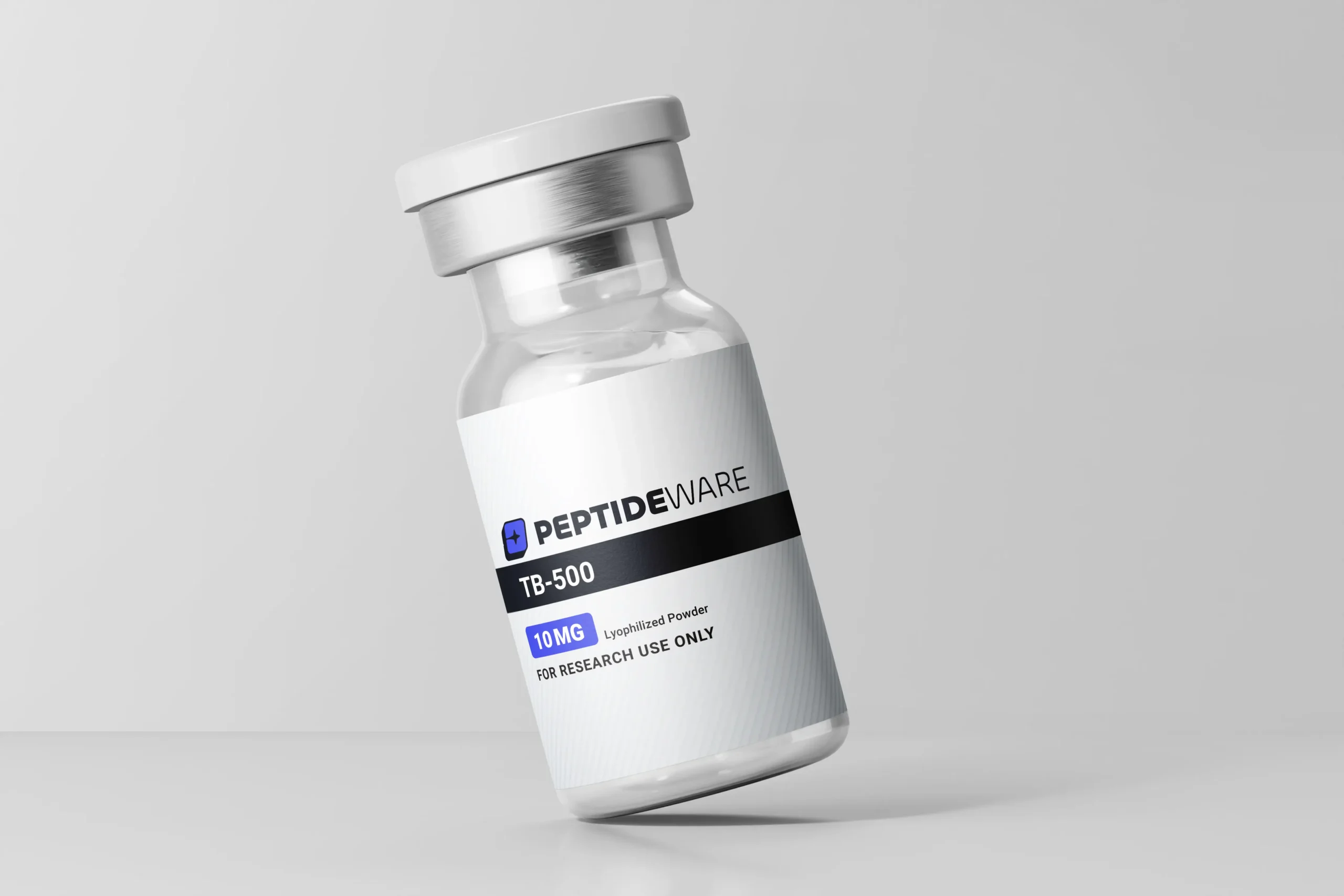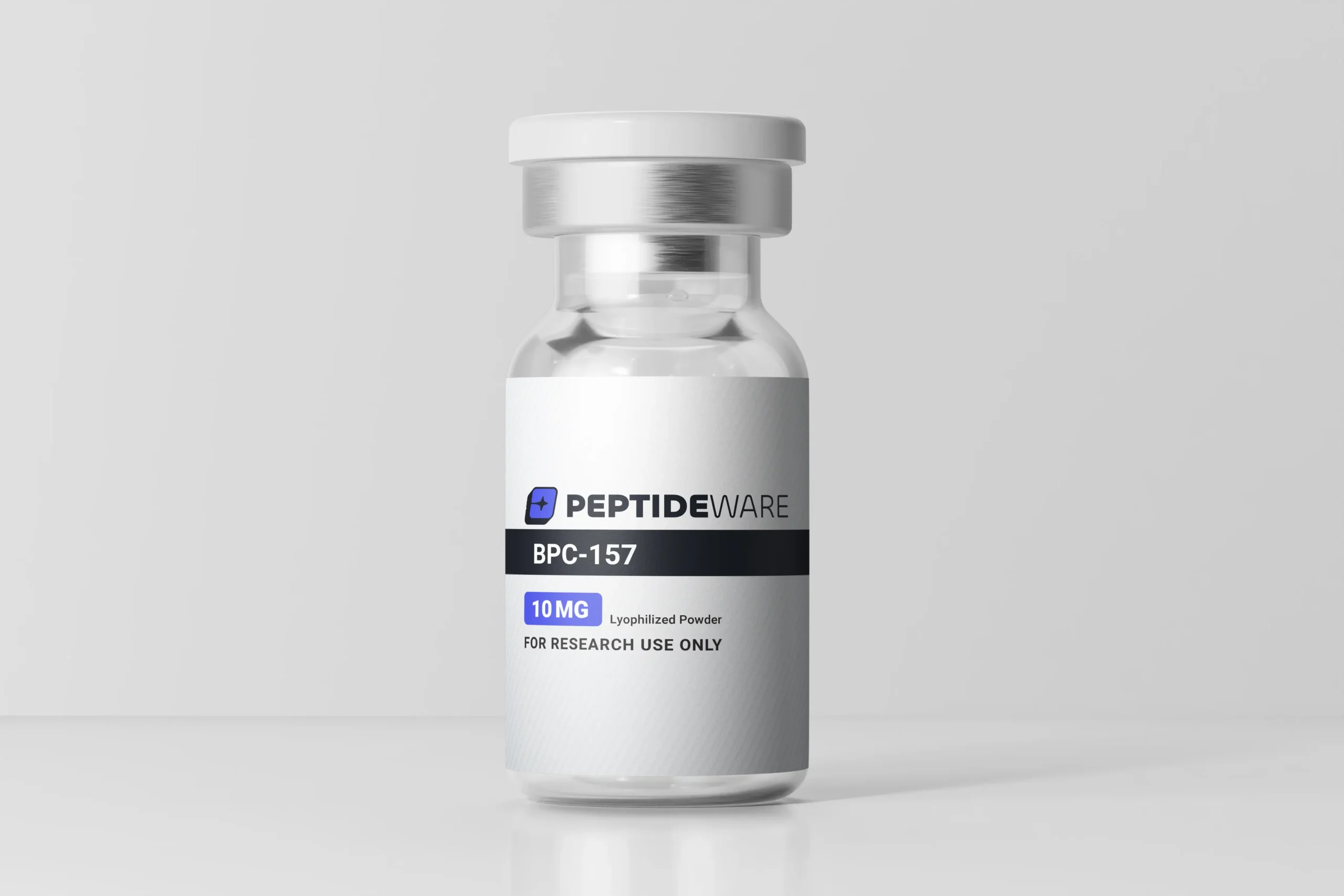
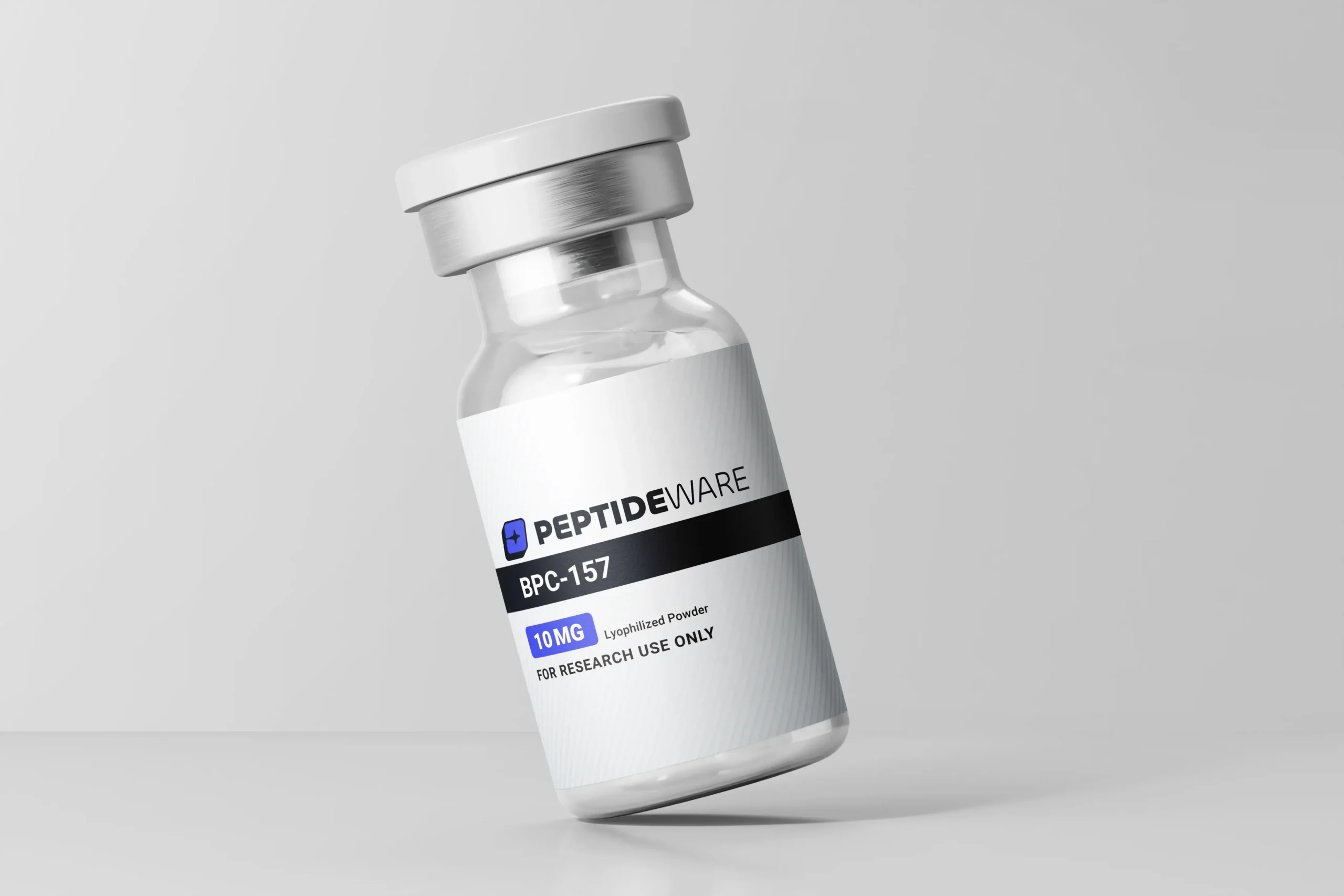
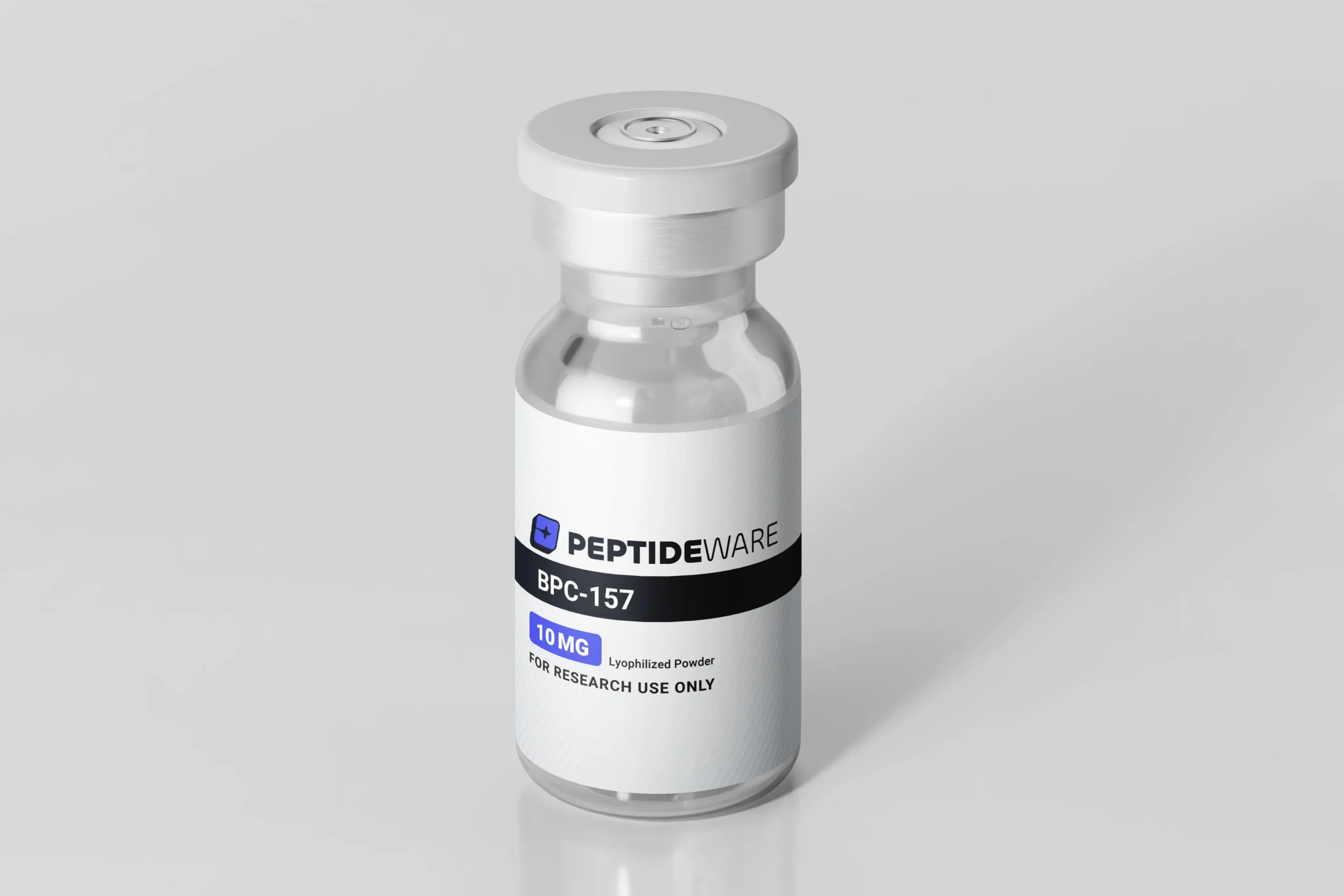


Description
Buy BPC-157 10mg for Sale at Peptideware
Buy BPC-157 10mg for sale at Peptideware — a US-based research peptide supplier. Every vial is independently HPLC-verified at ≥99% purity with a batch-matched Certificate of Analysis (COA) on file, manufactured as stable lyophilized powder for reliable laboratory research. BPC-157 10mg orders ship fast from US domestic inventory. For research use only — not for human consumption.
What Is BPC-157?
BPC-157 (Body Protection Compound-157) is a synthetic 15-amino-acid peptide (MW: 1,419.53 Da, CAS: 137525-51-0) derived from human gastric juice protein. Over 100 preclinical studies investigate tissue repair via VEGF-mediated angiogenesis, NO modulation, and gastrointestinal cytoprotection. Uniquely stable at pH 2-3 (gastric acid range). HPLC-verified at 99%+ purity with COA.
Why Researchers Choose BPC-157
- Extensively studied pentadecapeptide with over 100 published research papers in peer-reviewed journals
- Every batch verified at ≥99% purity via independent third-party HPLC and mass spectrometry analysis
- Stable lyophilized format with documented shelf life suitable for longitudinal research protocols
- Primary research compound for cytoprotective and angiogenic signaling pathway investigations
- Compatible with standard bacteriostatic water reconstitution and synergy research protocols (GLOW blend)
Frequently Asked Questions
Where can I buy BPC-157 10mg for research?
You can buy BPC-157 10mg for sale directly from Peptideware, a US-based research peptide supplier. Every BPC-157 vial ships with a batch-matched Certificate of Analysis, is HPLC-verified at ≥99% purity, and is reserved for laboratory research use only. Orders ship from US domestic inventory with tracked delivery.
How much does BPC-157 10mg cost at Peptideware?
BPC-157 10mg vials are priced on the product page above, with volume discounts available at higher quantities. Pricing reflects independent third-party HPLC testing, US-based inventory, and tracked domestic shipping. Synergy blends containing BPC-157 (GLOW, KLOW) are also available for multi-peptide research protocols. All BPC-157 is supplied for research use only.
Is BPC-157 in stock and available for fast US shipping?
Yes — Peptideware maintains BPC-157 10mg in US domestic inventory and ships research orders across the United States with tracked delivery. Lyophilized BPC-157 is shelf-stable at room temperature for transit; long-term storage at ≤-20°C is recommended. All BPC-157 peptide is reserved for in-vitro laboratory research; it is not a drug, supplement, or food.
What is BPC-157 and what research applications does it support?
BPC-157 (Body Protection Compound-157) is a synthetic pentadecapeptide consisting of 15 amino acids derived from a protective protein found in human gastric juice. In preclinical research, it has been investigated for cytoprotective properties, angiogenic signaling via VEGF and NO pathways, and soft tissue modeling. All Peptideware BPC-157 is provided for laboratory research purposes only.
How do I reconstitute BPC-157 for laboratory use?
To reconstitute BPC-157 10mg, add 2mL of bacteriostatic water to the vial using a sterile syringe. This yields a concentration of 5mg/mL. Direct the stream against the glass wall of the vial and allow the lyophilized powder to dissolve — gently roll, never shake. See our complete Reconstitution 101 guide for detailed protocols.
What purity verification does Peptideware provide for BPC-157?
Every batch of Peptideware BPC-157 undergoes independent third-party testing. HPLC analysis confirms ≥99% purity, and mass spectrometry verifies the precise molecular weight (1419.53 Da) and sequence integrity. Certificates of Analysis (COA) are available for every batch.
How should I store BPC-157 before and after reconstitution?
Store lyophilized (unreconstituted) BPC-157 at -20°C for maximum long-term stability, or at 2-8°C for short-term storage. Once reconstituted with bacteriostatic water, store at 2-8°C (refrigerated) and use within 28 days for optimal research consistency.
How does BPC-157 differ from TB-500 in research applications?
BPC-157 and TB-500 operate through distinct mechanisms. BPC-157 is primarily investigated for cytoprotective and angiogenic signaling (VEGF, NO pathways), while TB-500 (Thymosin Beta-4) is studied for cell migration and actin polymerization regulation. Published research suggests they may engage complementary pathways, which is why both are included in Peptideware’s GLOW blend for synergy research.
What published research exists on BPC-157?
BPC-157 has been the subject of over 100 published studies in peer-reviewed journals. Key research areas include soft tissue modeling, cytoprotective mechanisms, angiogenic signaling, and gastrointestinal research. Studies are indexed on PubMed under the search term ‘BPC-157 peptide.’ All findings are from preclinical research models.
Can BPC-157 be used in combination research protocols?
Yes. BPC-157 is frequently investigated alongside other peptides in combination research. Peptideware offers the GLOW Blend (BPC-157 + TB-500 + GHK-Cu) and KLOW Blend (BPC-157 + TB-500 + GHK-Cu + KPV) specifically for researchers studying multi-peptide synergistic protocols.
Further Reading
Research Mechanism: Angiogenesis & NO Pathway
BPC-157 is extensively studied for its interaction with the Nitric Oxide (NO) system, a critical regulator of vascular health and tissue perfusion.
-
VEGF Upregulation: In vitro observations suggest BPC-157 may modulate the Vascular Endothelial Growth Factor (VEGF) pathway, specifically interacting with VEGFR2 receptors. This interaction is hypothesized to promote angiogenesis—the physiological process through which new blood vessels form from pre-existing vessels.
-
NO Signaling: Research indicates the peptide may influence the Akt-eNOS pathway, potentially leading to increased nitric oxide bioavailability in endothelial cells. In animal models, this mechanism has been correlated with improved microcirculation and the accelerated re-establishment of blood flow in ischemic tissues.
-
Fibroblast Recruitment: Further studies investigate BPC-157’s potential to recruit fibroblasts to sites of injury, a key step in extracellular matrix (ECM) organization during the initial phases of tissue repair.
Synergistic Research: The GLOW Stack
For comprehensive tissue repair models, BPC-157 is frequently researched alongside TB-500 (Thymosin Beta-4). This pairing is central to our GLOW Peptide Stack due to their complementary mechanisms of action:
-
BPC-157 is studied for its influence on Angiogenesis (building the vascular supply line).
-
TB-500 is investigated for its role in Actin Sequestration and cell migration (moving repair cells to the injury site).
-
Hypothesis: Co-administration is theorized to create a “synergistic loop,” where enhanced blood flow supports the metabolic demands of migrating cells during tissue remodeling.
This research peptide undergoes rigorous quality control and stability testing to ensure maximum integrity for scientific applications. Each batch is manufactured under strict laboratory conditions and verified through independent laboratory analysis.⚠️ FOR RESEARCH PURPOSES ONLY
This product is strictly for in-vitro laboratory research, analysis, and development. It is not intended for human consumption, injection, or therapeutic use. BPC-157 is not a drug, dietary supplement, or food. All statements regarding the physiological mechanisms of BPC-157 are based on preclinical animal and cell-culture studies and are provided for educational and informational purposes only.
Storage & Handling
Peptides require careful storage to maintain their integrity and research effectiveness. Lyophilized peptides should be stored in a cold, dry, dark environment to prevent degradation. For short-term use within 4 weeks, storage at 4°C is sufficient, while long-term storage requires temperatures below -20°C or -80°C for extended periods up to 2 years. Always protect peptides from light exposure and avoid repeated freeze-thaw cycles, which can compromise structural integrity and research results.
Chemical Profile: BPC-157
| Specification | Detail |
| Sequence | Gly-Glu-Pro-Pro-Pro-Gly-Lys-Pro-Ala-Asp-Asp-Ala-Gly-Leu-Val |
| PubChem CID | 9941957 |
| CAS Number | 137525-51-0 |
| Molar Mass | 1419.5 g/mol |
| Formula | C₆₂H₉₈N₁₆O₂₂ |
| Form | Lyophilized White Powder (Requires Reconstitution) |