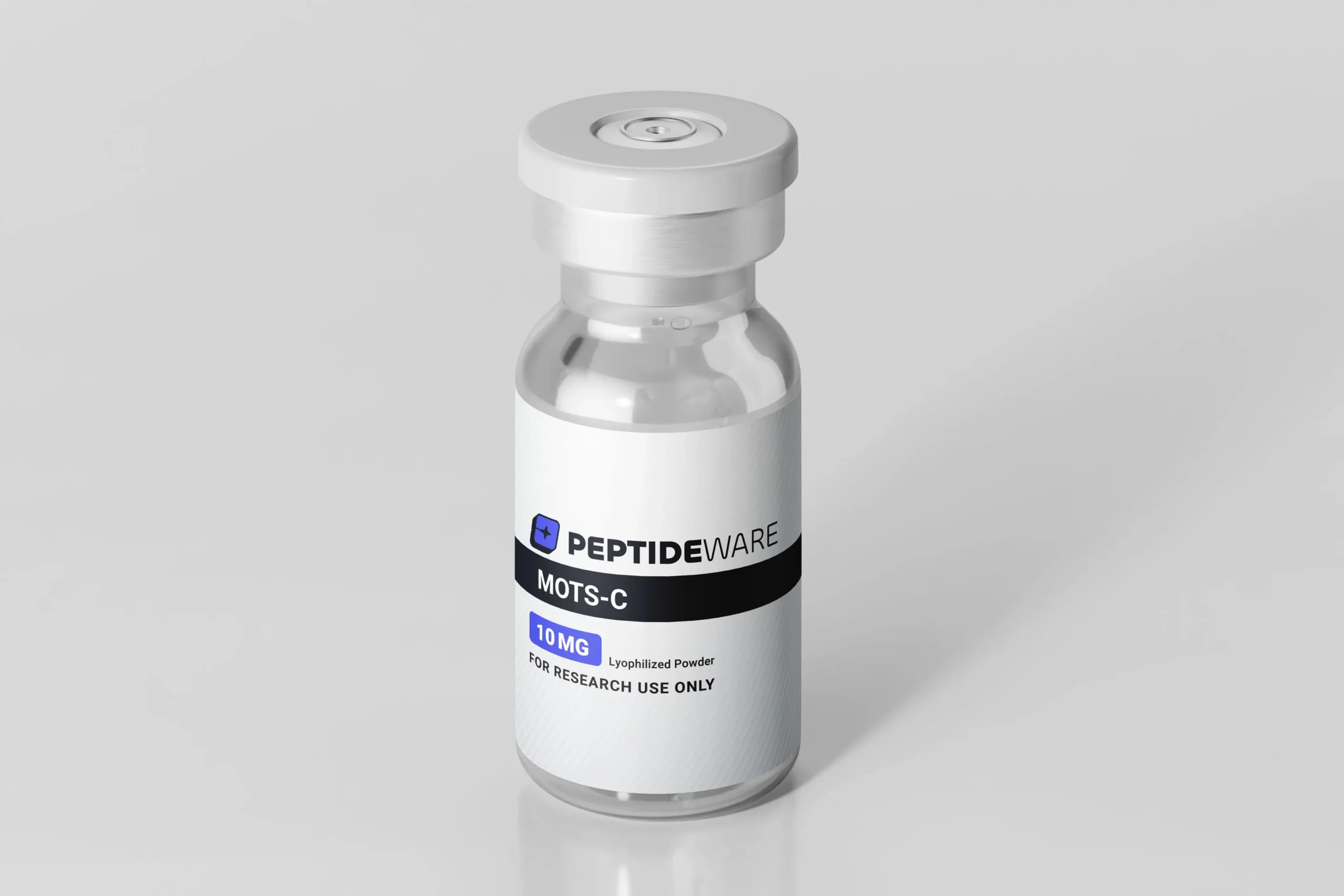


Description
What Is MOTS-c?
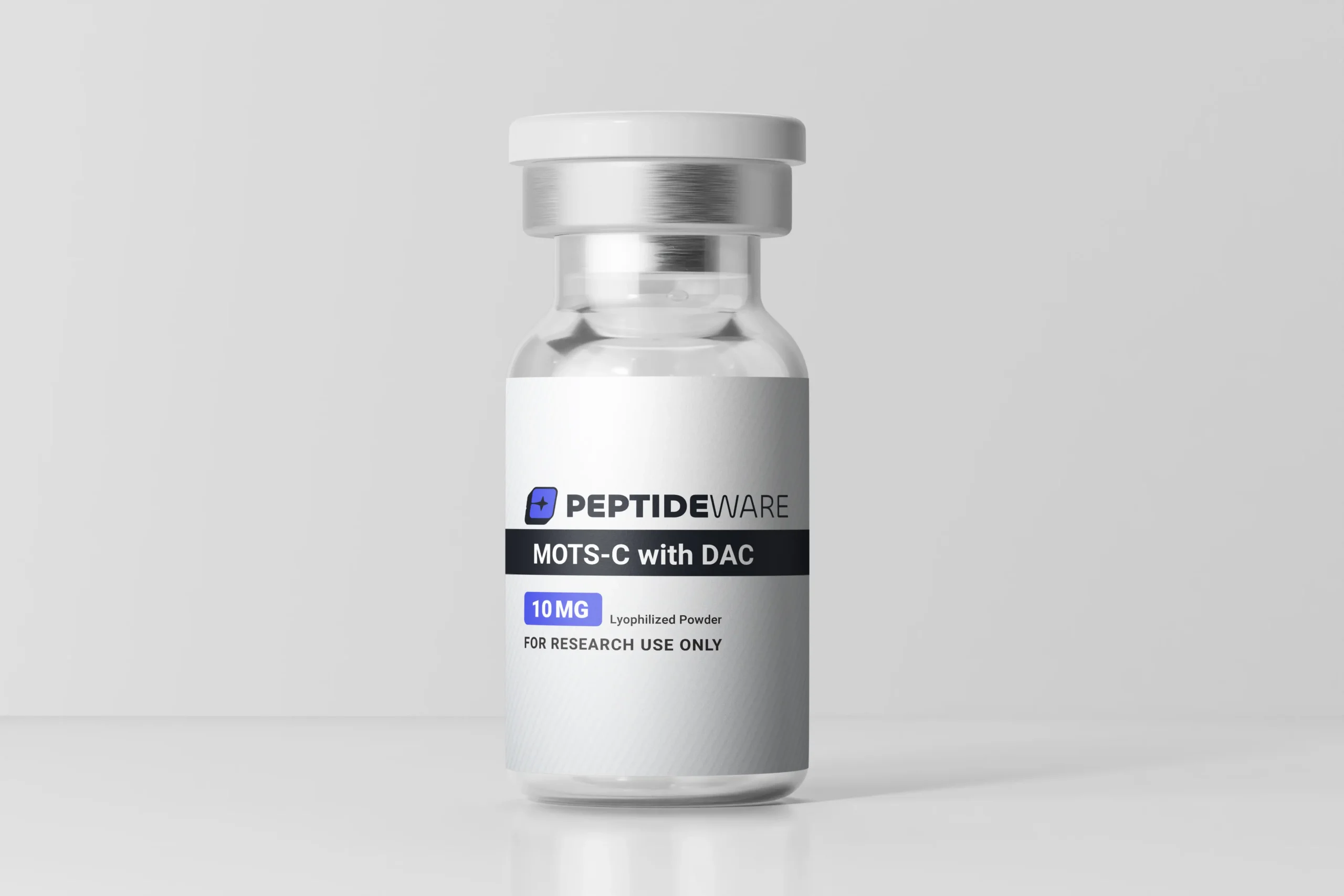
MOTS-c (Mitochondrial Open Reading Frame of the 12S rRNA-c) is a 16-amino-acid mitochondrial-derived peptide encoded within the mitochondrial genome. Research focuses on AMPK activation, glucose metabolism regulation, and exercise-mimetic effects. This DAC-modified format extends biological activity for sustained research protocols. HPLC-verified at 99%+ purity with COA.
Why Researchers Choose MOTS-c with DAC
- Mitochondrial-Derived Peptide (MDP) — MOTS-c is a 16-amino acid peptide encoded within the mitochondrial genome (12S rRNA gene), representing a novel class of signaling molecules produced directly by mitochondrial DNA.
- DAC Modification for Extended Stability — The Drug Affinity Complex (DAC) conjugation protects MOTS-c from rapid enzymatic degradation, extending the bioactivity window from minutes to hours or days for longitudinal research protocols.
- AMPK Activation Pathway — Published studies suggest MOTS-c activates AMP-activated protein kinase (AMPK), the cellular master switch for energy metabolism, through modulation of the folate-methionine cycle and AICAR accumulation.
- Exercise Mimetic for Metabolic Homeostasis Research — Preclinical research indicates MOTS-c promotes glucose uptake and fatty acid oxidation in skeletal muscle, mimicking physiological responses to endurance exercise.
- Verified Purity: ≥99% (HPLC) — Every batch is independently verified through third-party laboratory analysis for maximum research integrity.
Frequently Asked Questions
What is MOTS-c?
MOTS-c (Mitochondrial Open Reading Frame of the Twelve S rRNA type-c) is a 16-amino acid peptide encoded in the mitochondrial genome. It belongs to the emerging class of mitochondrial-derived peptides (MDPs) — small bioactive molecules produced directly by mitochondrial DNA that function as retrograde signaling molecules. Published studies suggest MOTS-c regulates metabolic homeostasis through AMPK activation, making it one of the most studied exercise-mimetic peptides in preclinical research.
How do I reconstitute MOTS-c with DAC for laboratory use?
Add 2 mL of bacteriostatic water to the 10 mg vial to achieve a working concentration of 5 mg/mL. Important: MOTS-c peptides possess hydrophobic properties — the solution may appear cloudy initially. Do not shake vigorously, as this can cause fibrillation. Use gentle swirling. If the peptide does not fully dissolve, research protocols suggest titrating with a small amount of dilute acetic acid to aid solubilization before diluting to final volume.
What purity standard does this product meet?
Every batch is verified at ≥99% purity via high-performance liquid chromatography (HPLC) through independent third-party laboratory analysis.
How should MOTS-c with DAC be stored?
Store the lyophilized powder at -20°C or below for long-term stability (up to 24 months). Once reconstituted, store at 2-8°C. The DAC modification improves stability compared to native MOTS-c, but protect from light and avoid repeated freeze-thaw cycles.
How does MOTS-c differ from NAD+?
MOTS-c is a mitochondrial-derived signaling peptide that activates AMPK-mediated metabolic pathways — it acts as a messenger molecule. NAD+ is a coenzyme and direct enzymatic substrate consumed by sirtuins and PARPs during their catalytic activity. They address metabolic regulation through entirely different mechanisms — peptide signaling versus coenzyme availability — and are often studied in complementary longevity research protocols.
What does published research say about MOTS-c?
Preclinical research indicates MOTS-c activates AMPK through modulation of the folate-methionine cycle, promotes glucose uptake in skeletal muscle independently of insulin signaling, enhances fatty acid oxidation, and improves exercise capacity in animal models. Published studies suggest MOTS-c levels decline with age, and research continues into its role as a mitochondrial-nuclear retrograde signal in metabolic homeostasis and aging.
Can MOTS-c be used in combination research protocols?
Researchers studying metabolic regulation and exercise-mimetic pathways frequently design protocols incorporating MOTS-c alongside compounds targeting complementary mechanisms, such as NAD+ (sirtuin/PARP substrate), SS-31 (mitochondrial membrane stabilization), and SLU-PP-332 (ERR-mediated transcriptional activation). Always consult peer-reviewed literature when designing multi-compound research protocols.
Further Reading
New to peptide research? Visit our Peptide Reconstitution 101 guide for step-by-step instructions on proper handling, storage, and reconstitution techniques.
The DAC Advantage: Extending Stability
Native MOTS-c exhibits a notoriously short plasma half-life (often <30 minutes) due to rapid enzymatic degradation, which limits its utility in extended time-course studies.
-
Enhanced Half-Life: The addition of the Drug Affinity Complex (DAC) creates a protective conjugation that allows the peptide to bind non-covalently to plasma albumin. This shielding effect significantly protects the peptide from peptidase cleavage.
-
Longitudinal Research: This modification extends the window of bioactivity, allowing researchers to investigate metabolic effects over hours or days rather than minutes, providing a more robust model for systemic metabolic regulation.
Mechanism: Metabolic Regulation & Exercise Mimicry
MOTS-c is frequently categorized in research literature as an “exercise mimetic” due to its downstream effects on cellular energy handling.
-
AMPK Activation: Upon administration, MOTS-c is observed to target the Folate-Methionine Cycle, leading to an increase in AICAR levels. This accumulation triggers the phosphorylation of AMPK (AMP-activated protein kinase), the cellular “master switch” for energy metabolism.
-
Glucose & Fatty Acid Oxidation: Through AMPK activation, MOTS-c is studied for its ability to promote glucose uptake in skeletal muscle and enhance fatty acid oxidation, mimicking the physiological response to endurance exercise without mechanical stress.
Technical Specifications
-
Sequence (Native): Met-Arg-Trp-Qln-Glu-Met-Gly-Tyr-Ile-Phe-Tyr-Pro-Arg-Lys-Leu-Arg
-
Modification: Drug Affinity Complex (DAC) Conjugation
-
Concentration: 10mg Lyophilized Powder
-
Purity: ≥99% (HPLC Verified)
-
Research Target: Metabolic Homeostasis, Insulin Sensitivity, Mitochondrial Biogenesis
This research peptide undergoes rigorous quality control and stability testing to ensure maximum integrity for scientific applications. Each batch is manufactured under strict laboratory conditions and verified through independent laboratory analysis.
⚠️ FOR RESEARCH PURPOSES ONLY
This product is strictly for in-vitro laboratory research, analysis, and development. It is not intended for human consumption, weight loss, performance enhancement, or therapeutic use. All statements regarding the physiological mechanisms of MOTS-c are based on preclinical animal and cell-culture studies and are provided for educational and informational purposes only.
⚠️ Technical Handling: Solubility & Reconstitution
CRITICAL RESEARCH NOTE: MOTS-c peptides possess hydrophobic properties that can make reconstitution challenging compared to standard peptides.
-
Visual Clarity: Upon adding bacteriostatic water, the solution may appear cloudy or contain precipitate.
-
Titration Protocol: If the peptide does not fully dissolve, research protocols often suggest titrating with a small amount (0.1mL – 0.5mL) of dilute acetic acid or a specific pH buffer to aid solubilization before diluting to volume.
-
Gentle Handling: Do not shake vigorously. High-velocity agitation can damage the peptide structure (fibrillation). Use gentle swirling or a slow roller mixer.
Storage & Handling
Peptides require careful storage to maintain their integrity and research effectiveness. Lyophilized peptides should be stored in a cold, dry, dark environment to prevent degradation. For short-term use within 4 weeks, storage at 4°C is sufficient, while long-term storage requires temperatures below -20°C or -80°C for extended periods up to 2 years. Always protect peptides from light exposure and avoid repeated freeze-thaw cycles, which can compromise structural integrity and research results.