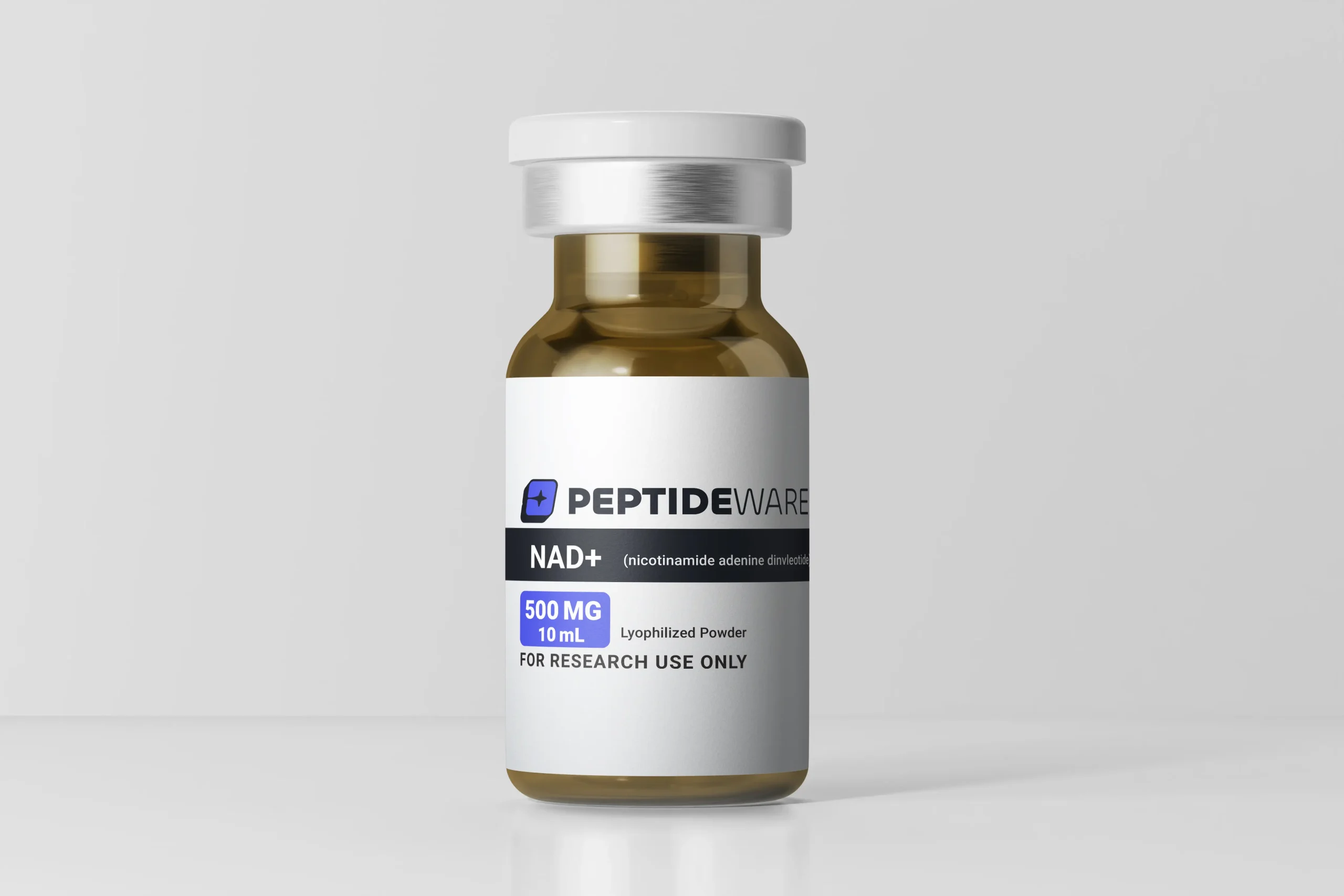


Description
Mechanism: The “Longevity Substrate”
Research into NAD+ focuses on its dual role as both a coenzyme and a signaling substrate:
-
Sirtuin Activation: NAD+ is the obligate substrate for Sirtuins (SIRT1–SIRT7), a family of protein deacetylases often referred to as “longevity genes.” Research suggests that high NAD+ availability is required for Sirtuins to regulate inflammation, DNA repair, and circadian rhythm.
-
Mitochondrial Bioenergetics: It plays a pivotal role in the Krebs Cycle (Citric Acid Cycle), accepting high-energy electrons to form NADH, which then drives ATP production. Depletion of NAD+ pools is a primary biomarker in studies of metabolic dysfunction and cellular senescence.
-
DNA Repair (PARPs): NAD+ is consumed by Poly (ADP-ribose) polymerases (PARPs), enzymes that detect and repair DNA damage. This pathway is a key focus in research regarding genomic stability under stress.
This research peptide undergoes rigorous quality control and stability testing to ensure maximum integrity for scientific applications. Each batch is manufactured under strict laboratory conditions and verified through independent laboratory analysis.
⚠️ FOR RESEARCH PURPOSES ONLY
This product is strictly for in-vitro laboratory research, analysis, and development. It is not intended for human consumption, injection (IV/IM), or therapeutic use. NAD+ is not a drug.
Technical Specifications
-
Chemical Name: $\beta$-Nicotinamide Adenine Dinucleotide (Oxidized Form)
-
CAS Number: 53-84-9
-
Formula: $C_{21}H_{27}N_{7}O_{14}P_{2}$
-
Molar Mass: 663.43 g/mol
-
Purity: ≥99% (HPLC Verified)
-
Form: Lyophilized White Powder
-
Solubility: Highly Water Soluble (Reconstitute with Bacteriostatic Water or Sterile Water)
Storage & Handling
Peptides require careful storage to maintain their integrity and research effectiveness. Lyophilized peptides should be stored in a cold, dry, dark environment to prevent degradation. For short-term use within 4 weeks, storage at 4°C is sufficient, while long-term storage requires temperatures below -20°C or -80°C for extended periods up to 2 years. Always protect peptides from light exposure and avoid repeated freeze-thaw cycles, which can compromise structural integrity and research results.