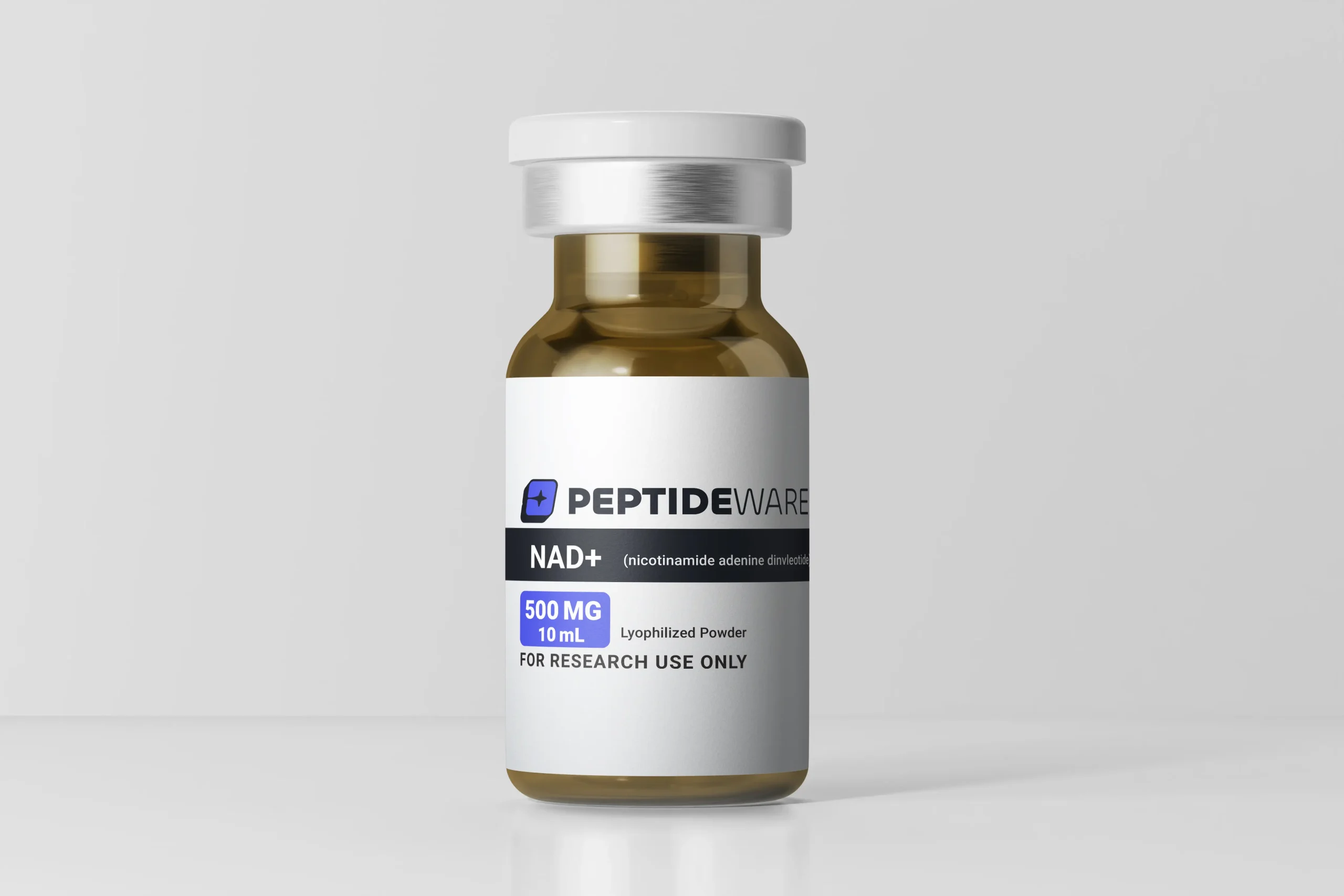
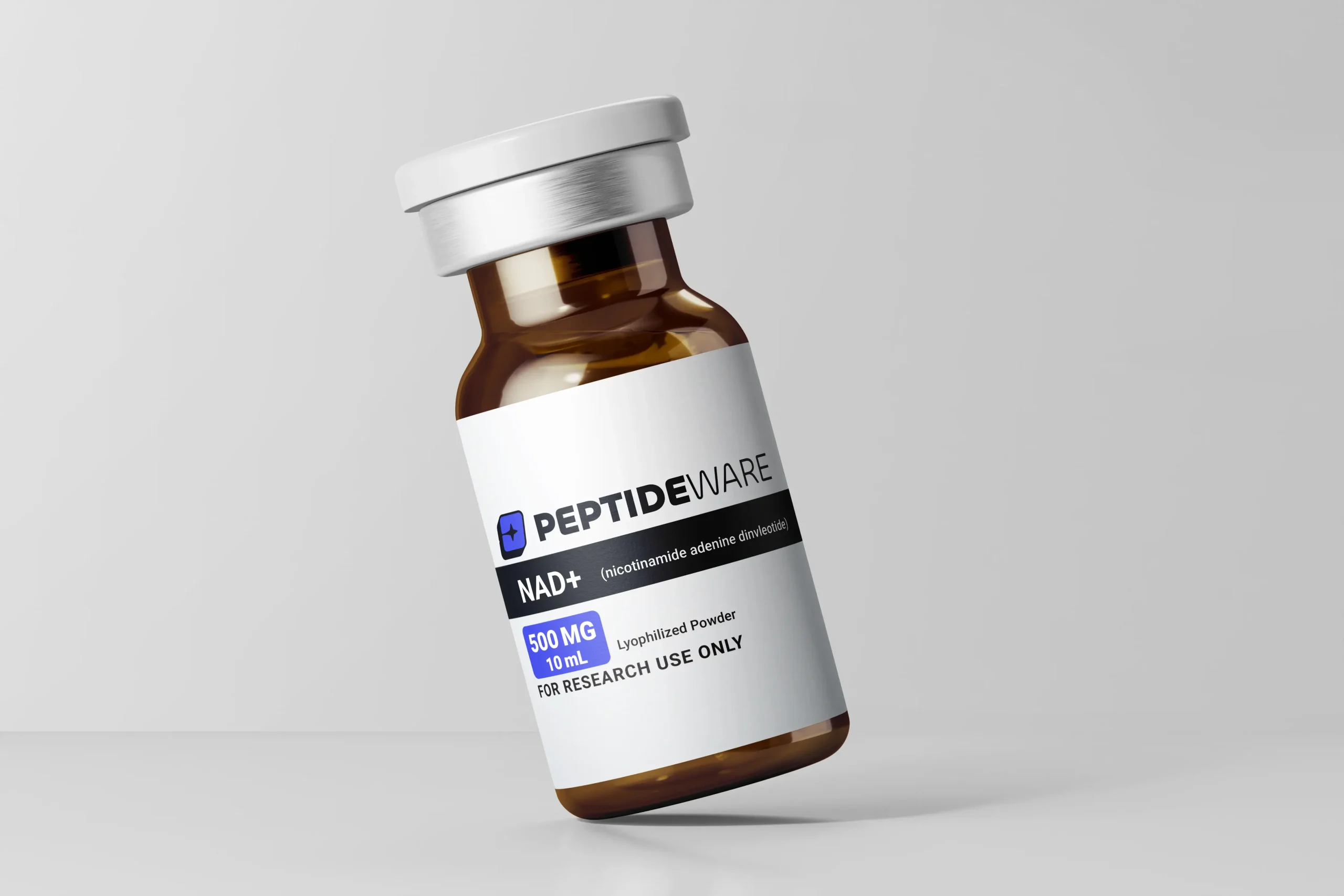
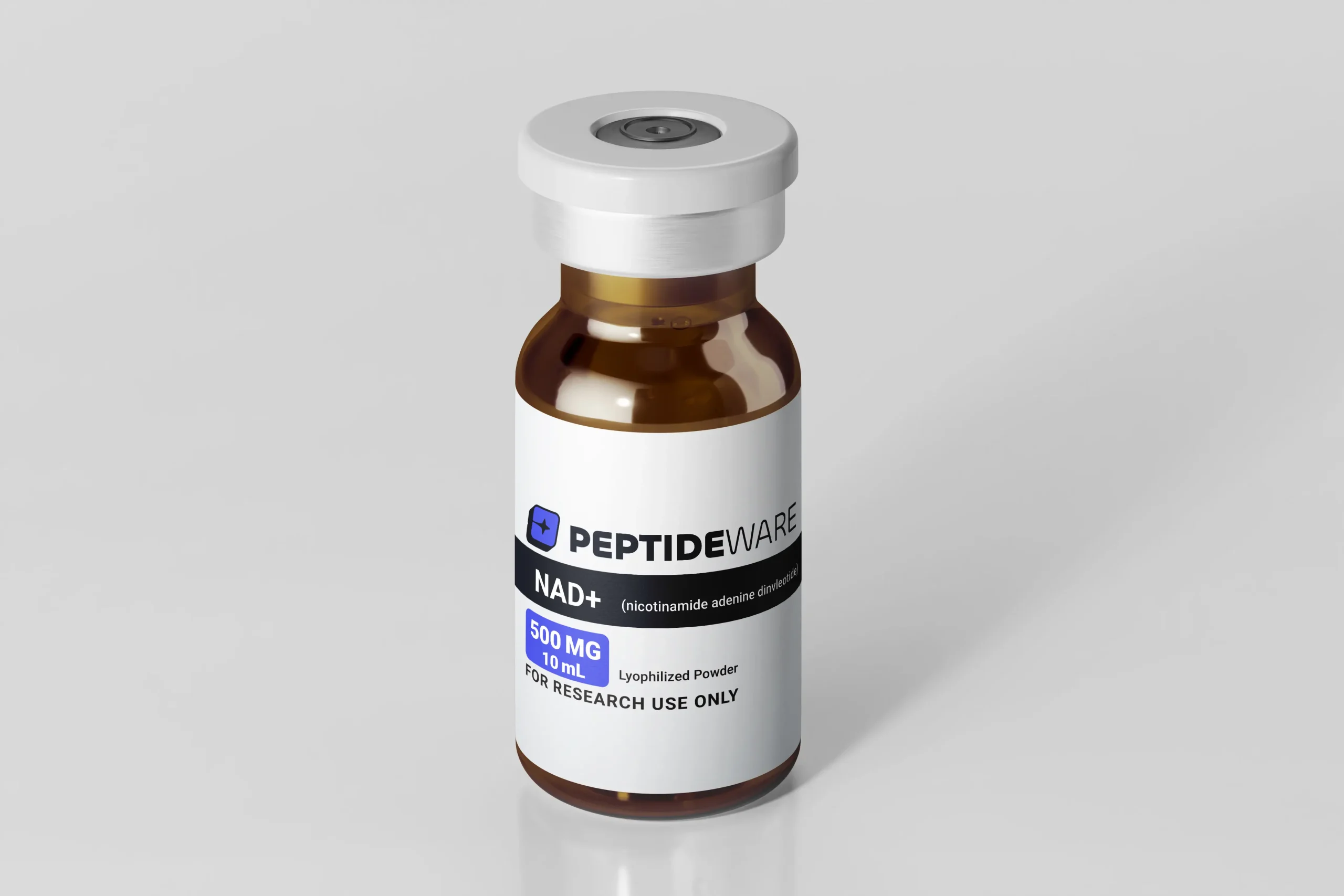


Description
What Is NAD+?
NAD+ (Nicotinamide Adenine Dinucleotide) is an essential coenzyme in all living cells, serving as a substrate for sirtuins, PARPs, and CD38 enzymes that regulate DNA repair, circadian rhythm, and cellular energy metabolism. NAD+ levels decline with age, driving research into supplementation for longevity and metabolic function. 500mg lyophilized format. HPLC-verified with publicly available COA.
Why Researchers Choose NAD+
- Essential Coenzyme in All Living Cells — NAD+ (Nicotinamide Adenine Dinucleotide) is a fundamental coenzyme present in every cell, central to over 500 enzymatic reactions governing cellular metabolism.
- 500 mg High-Dose Lyophilized Format — A concentrated research-grade preparation designed for protocols requiring substantial quantities of this critical substrate.
- Central Mediator of Mitochondrial ETC and Sirtuin Pathways — Published studies identify NAD+ as the obligate substrate for both the mitochondrial electron transport chain and the sirtuin family of deacetylases (SIRT1-SIRT7).
- Critical Substrate for PARP Enzymes — Preclinical research indicates NAD+ is consumed by Poly(ADP-ribose) polymerases during DNA damage repair, linking NAD+ availability directly to genomic stability.
- Verified Purity: ≥99% (HPLC) — Every batch is independently verified through third-party laboratory analysis to ensure maximum integrity for scientific applications.
Frequently Asked Questions
What is NAD+?
NAD+ (Nicotinamide Adenine Dinucleotide, oxidized form) is an essential coenzyme found in all living cells. It functions as both an electron carrier in the mitochondrial electron transport chain and as a substrate for key regulatory enzymes including sirtuins and PARPs. Research into NAD+ biology has expanded dramatically as published studies suggest that declining NAD+ levels are a hallmark of cellular aging and metabolic dysfunction.
How do I reconstitute NAD+ for laboratory use?
NAD+ is highly water-soluble. Reconstitute the 500 mg lyophilized powder with an appropriate volume of bacteriostatic water or sterile water based on your research protocol requirements. Direct the stream of water down the inside wall of the vial. Swirl gently until fully dissolved — do not shake vigorously.
What purity standard does this product meet?
Every batch is verified at ≥99% purity via high-performance liquid chromatography (HPLC) through independent third-party laboratory analysis.
How should NAD+ be stored?
Store the lyophilized powder at -20°C or below for long-term stability (up to 24 months). Once reconstituted, store at 2-8°C and use promptly. NAD+ in solution is sensitive to light, heat, and pH extremes. Protect from light and avoid repeated freeze-thaw cycles.
How does NAD+ differ from NMN and NR precursors?
NAD+ is the direct, active coenzyme itself, while NMN (Nicotinamide Mononucleotide) and NR (Nicotinamide Riboside) are biosynthetic precursors that must be enzymatically converted into NAD+ within cells. Research protocols studying NAD+-dependent enzymes directly often use the coenzyme itself rather than relying on precursor conversion pathways, which can vary in efficiency across different experimental systems.
What does published research say about NAD+?
Published studies suggest that NAD+ is the obligate substrate for sirtuin-mediated deacetylation (often called “longevity pathways”), is consumed during PARP-mediated DNA repair, and is essential for mitochondrial oxidative phosphorylation. Preclinical research indicates that NAD+ depletion correlates with aging biomarkers, metabolic dysfunction, and impaired DNA repair capacity in multiple model organisms.
Can NAD+ be used in combination with other longevity research compounds?
Researchers investigating mitochondrial function and cellular aging pathways frequently design protocols incorporating NAD+ alongside other compounds that target complementary pathways, such as mitochondrial-targeted peptides (SS-31), exercise mimetics (MOTS-c), and sirtuin modulators. Always consult peer-reviewed literature when designing multi-compound research protocols.
Further Reading
New to peptide research? Visit our Peptide Reconstitution 101 guide for step-by-step instructions on proper handling, storage, and reconstitution techniques.
Mechanism: The “Longevity Substrate”
Research into NAD+ focuses on its dual role as both a coenzyme and a signaling substrate:
-
Sirtuin Activation: NAD+ is the obligate substrate for Sirtuins (SIRT1–SIRT7), a family of protein deacetylases often referred to as “longevity genes.” Research suggests that high NAD+ availability is required for Sirtuins to regulate inflammation, DNA repair, and circadian rhythm.
-
Mitochondrial Bioenergetics: It plays a pivotal role in the Krebs Cycle (Citric Acid Cycle), accepting high-energy electrons to form NADH, which then drives ATP production. Depletion of NAD+ pools is a primary biomarker in studies of metabolic dysfunction and cellular senescence.
-
DNA Repair (PARPs): NAD+ is consumed by Poly (ADP-ribose) polymerases (PARPs), enzymes that detect and repair DNA damage. This pathway is a key focus in research regarding genomic stability under stress.
This research peptide undergoes rigorous quality control and stability testing to ensure maximum integrity for scientific applications. Each batch is manufactured under strict laboratory conditions and verified through independent laboratory analysis.
⚠️ FOR RESEARCH PURPOSES ONLY
This product is strictly for in-vitro laboratory research, analysis, and development. It is not intended for human consumption, injection (IV/IM), or therapeutic use. NAD+ is not a drug.
Technical Specifications
-
Chemical Name: $-Nicotinamide Adenine Dinucleotide (Oxidized Form)
-
CAS Number: 53-84-9
-
Formula: {21}H_{27}N_{7}O_{14}P_{2}$
-
Molar Mass: 663.43 g/mol
-
Purity: ≥99% (HPLC Verified)
-
Form: Lyophilized White Powder
-
Solubility: Highly Water Soluble (Reconstitute with Bacteriostatic Water or Sterile Water)
Storage & Handling
Peptides require careful storage to maintain their integrity and research effectiveness. Lyophilized peptides should be stored in a cold, dry, dark environment to prevent degradation. For short-term use within 4 weeks, storage at 4°C is sufficient, while long-term storage requires temperatures below -20°C or -80°C for extended periods up to 2 years. Always protect peptides from light exposure and avoid repeated freeze-thaw cycles, which can compromise structural integrity and research results.