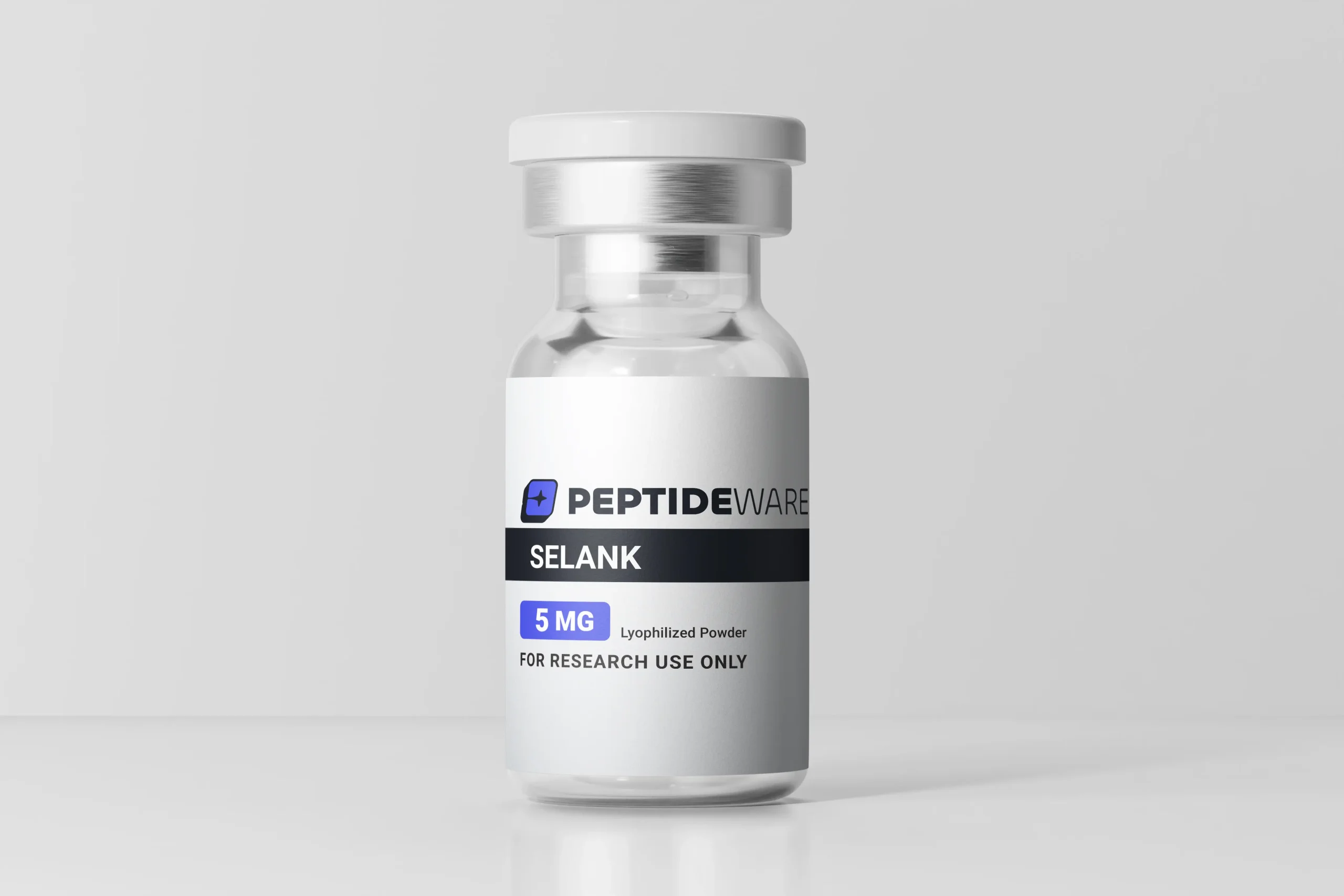


Description
Mechanism: Enkephalin Regulation & Neuroplasticity
The pharmacological profile of Selank is characterized by its modulation of the central nervous system’s endogenous regulatory systems:
-
Enkephalin Hydrolysis Inhibition: Selank inhibits the enzymatic breakdown of endogenous enkephalins (natural opioid peptides). By extending the half-life of these molecules, it promotes a sustained sense of well-being and stress resilience.
-
Monoamine Modulation: Research indicates Selank influences the metabolism of key neurotransmitters—Serotonin, Dopamine, and Norepinephrine—in the brain, potentially improving mood stability and cognitive focus.
-
BDNF Upregulation: Studies suggest that Selank administration leads to increased expression of Brain-Derived Neurotrophic Factor (BDNF) in the hippocampus, supporting neuroplasticity, memory formation, and learning capacity.
This research peptide undergoes rigorous quality control and stability testing to ensure maximum integrity for scientific applications. Each batch is manufactured under strict laboratory conditions and verified through independent laboratory analysis.
⚠️ FOR RESEARCH PURPOSES ONLY
This product is strictly for in-vitro laboratory research, analysis, and development. It is not intended for human consumption, injection, or therapeutic use. Selank is not a drug or medical treatment for anxiety.
Technical Specifications
-
Sequence: N-Acetyl-Thr-Lys-Pro-Arg-Pro-Gly-Pro
-
Parent Molecule: Tuftsin (Fragment 289-292 of IgG heavy chain)
-
Formula: $C_{33}H_{57}N_{11}O_{9}$
-
Molar Mass: ~751.9 g/mol
-
Purity: ≥99% (HPLC Verified)
-
Form: Lyophilized White Powder
-
Stability: N-Acetyl modification enhances resistance to peptidase degradation.
Storage & Handling
Peptides require careful storage to maintain their integrity and research effectiveness. Lyophilized peptides should be stored in a cold, dry, dark environment to prevent degradation. For short-term use within 4 weeks, storage at 4°C is sufficient, while long-term storage requires temperatures below -20°C or -80°C for extended periods up to 2 years. Always protect peptides from light exposure and avoid repeated freeze-thaw cycles, which can compromise structural integrity and research results.