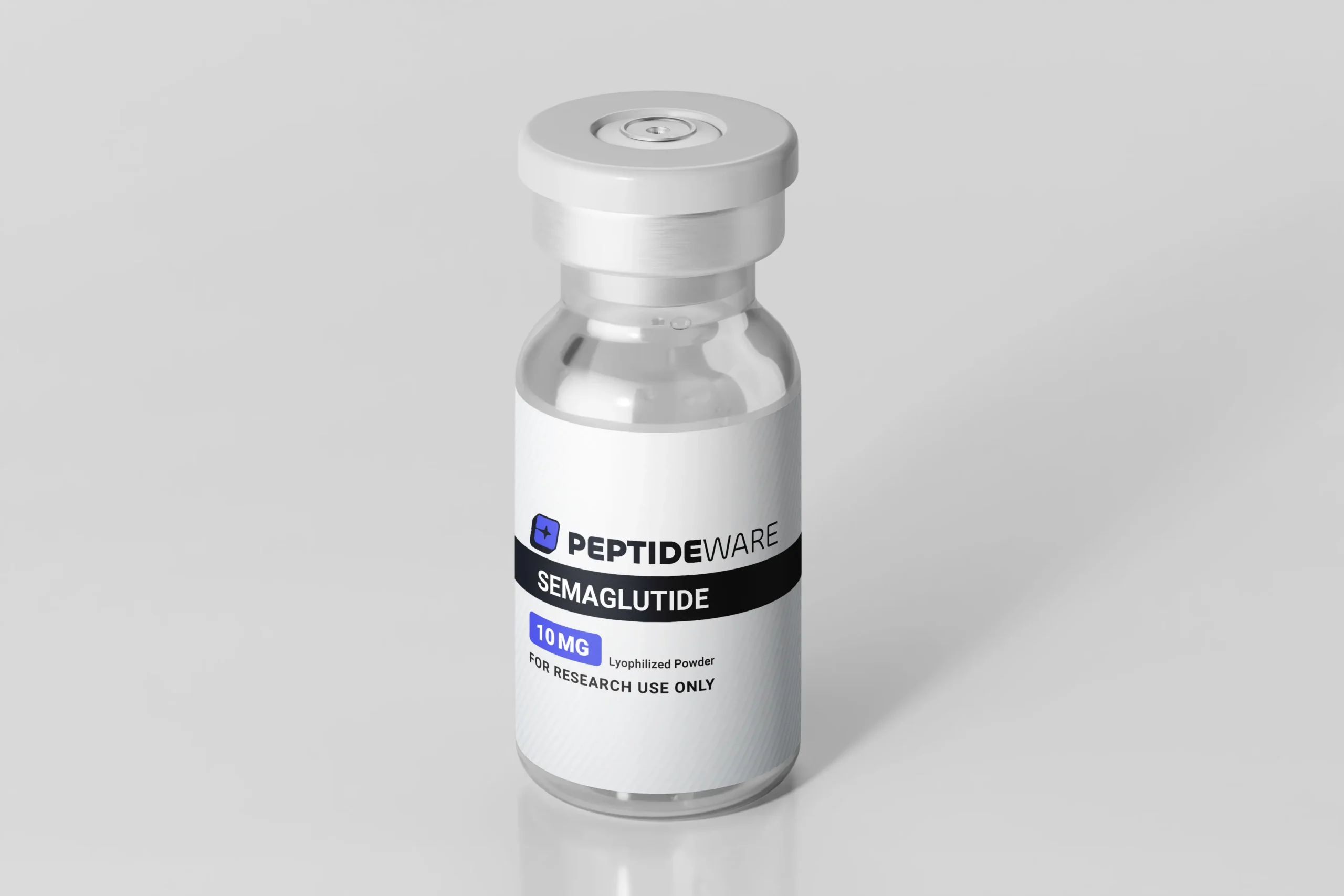


Description
What Is Semaglutide?
Semaglutide is a synthetic GLP-1 receptor agonist (MW: 4,113 Da, CAS: 910463-68-2) with a C-18 fatty acid chain enabling a 7-day half-life. The STEP 1 trial reported 14.9% mean weight reduction over 68 weeks (n=1,961). The SELECT trial showed 20% reduction in major cardiovascular events. One of the most extensively studied peptides in metabolic research. HPLC-verified at 99%+ purity with publicly available COA.
Why Researchers Choose Semaglutide
- 94% structural homology to native human GLP-1 — the benchmark reference standard for GLP-1 research
- Long-acting profile with albumin binding for extended pharmacokinetic research models
- ≥99% purity verified via independent third-party HPLC and mass spectrometry
- Extensively published GLP-1 receptor agonist with thousands of indexed research papers
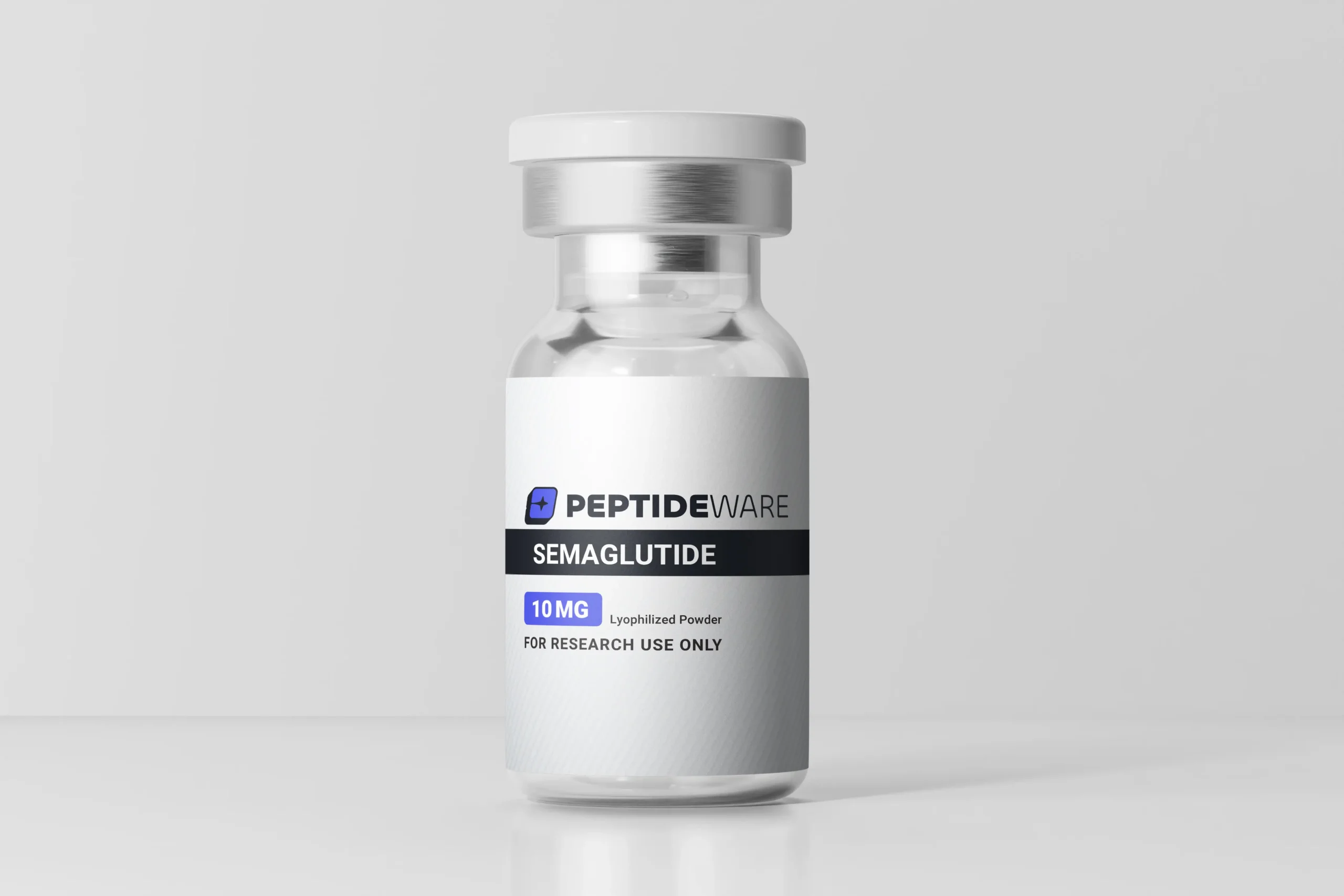
- 10mg lyophilized format optimized for precision metabolic and neuroendocrine research
Frequently Asked Questions
What is Semaglutide and what research applications does it support?
Semaglutide is a synthetic GLP-1 analog with 94% structural homology to native human GLP-1. It is investigated in research protocols focused on metabolic signaling, insulin kinetics, and neuroendocrine regulation. This compound is sold strictly for laboratory research purposes only.
How do I reconstitute Semaglutide for laboratory use?
Add 2mL of bacteriostatic water to yield a concentration of 5mg/mL. Direct the stream against the glass wall of the vial and gently roll to dissolve — do not shake. For detailed reconstitution research protocols, see our Reconstitution 101 guide.
What purity verification does Peptideware provide for Semaglutide?
Every batch of Semaglutide undergoes independent third-party HPLC testing confirming ≥99% purity, along with mass spectrometry confirmation of molecular identity. A Certificate of Analysis (COA) is available for each lot.
How should I store Semaglutide before and after reconstitution?
In lyophilized form, store at -20°C for long-term storage or 2-8°C for short-term storage. Once reconstituted for research, store at 2-8°C and use within 28 days for optimal stability.
How does Semaglutide differ from Tirzepatide in research?
Semaglutide is a single GLP-1 receptor agonist, while Tirzepatide is a dual GIP/GLP-1 receptor agonist (often called a “Twincretin”). They offer different receptor activation profiles suited to different metabolic research models.
What published research exists on Semaglutide?
Thousands of indexed studies on PubMed examine Semaglutide in preclinical research contexts covering metabolic signaling, body composition analysis, and glycemic research models. All references are provided in a preclinical research context.
Can Semaglutide be used in comparison research protocols?
Yes. Semaglutide is frequently used as the reference standard alongside Tirzepatide (dual agonist) and Retatrutide (triple agonist) in comparative incretin research protocols. Peptideware carries all three compounds for comprehensive research.
Further Reading
Mechanism: DPP-4 Resistance & Albumin Binding
Semaglutide owes its distinct pharmacological profile to specific structural modifications that overcome the rapid degradation seen in native GLP-1.
-
Amino Acid Substitution: The substitution of Alanine with α-aminoisobutyric acid (Aib) at position 8 renders the peptide resistant to degradation by the enzyme dipeptidyl peptidase-4 (DPP-4).
-
Albumin Affinity: The critical innovation is the acylation of the peptide backbone with a C-18 fatty diacid side chain. This spacer allows Semaglutide to bind non-covalently to serum albumin with high affinity.
-
Extended Half-Life: This albumin binding serves a dual purpose: it shields the peptide from renal clearance and enzymatic breakdown, extending the plasma half-life to approximately 7 days (165 hours) in research models.
This research peptide undergoes rigorous quality control and stability testing to ensure maximum integrity for scientific applications. Each batch is manufactured under strict laboratory conditions and verified through independent laboratory analysis.
⚠️ FOR RESEARCH PURPOSES ONLY
This product is strictly for in-vitro laboratory research, analysis, and development. It is not intended for human consumption, injection, or therapeutic use. Semaglutide is not a drug, dietary supplement, or food. It is a research chemical. All statements regarding the physiological mechanisms of Semaglutide are based on preclinical animal and cell-culture studies and are provided for educational and informational purposes only.
Primary Research Targets
Semaglutide is the primary subject of study for the following physiological pathways:
-
Glucose-Dependent Insulin Secretion: Investigating the stimulation of pancreatic beta-cells to release insulin only when glucose levels are elevated.
-
Glucagon Suppression: Studying the inhibition of inappropriate glucagon secretion from alpha-cells.
-
Gastric Motility: Analyzing the delay in gastric emptying rates, a mechanism linked to satiety signaling via the Vagus nerve.
The “Control Standard” for Comparative Studies: In the current landscape of metabolic research, Semaglutide serves as the Control Standard. It is the baseline against which the efficacy of novel “Twin” (Tirzepatide) and “Triple” (Retatrutide) agonists are measured in preclinical trials.
Technical Specifications
-
CAS Number: 910463-68-2
-
Molecular Formula: C₁₈₇H₂₉₁N₄₅O₅₉
-
Molar Mass: 4113.58 g/mol
-
Sequence: Modified GLP-1 (7-37) backbone with C-18 fatty acid chain
-
Purity: ≥99% (HPLC Verified)
-
Form: Lyophilized White Powder