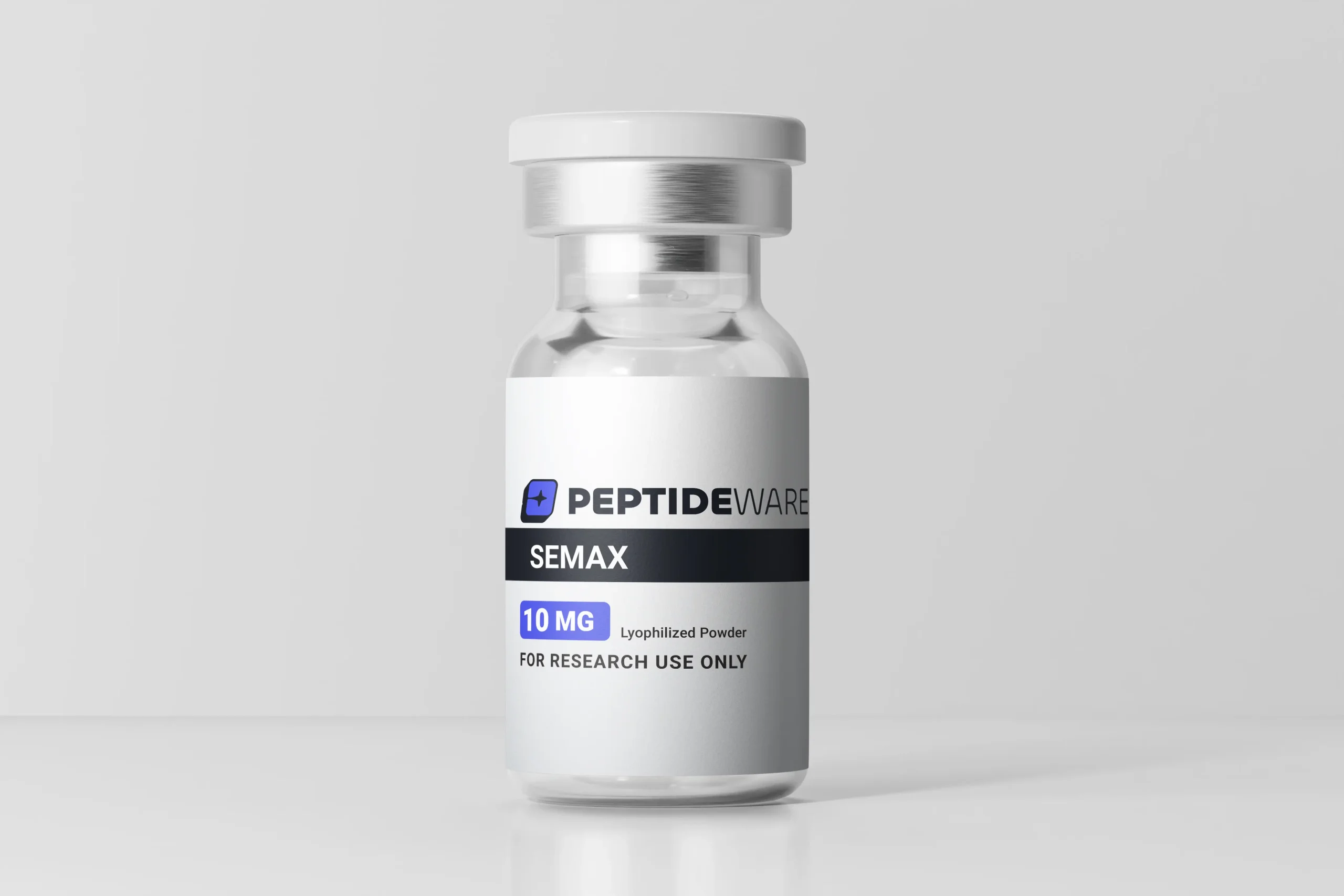


Description
Mechanism: BDNF Upregulation & Neuroprotection
Semax is unique in its ability to modulate the central nervous system through gene expression and neurotrophic support:
-
BDNF & NGF Synthesis: Research demonstrates that Semax rapidly upregulates the expression of Brain-Derived Neurotrophic Factor (BDNF) and Nerve Growth Factor (NGF) in the hippocampus and forebrain. These proteins are critical for neuronal survival, synaptic plasticity, and long-term memory formation.
-
Default Mode Network (DMN): fMRI studies suggest Semax modulates the connection between the DMN and task-positive networks, potentially enhancing resting-state functional connectivity and attention switching.
-
Neurotransmitter Turnover: The peptide is observed to increase the turnover of dopamine and serotonin, improving neurotransmission efficiency without the neurotoxicity associated with amphetamine-class compounds.
This research peptide undergoes rigorous quality control and stability testing to ensure maximum integrity for scientific applications. Each batch is manufactured under strict laboratory conditions and verified through independent laboratory analysis.
⚠️ FOR RESEARCH PURPOSES ONLY
This product is strictly for in-vitro laboratory research, analysis, and development. It is not intended for human consumption, injection, or therapeutic use. Semax is not a drug.
Technical Specifications
-
Sequence: Met-Glu-His-Phe-Pro-Gly-Pro
-
Identity: Synthetic ACTH (4-10) Analogue
-
Formula: $C_{37}H_{51}N_{9}O_{10}S$
-
Molar Mass: ~813.9 g/mol
-
CAS Number: 80714-61-0
-
Purity: ≥99% (HPLC Verified)
-
Form: Lyophilized White Powder
Storage & Handling
Peptides require careful storage to maintain their integrity and research effectiveness. Lyophilized peptides should be stored in a cold, dry, dark environment to prevent degradation. For short-term use within 4 weeks, storage at 4°C is sufficient, while long-term storage requires temperatures below -20°C or -80°C for extended periods up to 2 years. Always protect peptides from light exposure and avoid repeated freeze-thaw cycles, which can compromise structural integrity and research results.