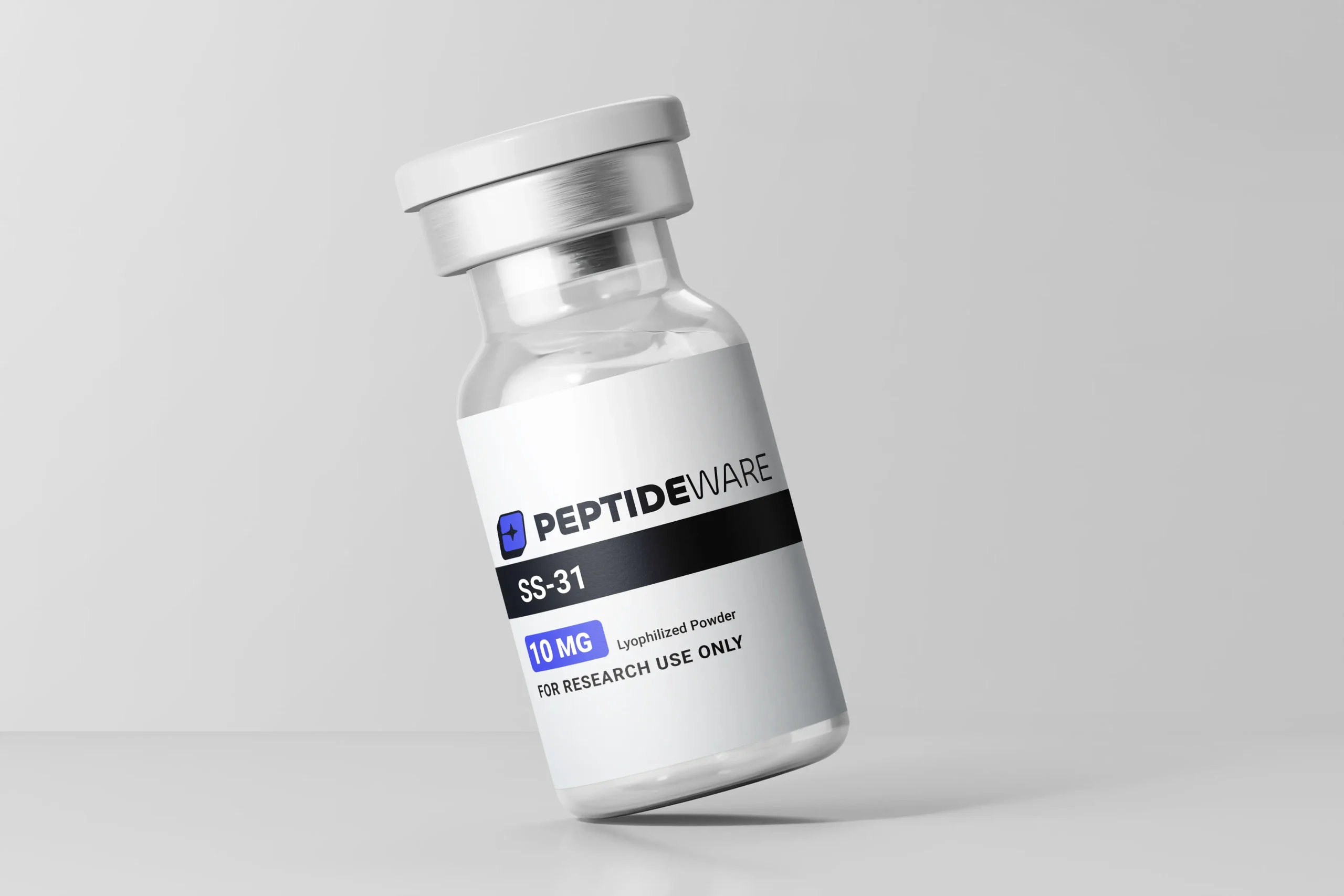
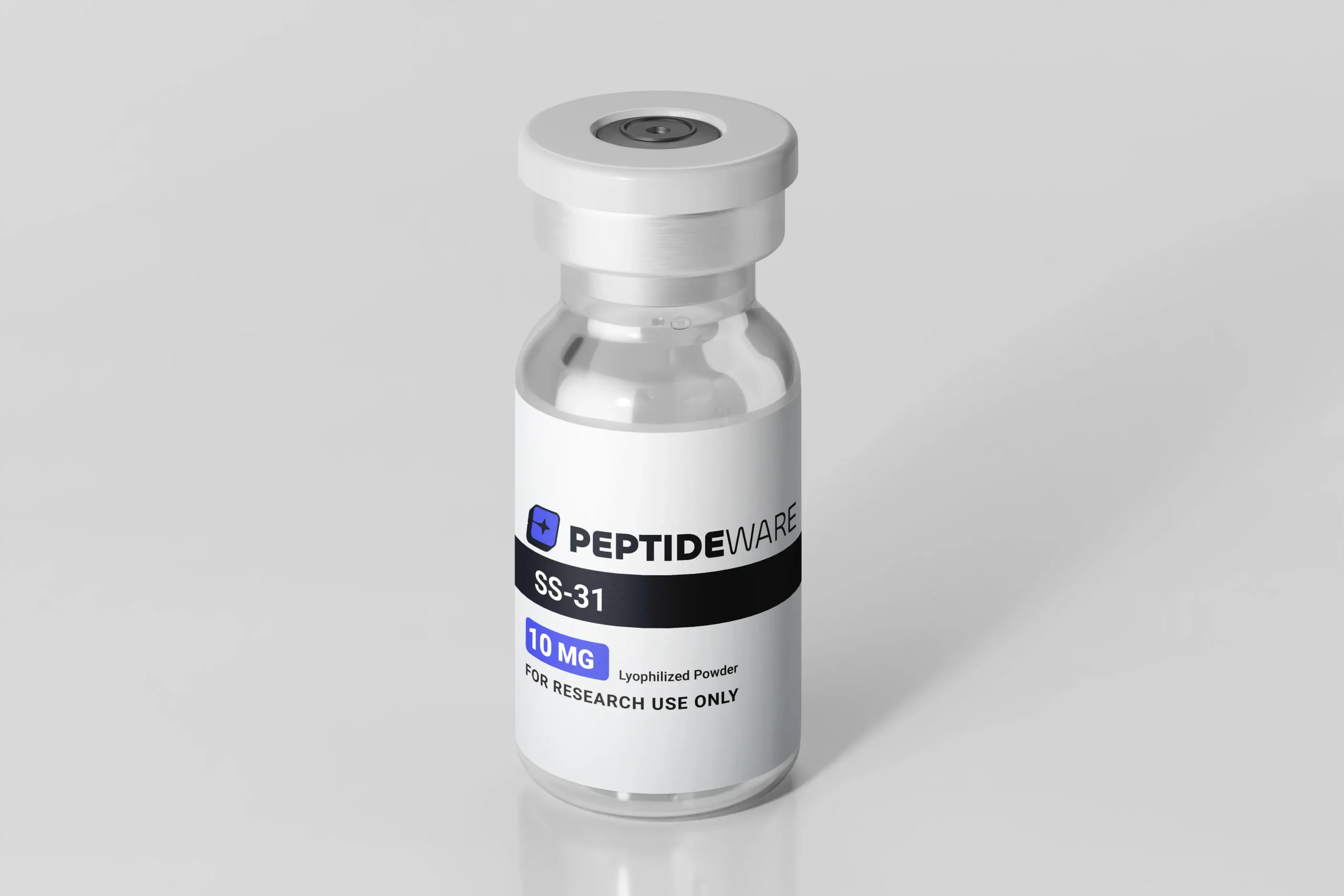


Description
What Is SS-31?
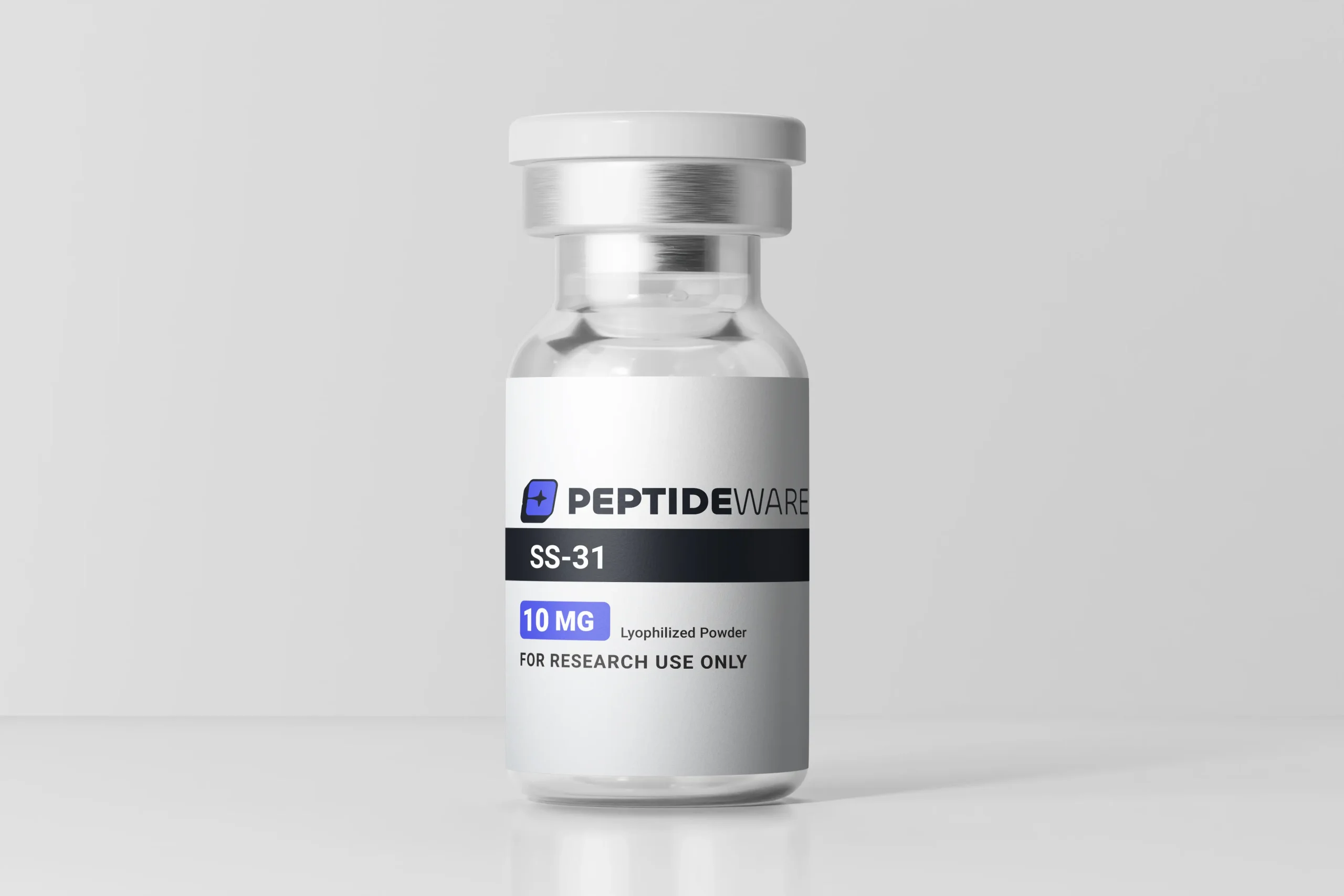
SS-31 (Elamipretide) is a mitochondria-targeted tetrapeptide from the Szeto-Schiller class. It selectively concentrates in the inner mitochondrial membrane, stabilizing cardiolipin to restore electron transport chain efficiency and reduce reactive oxygen species. Investigated in Phase 2/3 clinical trials for mitochondrial dysfunction. HPLC-verified at 99%+ purity with COA.
Why Researchers Choose SS-31
- Szeto-Schiller Class Mitochondrial-Targeted Tetrapeptide — SS-31 (Elamipretide) belongs to the Szeto-Schiller peptide family, specifically engineered with an alternating aromatic-cationic motif that enables mitochondrial targeting.
- Selectively Concentrates at the Inner Mitochondrial Membrane — Unlike systemic antioxidant compounds, SS-31 accumulates 1,000- to 5,000-fold at the inner mitochondrial membrane (IMM), placing it precisely where electron transport chain activity generates reactive oxygen species.
- Cardiolipin Interaction Research — Published studies suggest SS-31 binds selectively to cardiolipin, a phospholipid unique to the IMM, stabilizing cristae structure and optimizing electron transport efficiency.
- Verified Purity: ≥99% (HPLC) — Every batch is independently verified through third-party laboratory analysis for maximum research integrity.
- 10 mg Format for Mitochondrial Research — Research-grade quantity designed for protocols investigating mitochondrial bioenergetics, ischemia-reperfusion models, and age-related mitochondrial dysfunction.
Frequently Asked Questions
What is SS-31 (Elamipretide)?
SS-31, also known by its research code MTP-131 or Elamipretide, is a synthetic tetrapeptide (D-Arg-Dmt-Lys-Phe-NH2) belonging to the Szeto-Schiller class of mitochondrial-targeted peptides. Its alternating aromatic-cationic structure allows it to cross cell membranes and concentrate at the inner mitochondrial membrane independently of mitochondrial membrane potential. Preclinical research indicates it interacts with cardiolipin to stabilize the electron transport chain and reduce reactive oxygen species production at their source.
How do I reconstitute SS-31 for laboratory use?
Add 2 mL of bacteriostatic water to the 10 mg vial to achieve a working concentration of 5 mg/mL. Direct the stream of water down the inside wall of the vial rather than directly onto the lyophilized cake. Swirl gently — do not shake. Allow up to 5 minutes for complete dissolution before use in research protocols.
What purity standard does this product meet?
Every batch is verified at ≥99% purity via high-performance liquid chromatography (HPLC) through independent third-party laboratory analysis.
How should SS-31 be stored?
Store the lyophilized powder at -20°C or below for long-term stability (up to 24 months). Once reconstituted, store at 2-8°C and use within 4 weeks. Protect from light and avoid repeated freeze-thaw cycles to maintain peptide structural integrity.
How does SS-31 differ from general antioxidants?
Conventional antioxidant compounds distribute systemically and scavenge free radicals after they are produced. SS-31 takes a fundamentally different approach — it concentrates directly at the inner mitochondrial membrane where reactive oxygen species originate, stabilizing cardiolipin and the electron transport chain to reduce ROS production at its source. This targeted mechanism is distinct from systemic free radical scavenging.
How does SS-31 differ from NAD+?
SS-31 is a mitochondrial-targeted peptide that physically localizes to the inner mitochondrial membrane and interacts with cardiolipin to optimize electron transport efficiency. NAD+ is a coenzyme and substrate for metabolic enzymes (sirtuins, PARPs) that operates throughout the cell. They address mitochondrial function through entirely different mechanisms — structural stabilization versus enzymatic substrate availability — and are often studied in complementary research protocols.
What does published research say about SS-31?
Preclinical research indicates SS-31 reduces mitochondrial ROS production, improves ATP synthesis efficiency, and preserves mitochondrial cristae structure in multiple model systems. Published studies have examined its effects in ischemia-reperfusion injury models, age-related mitochondrial dysfunction, and cardiac bioenergetics. Research continues into its role in preserving mitochondrial function under metabolic stress conditions.
Can SS-31 be used in combination research protocols?
Researchers investigating mitochondrial biology frequently design protocols incorporating SS-31 alongside compounds targeting complementary pathways, such as NAD+ (sirtuin/PARP substrate), MOTS-c (AMPK-mediated metabolic signaling), and other mitochondrial-targeted agents. Always consult peer-reviewed literature when designing multi-compound research protocols.
Further Reading
New to peptide research? Visit our Peptide Reconstitution 101 guide for step-by-step instructions on proper handling, storage, and reconstitution techniques.
Mechanism: Cardiolipin Stabilization
The unique pharmacological action of SS-31 centers on its interaction with Cardiolipin, a phospholipid exclusively found in the inner mitochondrial membrane.
-
Cardiolipin Binding: SS-31 penetrates the cell membrane and binds selectively to Cardiolipin. This interaction stabilizes the cristae structure of the mitochondria.
-
Electron Transport Efficiency: By optimizing membrane curvature and fluidity, SS-31 facilitates the efficient transfer of electrons between complexes in the Electron Transport Chain (ETC). This reduces electron “leakage.”
-
ROS Reduction: The result is a significant decrease in the production of Reactive Oxygen Species (ROS) at the source, while simultaneously maintaining or increasing ATP production—a phenomenon distinct from standard uncoupling agents.
This research peptide undergoes rigorous quality control and stability testing to ensure maximum integrity for scientific applications. Each batch is manufactured under strict laboratory conditions and verified through independent laboratory analysis.
⚠️ FOR RESEARCH PURPOSES ONLY
This product is strictly for in-vitro laboratory research, analysis, and development. It is not intended for human consumption, injection, or therapeutic use. SS-31 is not a drug.
Technical Specifications
-
Sequence: D-Arg-Dmt-Lys-Phe-NH2
-
(Dmt = 2′,6′-dimethyltyrosine)
-
-
Research Code: MTP-131
-
Formula: {32}H_{49}N_{9}O_{5}$
-
Molar Mass: 639.8 g/mol
-
Purity: ≥99% (HPLC Verified)
-
Form: Lyophilized White Powder
Storage & Handling
Peptides require careful storage to maintain their integrity and research effectiveness. Lyophilized peptides should be stored in a cold, dry, dark environment to prevent degradation. For short-term use within 4 weeks, storage at 4°C is sufficient, while long-term storage requires temperatures below -20°C or -80°C for extended periods up to 2 years. Always protect peptides from light exposure and avoid repeated freeze-thaw cycles, which can compromise structural integrity and research results.