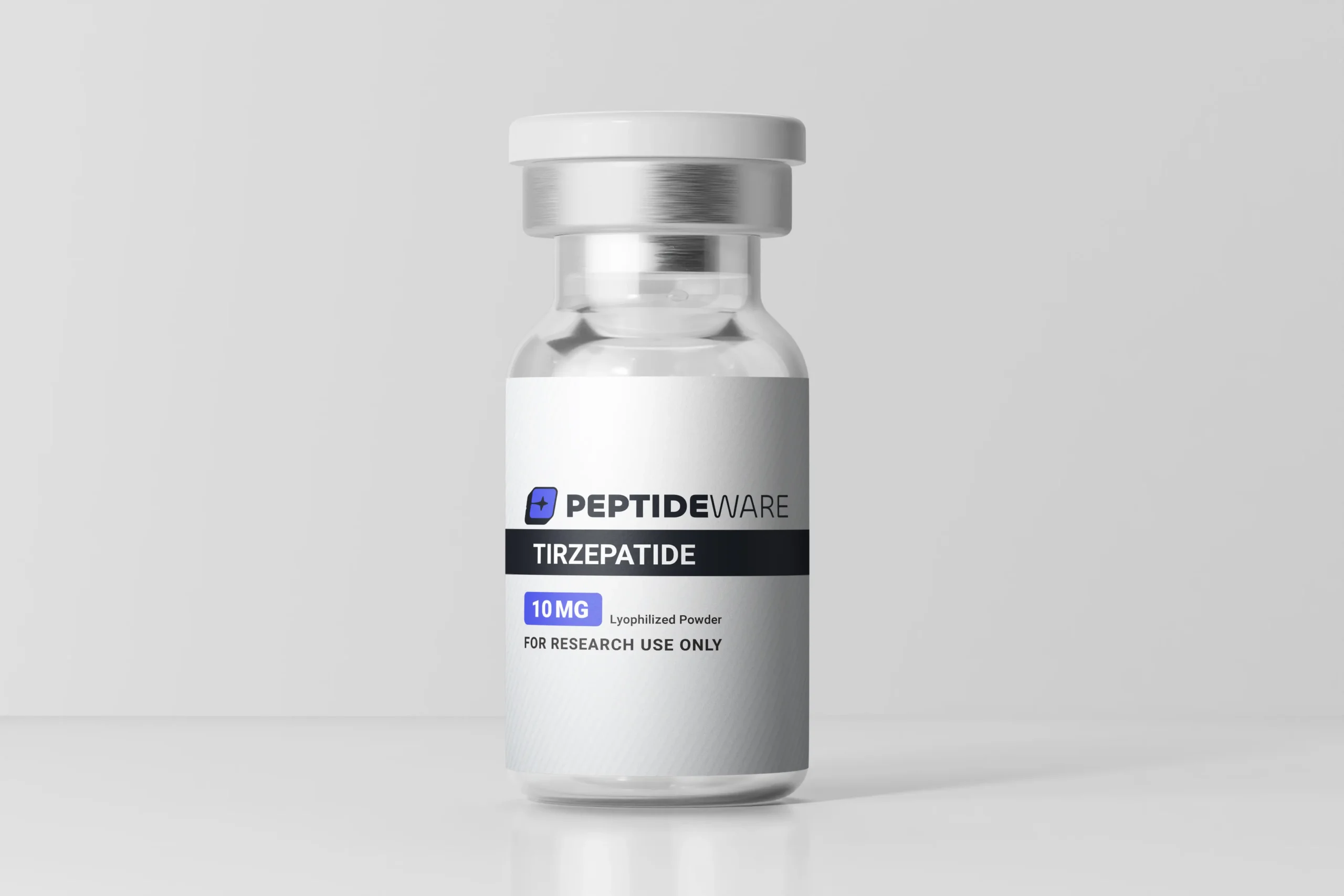
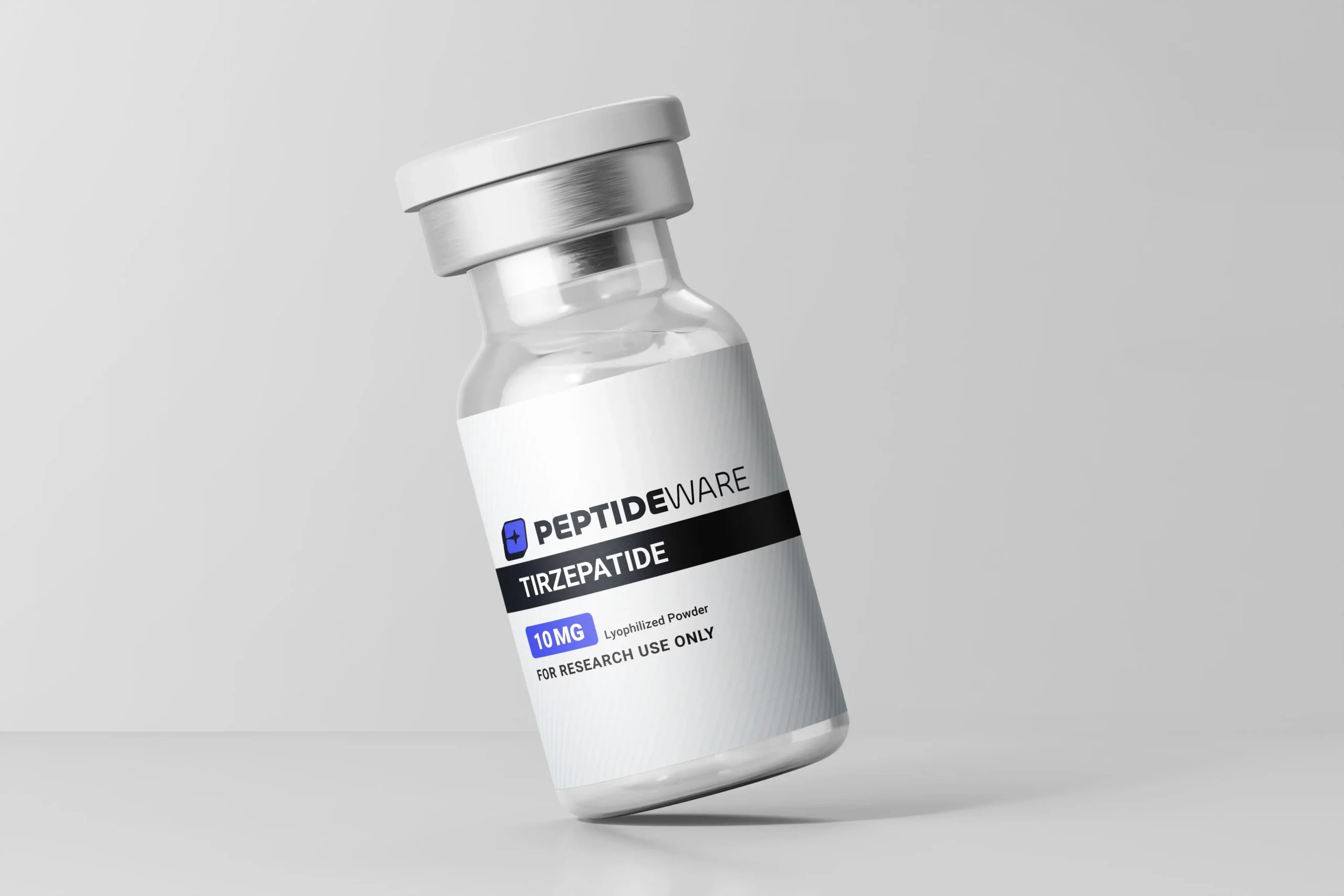
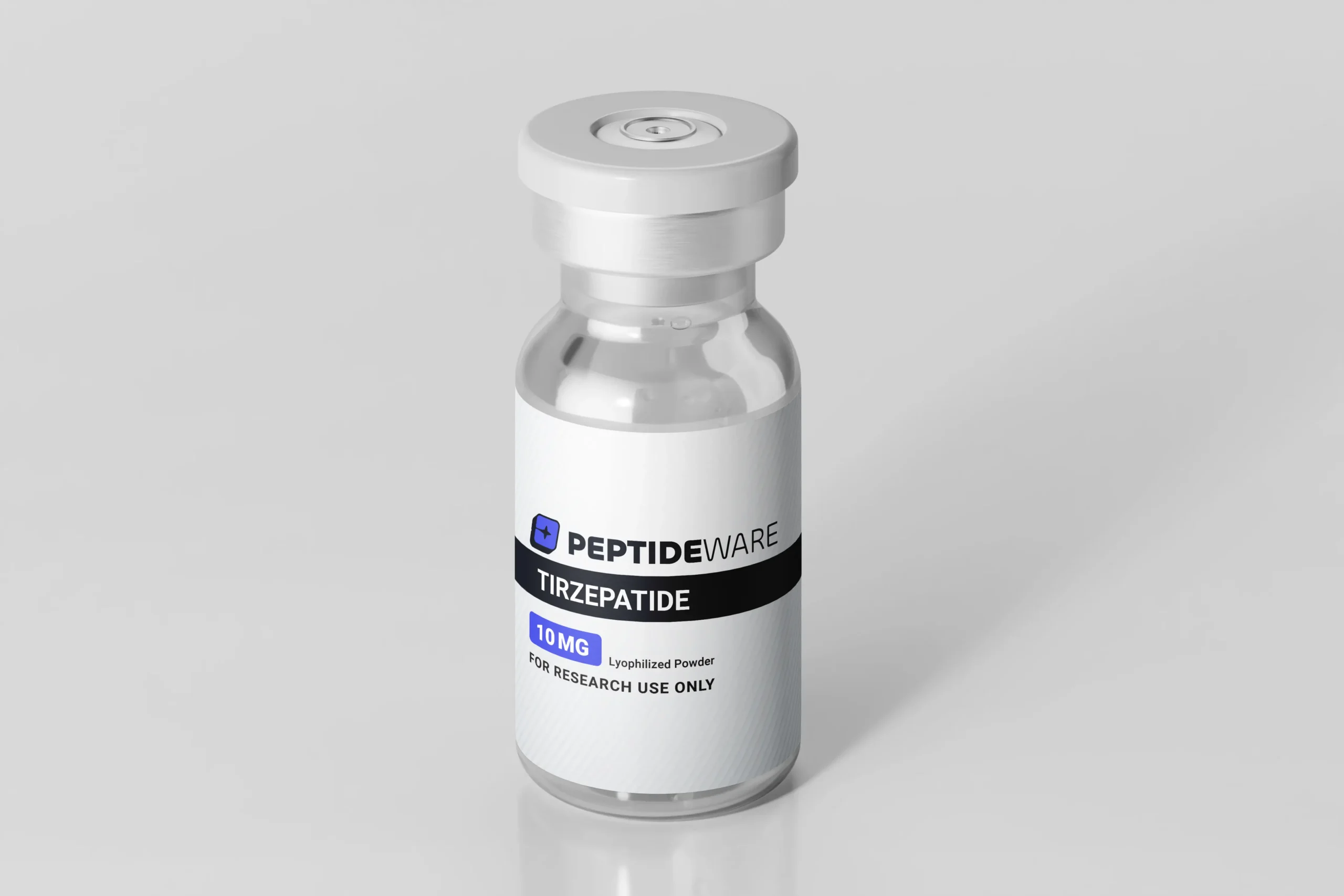


Description
Mechanism: Dual GIP & GLP-1 Receptor Agonism
Tirzepatide is engineered to function through a unique pharmacological principle known as “Imbalanced Agonism.” Unlike a balanced 1:1 ratio, Tirzepatide exhibits a specific binding affinity bias that is central to its potency:
-
GIP Receptor Bias: It binds with high affinity to the GIP receptor, comparable to native GIP.
-
GLP-1 Receptor Interaction: It binds with lower affinity to the GLP-1 receptor compared to native GLP-1.
The Synergistic Outcome: Research suggests this specific “imbalance” is key to its efficacy. By heavily recruiting the GIP pathway while simultaneously stimulating GLP-1 pathways, Tirzepatide is observed in preclinical models to produce metabolic outcomes—such as reductions in adiposity and improvements in insulin sensitivity—that statistically surpass those of mono-agonists (like Semaglutide) alone.
This research peptide undergoes rigorous quality control and stability testing to ensure maximum integrity for scientific applications. Each batch is manufactured under strict laboratory conditions and verified through independent laboratory analysis.
⚠️ FOR RESEARCH PURPOSES ONLY
This product is strictly for in-vitro laboratory research, analysis, and development. It is not intended for human consumption, injection, or therapeutic use. Tirzepatide is not a drug, dietary supplement, or food. All statements regarding the physiological mechanisms of Tirzepatide are based on preclinical animal and cell-culture studies and are provided for educational and informational purposes only.
hemical Profile: The C20 Modification
Structurally, Tirzepatide is a 39-amino acid linear peptide analogue of the gastric inhibitory polypeptide (GIP).
-
The C20 Fatty Diacid Moiety: The critical structural modification is the attachment of a C20 fatty diacid moiety via a hydrophilic linker.
-
Pharmacokinetic Impact: This fatty acid chain promotes high-affinity binding to plasma albumin. This albumin binding acts as a reservoir, protecting the peptide from enzymatic degradation and renal filtration, resulting in an extended half-life of approximately 5 days (116.5 hours) in research subjects.
Technical Specifications
| Specification | Detail |
| Research Code | LY3298176 |
| Sequence Length | 39 Amino Acids (Linear) |
| Modification | C20 Fatty Diacid Acylation |
| CAS Number | 2023788-19-2 |
| Formula | C₂₂₅H₃₄₈N₄₈O₆₈ |
| Molar Mass | 4813.45 g/mol |
| Purity | ≥99% (HPLC Verified) |