


Last Updated: March 2026 | v1.0
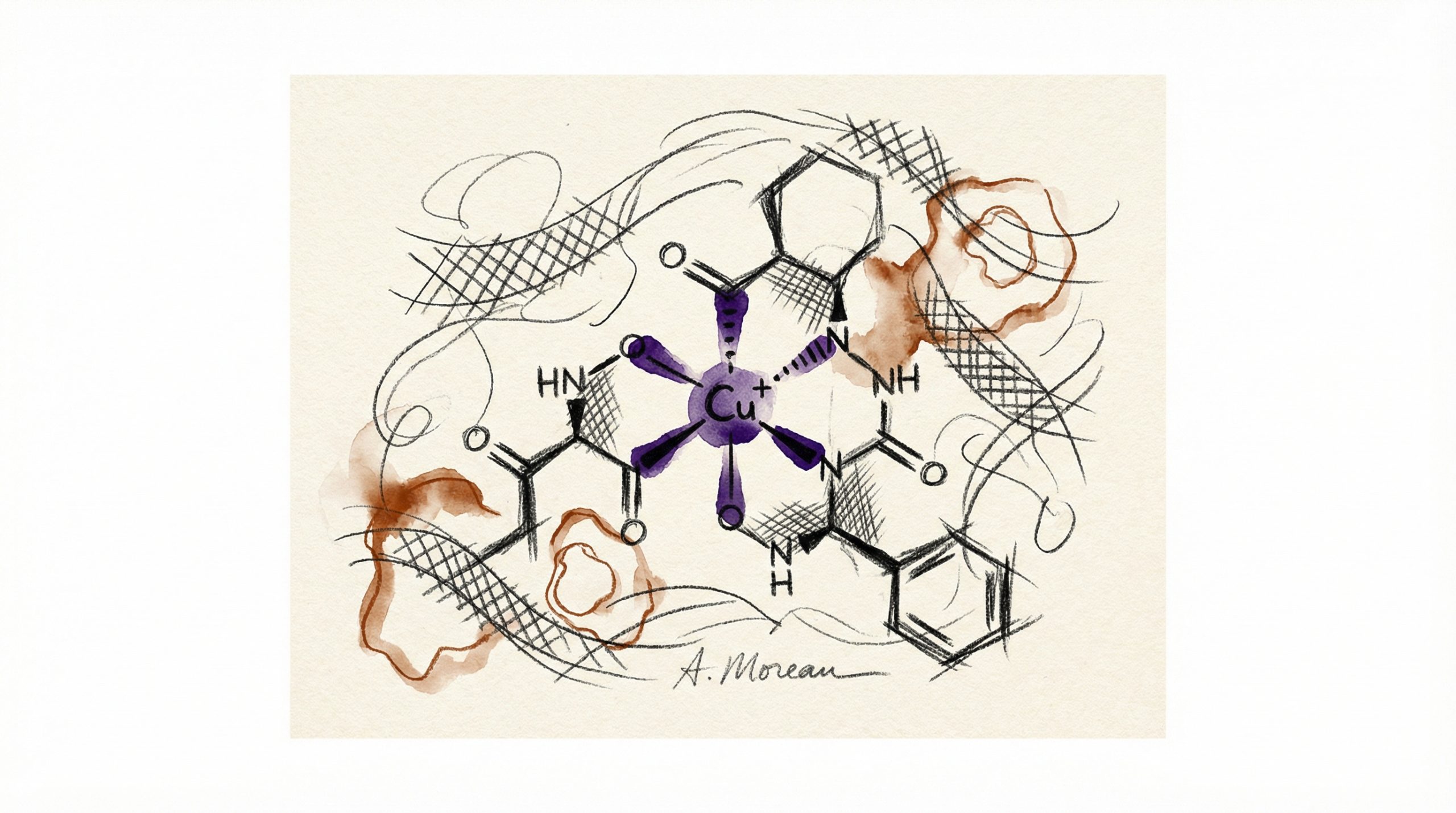
GHK-Cu (glycyl-L-histidyl-L-lysine copper complex) is a naturally occurring copper-binding tripeptide first identified in human plasma in 1973 by Loren Pickart. With a molecular weight of 403.9 Da, it is one of the smallest bioactive peptides studied in regenerative research — just three amino acids (Gly-His-Lys) bound to a copper(II) ion. Despite its small size, GHK-Cu has generated a substantial body of published research demonstrating its ability to modulate the expression of over 4,000 human genes, with documented effects on collagen synthesis, wound healing, anti-inflammatory signaling, antioxidant defense, and tissue remodeling. GHK-Cu levels decline significantly with age — circulating concentrations drop from approximately 200 ng/mL at age 20 to 80 ng/mL by age 60 — leading researchers to investigate whether this decline contributes to age-related tissue degeneration. This guide covers GHK-Cu’s mechanism of action, gene expression research, and standard laboratory protocols. All products and information are provided for laboratory and research purposes only.
Quick Facts: GHK-Cu
- Classification: Copper-binding tripeptide (Gly-His-Lys:Cu2+)
- Molecular weight: 403.9 Da
- Gene modulation: Published data shows effects on 4,000+ human genes (~6% of the genome)
- Age-related decline: Plasma levels decrease ~60% between age 20 and age 60
- Primary research areas: Collagen synthesis, wound healing, gene expression modulation, antioxidant defense, anti-inflammatory signaling
Use the free reconstitution calculator for exact syringe units, or browse the GHK-Cu reference page for dosing and protocol data.
What Is the Mechanism of Action of GHK-Cu?
GHK-Cu’s mechanism of action is uniquely broad for a peptide of its size. The tripeptide-copper complex acts as a signaling molecule that modulates gene expression across multiple pathways simultaneously. Microarray analysis by Pickart and Margolina identified that GHK-Cu affects the expression of 4,048 human genes — approximately 6% of the human genome. Of these, 2,861 were upregulated and 1,187 were suppressed (PubMed: 22585065). The affected genes cluster into several functional categories relevant to tissue repair and aging research.
The copper ion is integral to GHK-Cu’s biological activity. Copper serves as a cofactor for critical enzymes including lysyl oxidase (required for collagen and elastin cross-linking), superoxide dismutase (a primary antioxidant enzyme), and cytochrome c oxidase (essential for mitochondrial energy production). By delivering copper to cells at injury sites, GHK-Cu supports these enzymatic processes. The tripeptide component (GHK) functions as the delivery vehicle, binding copper with high affinity and releasing it in the appropriate cellular context.
Published studies suggest that GHK-Cu also interacts with the integrin receptor system on cell surfaces, triggering intracellular signaling cascades that promote cell migration, proliferation, and differentiation. This receptor-mediated signaling may explain how such a small molecule can produce such widespread gene expression changes (PubMed: 24508075).
What Does the Gene Expression Research Show?
The gene expression data for GHK-Cu is among the most comprehensive of any research peptide. Published microarray analyses document specific effects across several gene families:
Extracellular matrix genes: GHK-Cu upregulates collagen types I, III, and V, elastin, decorin, and multiple glycosaminoglycans. These genes encode the structural proteins that provide tissue strength, elasticity, and hydration. The upregulation of collagen synthesis is one of GHK-Cu’s most consistently documented effects across independent studies (PubMed: 8776857).
Antioxidant defense genes: GHK-Cu increases expression of genes for superoxide dismutase (SOD1, SOD2, SOD3), glutathione S-transferases, and other antioxidant enzymes. These enzymes neutralize reactive oxygen species (ROS) that damage cellular structures and accelerate aging. Published data indicates GHK-Cu can restore antioxidant gene expression to levels observed in younger tissue samples.
Anti-inflammatory genes: GHK-Cu suppresses the expression of pro-inflammatory cytokines including IL-6, IL-8, and TNF-α, while modulating NF-κB pathway activity. In wound healing models, this anti-inflammatory effect reduces excessive scar tissue formation and promotes more organized tissue repair.
DNA repair genes: Published microarray data shows GHK-Cu upregulates several DNA repair pathways, including base excision repair and nucleotide excision repair genes. This finding has generated interest in GHK-Cu’s potential role in genomic stability research (PubMed: 22585065).
What Has Been Studied in Wound Healing Research?
GHK-Cu has been extensively studied in wound healing models spanning four decades of published literature. Early studies by Pickart and colleagues demonstrated that GHK-Cu accelerated wound closure in animal models, with treated wounds showing increased granulation tissue formation, enhanced angiogenesis, and more organized collagen deposition compared to controls. The wound healing effects were attributed to GHK-Cu’s simultaneous activation of multiple repair pathways — extracellular matrix production, cell migration, angiogenesis, and anti-inflammatory signaling.
In comparative wound healing studies, GHK-Cu demonstrated efficacy comparable to or exceeding other wound-active peptides. A study by Leyden et al. found that topical GHK-Cu formulations increased collagen synthesis in photodamaged skin by 70% compared to controls, with significant improvements in skin thickness and elastic fiber content (PubMed: 11867961). Bone repair studies have also shown positive results, with GHK-Cu enhancing osteoblast activity and bone matrix deposition in fracture models.
What Are the Aging and Longevity Research Findings?
The age-related decline in circulating GHK-Cu levels has positioned this peptide at the intersection of regenerative medicine and aging research. The observation that GHK-Cu levels drop by approximately 60% between ages 20 and 60 raises the question of whether restoring youthful GHK-Cu concentrations could reverse age-related gene expression changes. Published gene expression data supports this hypothesis — many of the genes suppressed during aging overlap with genes that GHK-Cu upregulates, and vice versa.
In a computational analysis, Pickart and Margolina compared the gene expression signature of GHK-Cu treatment with the gene expression signature of aging. They found significant overlap: genes that decline with age (including collagen, elastin, and antioxidant enzymes) were upregulated by GHK-Cu, while genes that increase with age (including several pro-inflammatory mediators) were suppressed by GHK-Cu. This pattern suggests that GHK-Cu may partially reverse the transcriptomic profile associated with aging, though the functional significance of these gene expression changes in whole-organism aging requires further investigation.
What Is the Standard Reconstitution Protocol for GHK-Cu?
GHK-Cu for research use is typically supplied as a lyophilized powder in 50 mg vials. Researchers typically reconstitute with 3 mL of bacteriostatic water (BAC water), producing a concentration of approximately 16,667 mcg/mL. At this concentration, each unit on a 100-unit insulin syringe equals approximately 167 mcg of GHK-Cu. For a research dosage of 1.7 mg (1,700 mcg), researchers draw 10 units.
Reconstitution follows standard peptide protocols: swab stoppers with alcohol, inject BAC water along the vial wall, allow dissolution, and gently roll. GHK-Cu solutions may have a slight blue-green tint due to the copper ion — this is normal and indicates the copper-peptide complex is intact. Store at 2-8 °C (36-46 °F) after reconstitution and use within 21-28 days. See our Peptide Reconstitution 101 guide for detailed instructions, or use the reconstitution calculator at HowToMixPeptides.com.
What Research Dosages Are Referenced in Published Studies?
Published GHK-Cu studies span a wide dosage range depending on the route of administration and research application. Topical formulations in cosmetic research have used concentrations of 0.01-1%. For systemic research protocols, a commonly referenced dosage is 1.7 mg administered subcutaneously once daily (AM), corresponding to 10 units with the reconstitution described above. Research cycles of 8 weeks on followed by 8 weeks off are commonly referenced.
GHK-Cu’s relatively low molecular weight (403.9 Da) gives it favorable tissue penetration properties compared to larger peptides. This small size also means it can be administered topically, subcutaneously, or intradermally depending on the research question. Researchers investigating GHK-Cu as part of broader tissue repair protocols may combine it with compounds like BPC-157 or TB-500 that target complementary repair mechanisms. For additional reconstitution references, visit HowToMixPeptides.com.
Frequently Asked Questions
What is GHK-Cu?
GHK-Cu is a naturally occurring copper-binding tripeptide (Gly-His-Lys bound to a copper ion) first identified in human plasma in 1973. It is one of the smallest bioactive peptides, with a molecular weight of 403.9 Da, and modulates the expression of over 4,000 human genes.
Why does GHK-Cu contain copper?
The copper(II) ion is integral to GHK-Cu’s biological activity. Copper serves as a cofactor for enzymes involved in collagen cross-linking (lysyl oxidase), antioxidant defense (superoxide dismutase), and energy production (cytochrome c oxidase). The GHK tripeptide delivers copper to cells at injury sites.
Does GHK-Cu decline with age?
Yes. Published data shows circulating GHK-Cu levels decrease from approximately 200 ng/mL at age 20 to approximately 80 ng/mL by age 60 — a decline of roughly 60%. This decline correlates with reduced collagen synthesis and decreased tissue repair capacity.
How is GHK-Cu reconstituted?
A 50 mg vial is typically reconstituted with 3 mL of bacteriostatic water, yielding approximately 16,667 mcg/mL. For a research dosage of 1.7 mg, researchers draw 10 syringe units. Store at 2-8 °C (36-46 °F). A slight blue-green tint is normal.
What makes GHK-Cu unique among research peptides?
GHK-Cu is distinguished by the breadth of its gene expression effects — over 4,000 genes across collagen synthesis, antioxidant defense, anti-inflammatory, and DNA repair pathways. It is also the smallest commonly studied bioactive peptide and occurs naturally in human plasma.
Where can I find GHK-Cu with purity verification?
Peptideware provides GHK-Cu (50 mg) with independent third-party HPLC and mass spectrometry verification. COAs are published on the product page.
For research purposes only. All products and information are provided for laboratory and research purposes only.


