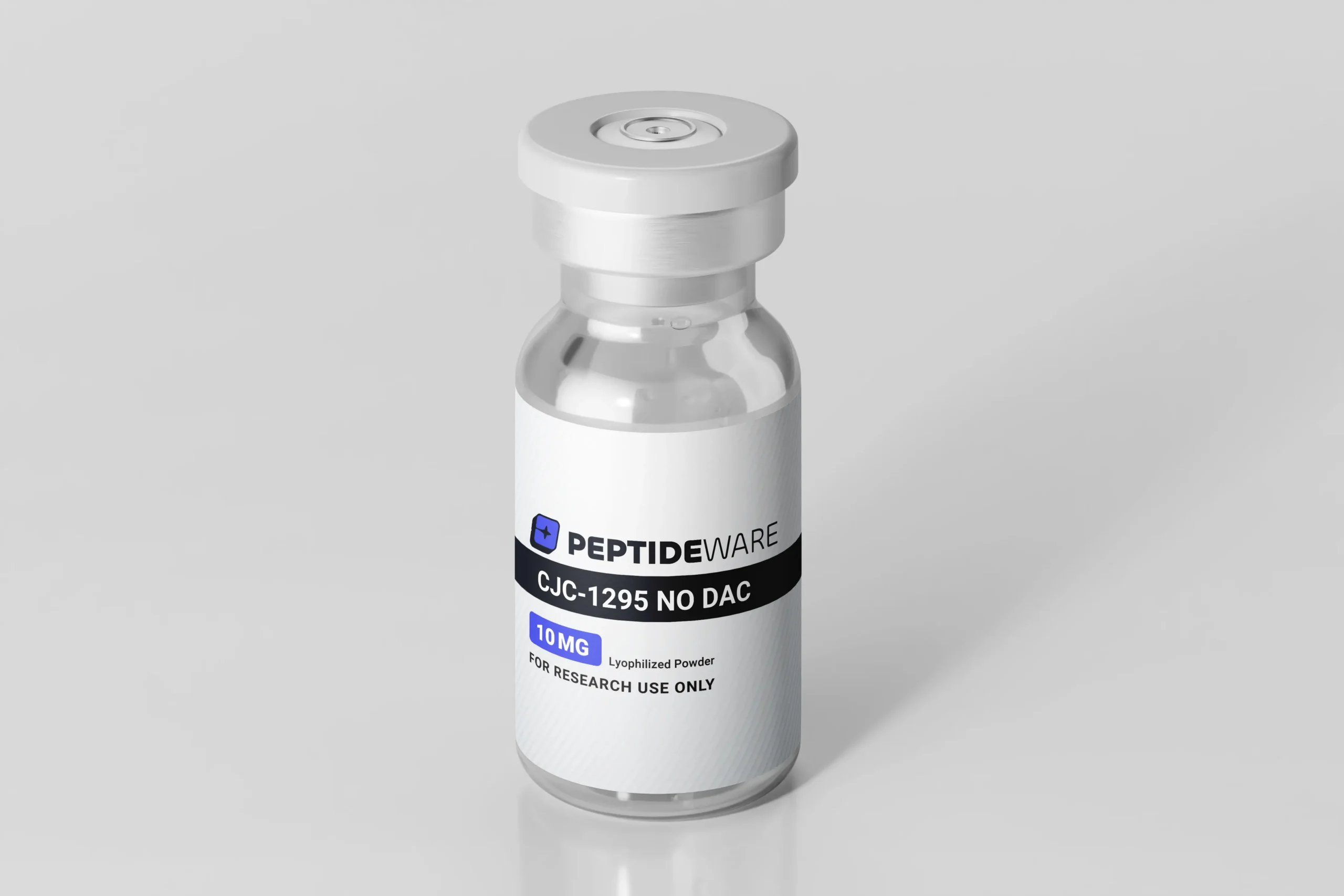


Description
What Is CJC-1295 (Mod GRF 1-29)?
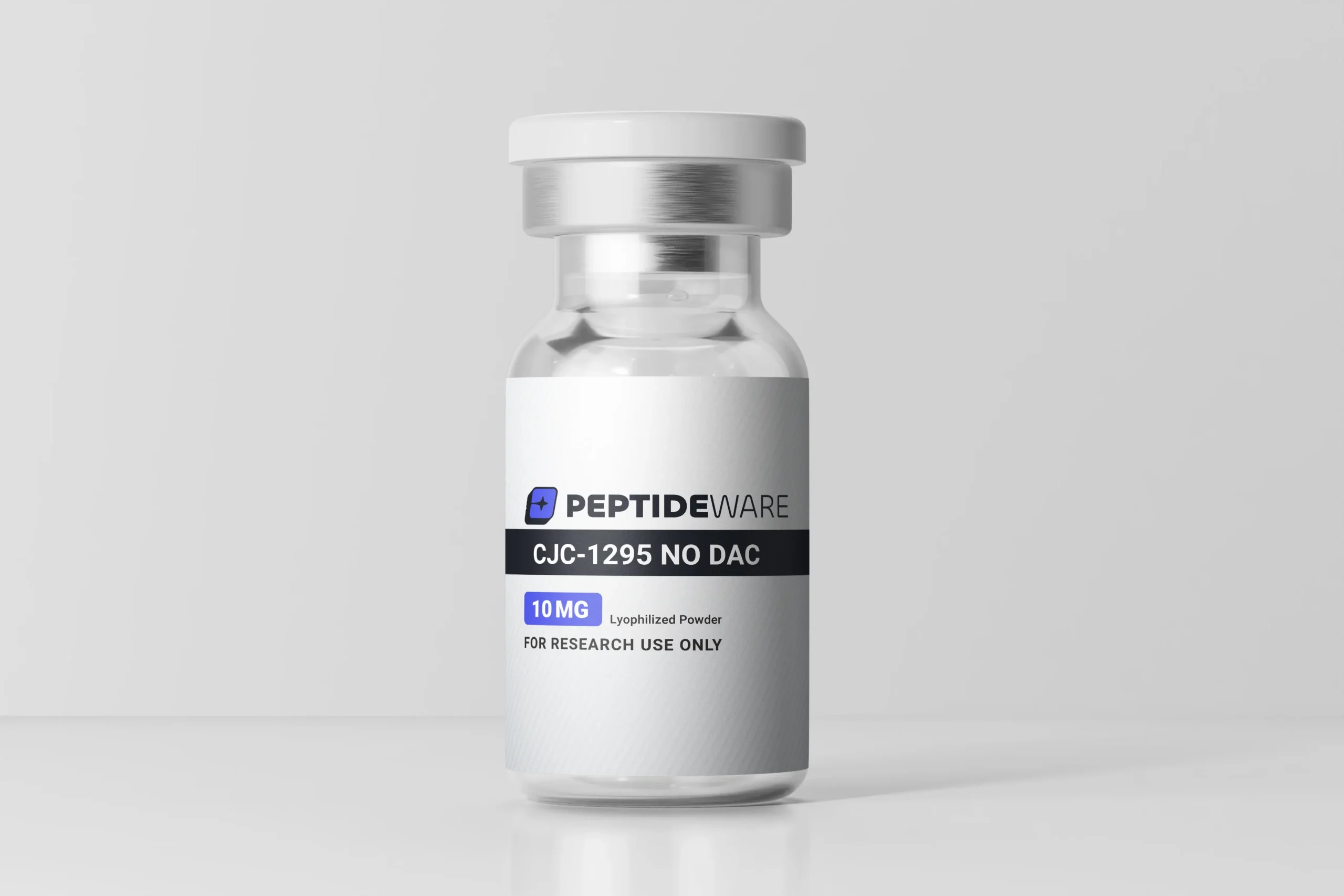
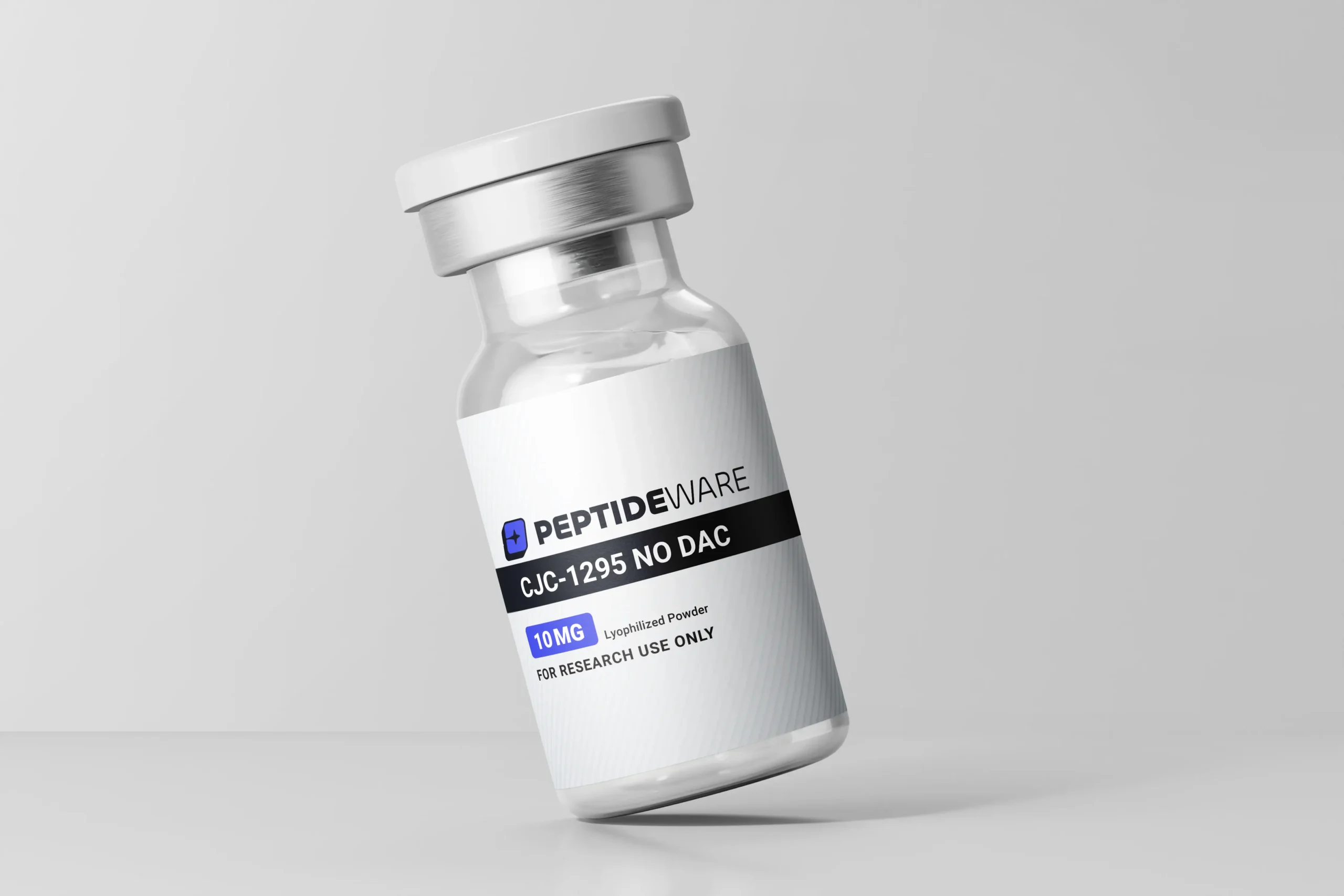
CJC-1295 No DAC (Mod GRF 1-29) is a tetrasubstituted 29-amino-acid analog of growth hormone releasing hormone (GHRH). Four amino acid substitutions confer resistance to enzymatic degradation while maintaining GHRH receptor affinity. Research focuses on pulsatile GH release and somatotropic axis modulation. HPLC-verified at 99%+ purity with COA.
Why Researchers Choose CJC-1295 No DAC
- Tetrasubstituted GHRH analog (Mod GRF 1-29) — specifically designed for pulsatile GH secretion research that mimics natural circadian patterns
- DPP-IV enzyme resistance: four strategic amino acid substitutions extend half-life to approximately 30 minutes in preclinical models
- Verified purity: ≥99% confirmed via third-party HPLC and mass spectrometry
- Ideal for acute research protocols: pulsatile release profile enables precise GH pulse modeling without sustained receptor desensitization
- Synergistic secretagogue research: published studies suggest enhanced GH output when combined with Ipamorelin in dual-pathway protocols
Frequently Asked Questions
What is CJC-1295 No DAC?
Also known as Mod GRF 1-29, CJC-1295 No DAC is a 29-amino acid growth hormone releasing hormone (GHRH) analog with four amino acid substitutions engineered for resistance to DPP-IV enzymatic degradation. Preclinical research indicates it produces pulsatile GH release in research models. This product is for laboratory research use only.
How do I reconstitute CJC-1295 No DAC?
Add 2 mL of bacteriostatic water to the 10 mg lyophilized vial for a concentration of 5 mg/mL. Follow standard reconstitution protocol — roll gently, do not shake. See our Reconstitution 101 guide for full instructions.
What purity verification is provided?
Every batch undergoes third-party HPLC analysis confirming ≥99% purity, along with mass spectrometry confirmation of molecular identity. A Certificate of Analysis (COA) is available for each lot.
How should I store CJC-1295 No DAC?
Lyophilized (powder): Store at -20°C for long-term storage or 2–8°C for short-term use. Reconstituted: Store at 2–8°C and use within 28 days. Protect from light and avoid repeated freeze-thaw cycles.
How does No DAC differ from With DAC?
CJC-1295 No DAC produces pulsatile (short burst) GH release with an approximately 30-minute half-life, making it ideal for research protocols that mimic natural GH secretion patterns. CJC-1295 With DAC produces sustained, continuous GH elevation with a multi-day half-life via albumin binding. The choice between them depends on whether the research design requires pulsatile or sustained GH modeling.
What published research exists on CJC-1295 No DAC?
CJC-1295 No DAC is indexed on PubMed under both “Mod GRF 1-29” and “CJC-1295.” Preclinical research covers GHRH analog mechanisms, pulsatile GH secretion modeling, and DPP-IV resistance pharmacokinetics. All available research is preclinical in nature.
Can CJC-1295 No DAC be combined with Ipamorelin in research?
Yes. This is one of the most studied GH secretagogue combinations in the literature. Published research suggests a synergistic “amplifier” effect on GH release when both the GHRH receptor (via CJC-1295) and the ghrelin receptor (via Ipamorelin) are activated simultaneously in preclinical models.
Further Reading
- Peptide Reconstitution 101 — Step-by-step guide to preparing lyophilized peptides for research
Technical Specifications
-
Synonyms: Mod GRF 1-29, Tetrasubstituted GRF 1-29
-
Sequence Length: 29 Amino Acids (Modified)
-
Purity: ≥99% (HPLC Verified)
-
Form: Lyophilized White Powder
-
Molar Mass: ~3367.9 g/mol
-
PubChem CID: 9924584
Mechanism: Natural Pulsatile Emulation
The primary research utility of CJC-1295 No DAC lies in its pharmacokinetic profile. Unlike the “DAC” (Drug Affinity Complex) variant, which binds to albumin for days creating a continuous “bleed” of growth hormone, Mod GRF 1-29 mimics the organism’s natural circadian rhythm.
-
Pulsatile Release: The approximate 30-minute half-life allows for distinct, high-amplitude spikes in Growth Hormone (GH) secretion followed by a return to baseline.
-
Pituitary Sensitivity: By avoiding the “GH bleed” associated with long-acting GHRH analogs, Mod GRF 1-29 minimizes the risk of downregulating GHRH receptors on the anterior pituitary. This makes it the preferred compound for studies attempting to emulate natural physiological signaling.
Research Synergy: The “GHRH + GHRP” Protocol
CJC-1295 No DAC is frequently utilized in conjunction with Ipamorelin or GHRP-6 to investigate neuroendocrine amplification. This pairing addresses the two rate-limiting factors of the somatotropic axis:
-
The Accelerator (CJC-1295 No DAC): Acts as a Growth Hormone Releasing Hormone (GHRH) agonist, binding to pituitary receptors to stimulate GH production.
-
The Brake Release (Ipamorelin): Acts as a Growth Hormone Releasing Peptide (GHRP), which mitigates the inhibitory effect of Somatostatin.
-
The Outcome: Research suggests that co-administration creates a synergistic effect where the total GH release is significantly greater than the sum of the two peptides administered individually.
This research peptide undergoes rigorous quality control and stability testing to ensure maximum integrity for scientific applications. Each batch is manufactured under strict laboratory conditions and verified through independent laboratory analysis.⚠️ FOR RESEARCH PURPOSES ONLY
This product is strictly for in-vitro laboratory research, analysis, and development. It is not intended for human consumption, injection, or therapeutic use. CJC-1295 No DAC is not a drug, dietary supplement, or food. All statements regarding the physiological mechanisms are based on preclinical animal and cell-culture studies and are provided for educational and informational purposes only.
Storage & Handling
Peptides require careful storage to maintain their integrity and research effectiveness. Lyophilized peptides should be stored in a cold, dry, dark environment to prevent degradation. For short-term use within 4 weeks, storage at 4°C is sufficient, while long-term storage requires temperatures below -20°C or -80°C for extended periods up to 2 years. Always protect peptides from light exposure and avoid repeated freeze-thaw cycles, which can compromise structural integrity and research results.