

Description
What Is GHK-Cu?
GHK-Cu (glycyl-L-histidyl-L-lysine copper complex) is a naturally occurring tripeptide (MW: 403.9 Da) first identified in human plasma in 1973. Published research shows it modulates over 4,000 human genes across collagen synthesis, antioxidant defense, and anti-inflammatory pathways. Plasma levels decline ~60% between ages 20 and 60. HPLC-verified at 99%+ purity with publicly available COA.
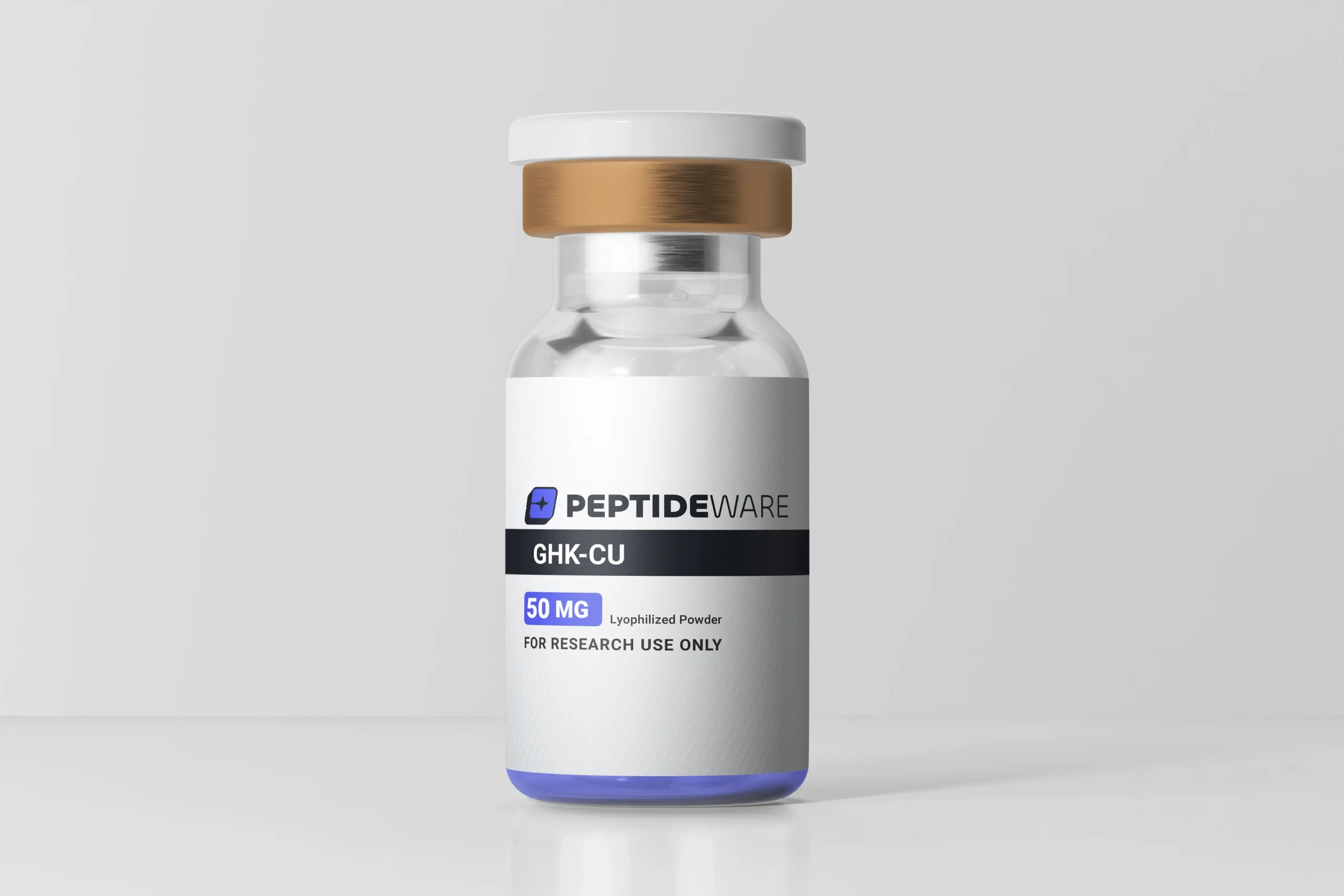
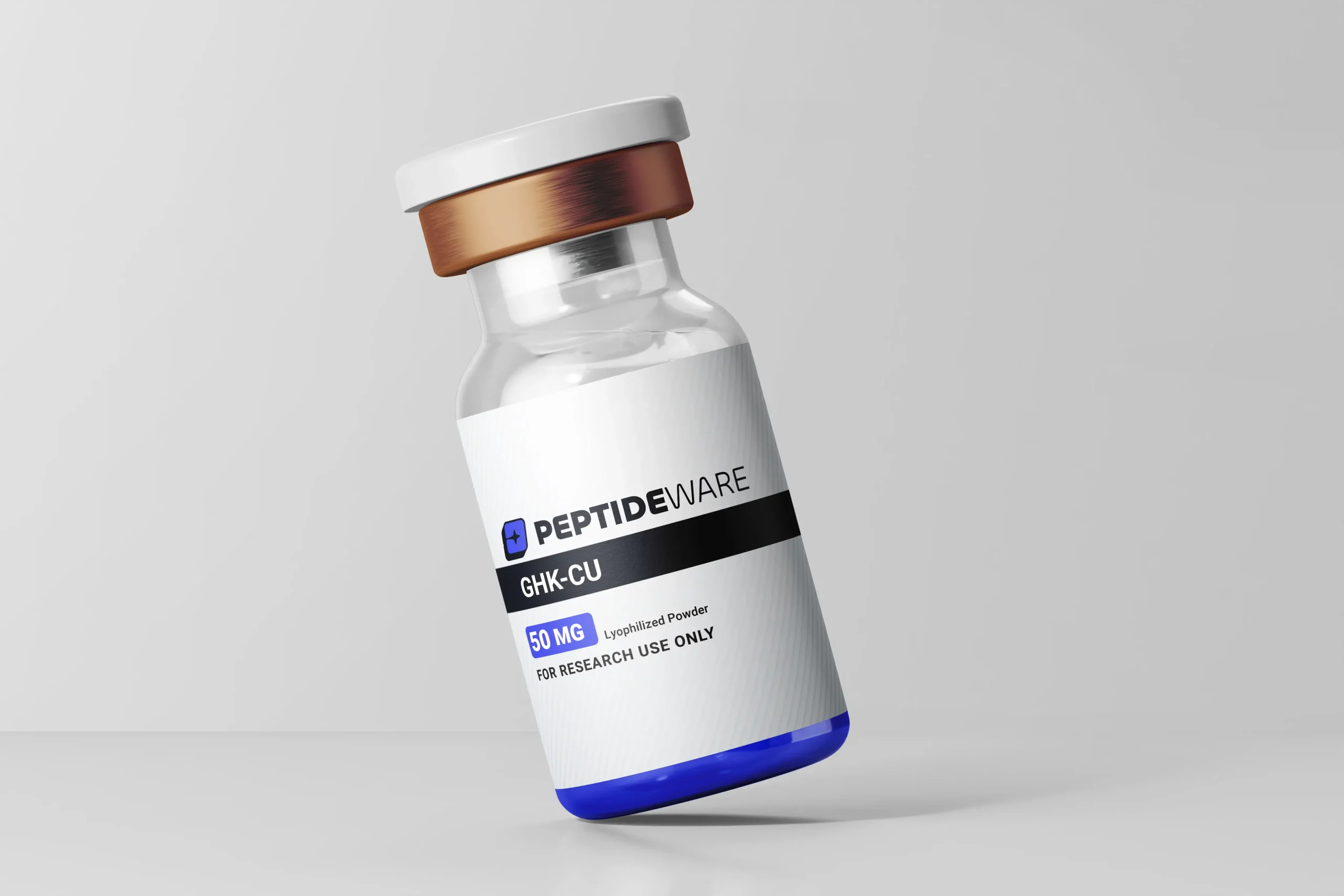
Why Researchers Choose GHK-Cu 50mg
- Naturally Occurring Copper Tripeptide — Glycyl-L-Histidyl-L-Lysine complexed with Cu²⁺, a peptide-copper compound found in human plasma and extensively documented in published literature.
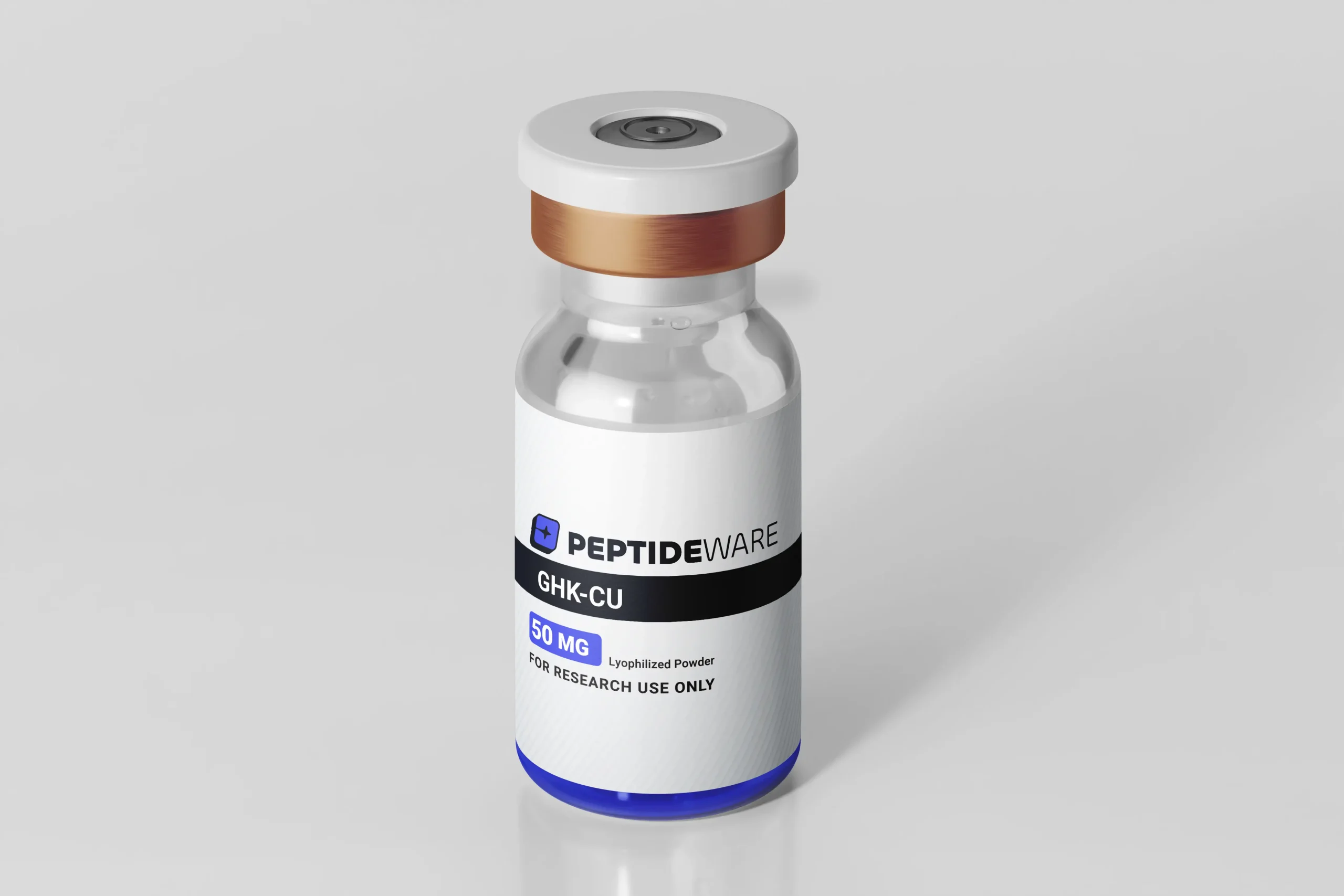
- 50mg High-Concentration Format — Engineered for advanced dermal remodeling and tissue regeneration research protocols requiring extended or high-volume experimentation.
- Characteristic Deep Blue Crystal — The distinctive appearance of the lyophilized powder confirms copper complexation and is easily identifiable in laboratory settings.
- ≥99% Purity Verified — Every batch undergoes independent HPLC and mass spectrometry analysis. Certificate of Analysis (COA) available upon request.
- Key Component in GLOW & KLOW Blends — Central to Peptideware’s multi-peptide regenerative research formulations alongside BPC-157 and TB-500.
Frequently Asked Questions
What is GHK-Cu?
GHK-Cu is a naturally occurring tripeptide-copper complex investigated for collagen modulation, dermal remodeling, and tissue regeneration in preclinical research. Published studies suggest it plays a role in extracellular matrix regulation. This product is for laboratory research only.
How do I reconstitute GHK-Cu?
Add 2–5 mL of bacteriostatic water to the 50 mg lyophilized vial depending on the desired concentration. Due to the dense deep blue crystal, allow several minutes for dissolution with gentle rotation. See our Reconstitution 101 guide for detailed protocols.
How is purity verified?
Each batch is verified at ≥99% purity via independent HPLC analysis and mass spectrometry. The characteristic deep blue crystal appearance further confirms copper complexation. A Certificate of Analysis (COA) is available for every lot.
What are the recommended storage conditions?
Lyophilized: store at -20°C for long-term preservation or 2–8°C for short-term use. Reconstituted solution: keep at 2–8°C and use within 28 days. Avoid repeated freeze-thaw cycles.
How does GHK-Cu differ from BPC-157 in research applications?
GHK-Cu is primarily investigated for dermal and collagen remodeling via copper-dependent pathways, while BPC-157 research focuses on systemic cytoprotection and angiogenic signaling. Preclinical research indicates they operate through different tissue targets with complementary mechanisms.
What published research exists on GHK-Cu?
There is extensive PubMed-indexed literature on copper peptides covering collagen synthesis, wound modeling, and matrix metalloproteinase regulation. All referenced research is preclinical and provided for educational purposes only.
Can GHK-Cu be used in combination research protocols?
Yes. GHK-Cu is included in the GLOW Blend (with BPC-157 + TB-500) and the KLOW Blend (with BPC-157 + TB-500 + KPV) for multi-pathway regenerative research designs.
Further Reading
The 50mg Research Advantage
Unlike standard 10mg or 20mg preparations, this 50mg High-Concentration Vial is specifically engineered for extended research protocols and high-volume experimentation.
-
Protocol Efficiency: Ideal for laboratories conducting long-term studies requiring repeated administration without the variability introduced by reconstituting multiple smaller vials.
-
Cost-Effective Analysis: Designed for “high-throughput” screening or studies requiring higher molar concentrations, allowing for broader data collection per unit.
Mechanism of Action: Dermal Remodeling & ECM Support
GHK-Cu is the subject of extensive investigation regarding its ability to modulate the Extracellular Matrix (ECM). Current research focuses on three primary pathways:
-
Collagen Synthesis: Studies suggest GHK-Cu may stimulate the upregulation of Collagen Type I and III, the structural proteins essential for skin density and tensile strength.
-
Structural Integrity: The peptide is investigated for its potential to promote the synthesis of Elastin and Glycosaminoglycans (GAGs), which are critical for tissue elasticity and hydration.
-
Enzymatic Modulation: Research indicates GHK-Cu may modulate the activity of Matrix Metalloproteinases (MMPs) and their tissue inhibitors (TIMPs). This balance is crucial for removing damaged proteins and facilitating healthy tissue regeneration without excessive scarring.
GHK-Cu is often combined with BPC-157 and TB-500, which is also known as GLOW Stack
This research peptide undergoes rigorous quality control and stability testing to ensure maximum integrity for scientific applications. Each batch is manufactured under strict laboratory conditions and verified through independent laboratory analysis.⚠️ FOR RESEARCH PURPOSES ONLY
This product is strictly for in-vitro laboratory research, analysis, and development. It is not intended for human consumption, topical application (cosmetic use), injection, or therapeutic use. All statements regarding the physiological mechanisms of GHK-Cu are based on preclinical studies and are provided for educational purposes only.
Technical Note: Reconstitution & Solubility
Important Handling Instruction: Due to the high density of 50mg of lyophilized powder within a standard vial, reconstitution requires precise handling.
-
Solvent Volume: Researchers may need to utilize a higher volume of bacteriostatic water (e.g., 2mL to 3mL) compared to standard peptides to ensure full saturation.
-
Dissolution Time: The “Deep Blue Crystal” is dense. Allow the vial to sit for several minutes after adding solvent. Gentle rotation (swirling) is recommended to facilitate complete dissolution. Do not shake vigorously, as this may degrade the peptide structure.
Storage & Handling
Peptides require careful storage to maintain their integrity and research effectiveness. Lyophilized peptides should be stored in a cold, dry, dark environment to prevent degradation. For short-term use within 4 weeks, storage at 4°C is sufficient, while long-term storage requires temperatures below -20°C or -80°C for extended periods up to 2 years. Always protect peptides from light exposure and avoid repeated freeze-thaw cycles, which can compromise structural integrity and research results.