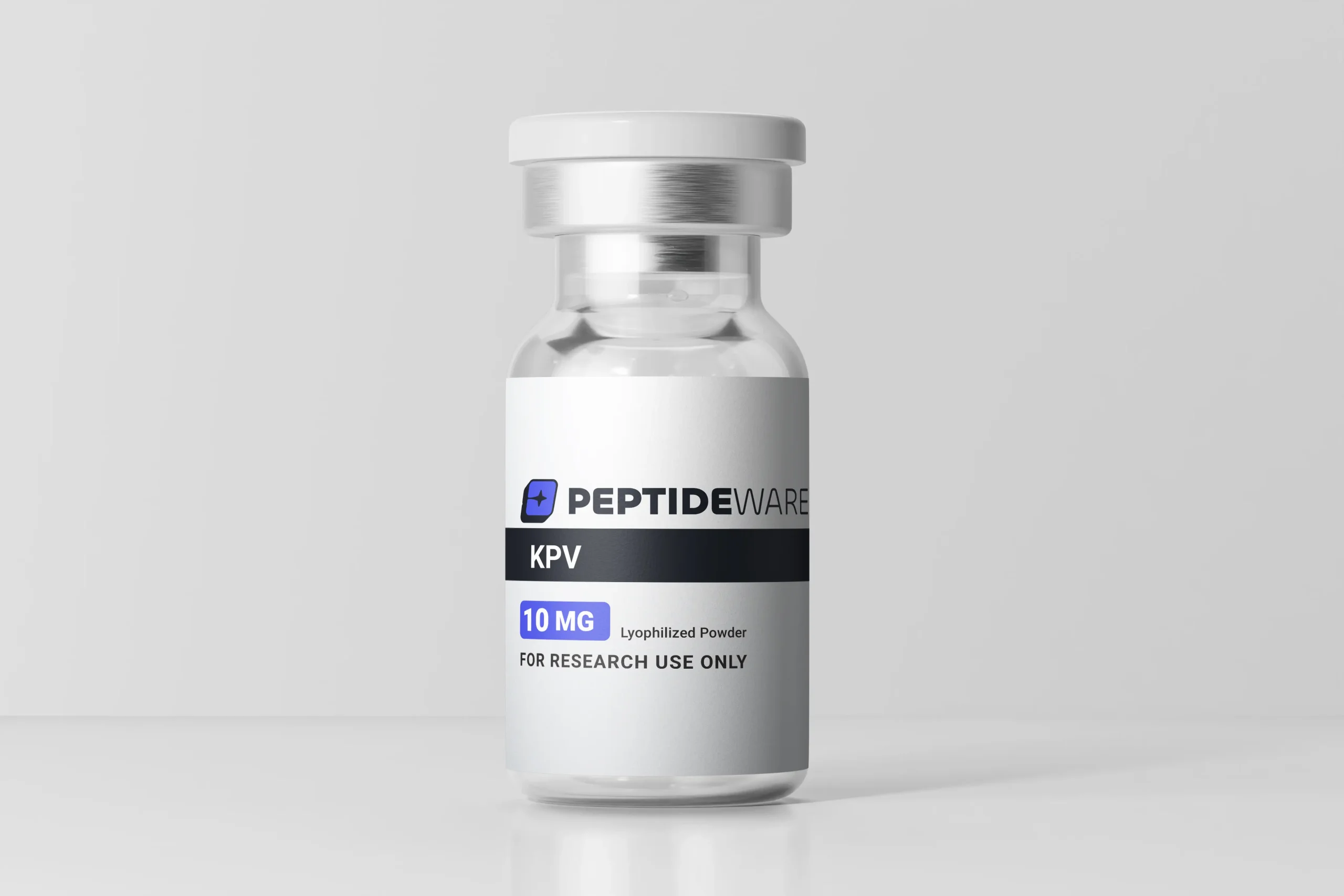


Description
What Is KPV?
KPV (Lys-Pro-Val) is a synthetic C-terminal tripeptide fragment of alpha-melanocyte stimulating hormone. Unlike full-length alpha-MSH or Melanotan II, KPV does not bind MC1R or cause pigmentation. Research focuses on anti-inflammatory effects via NF-kB pathway inhibition and direct antimicrobial activity. HPLC-verified at 99%+ purity with publicly available COA.
Why Researchers Choose KPV
- C-Terminal Tripeptide Fragment of α-MSH — Lysine-Proline-Valine, the bioactive anti-inflammatory pharmacophore derived from Alpha-Melanocyte Stimulating Hormone.
- Anti-Inflammatory Research Without Pigmentation — Published studies suggest KPV does not activate the melanocortin receptor (MC1R), eliminating pigmentation variables in research protocols.
- Potent Antimicrobial Properties — Preclinical research indicates direct antimicrobial activity against specific pathogens, supporting innate host defense investigations.
- ≥99% Purity Verified — Every batch undergoes third-party HPLC and mass spectrometry analysis. Certificate of Analysis (COA) available upon request.
- Key Differentiating Component in KLOW Blend — The addition of KPV is what distinguishes the KLOW formulation from the GLOW Blend, adding anti-inflammatory and antimicrobial research pathways.
Frequently Asked Questions
What is KPV?
KPV is a synthetic C-terminal tripeptide (Lysine-Proline-Valine) derived from α-MSH. It is investigated for anti-inflammatory and antimicrobial properties without MC1R pigmentation effects in preclinical research. This product is for laboratory research only.
How do I reconstitute KPV?
Add 2 mL of bacteriostatic water to the 10 mg lyophilized vial for a 5 mg/mL concentration. Standard reconstitution protocol applies. See our Reconstitution 101 guide for detailed instructions.
How is purity verified?
Each batch is verified at ≥99% purity via independent HPLC analysis and mass spectrometry. A Certificate of Analysis (COA) is available for every lot.
What are the recommended storage conditions?
Lyophilized: store at -20°C for long-term preservation or 2–8°C for short-term use. Reconstituted solution: keep at 2–8°C and use within 28 days. Avoid repeated freeze-thaw cycles.
How does KPV differ from Melanotan II?
KPV does not bind MC1R and has no pigmentation research applications. Published studies suggest it focuses on anti-inflammatory and antimicrobial pathways via NF-κB modulation. Melanotan II is a full melanocortin agonist with broad MC receptor activity — a fundamentally different research compound.
What published research exists on KPV?
KPV is PubMed-indexed under KPV and α-MSH fragments. Preclinical research covers NF-κB modulation, antimicrobial activity, and gut inflammation models. All referenced research is provided for educational purposes only.
Can KPV be used in combination research protocols?
Yes. KPV is the key differentiating addition in the KLOW Blend (GHK-Cu + BPC-157 + TB-500 + KPV). Published studies suggest the anti-inflammatory profile complements the regenerative properties of the other three peptides in multi-pathway research designs.
Further Reading
KPV 10mg is a synthetic C-terminal tripeptide fragment (Lysine-Proline-Valine) derived from the hormone Alpha-Melanocyte Stimulating Hormone ($alpha$-MSH). Unlike the full-length hormone or analogs like Melanotan II, KPV does not bind to the MC1R receptor responsible for pigmentation, making it a non-pigmentary reagent.
This peptide is the subject of rigorous investigation regarding its potent anti-inflammatory, antimicrobial, and cytoprotective properties, particularly within mucosal tissues and the integumentary system.
Mechanism: NF-κB Inhibition & Host Defense
KPV retains the specific anti-inflammatory pharmacophore of $alpha$-MSH but exhibits a distinct mechanism of action focused on immune modulation.
-
NF-κB Inhibition: Research demonstrates that KPV enters cells (often via the PepT1 transporter in intestinal models) and interacts directly with the nucleus to inhibit the Nuclear Factor-kappa B (NF-κB) pathway. This downregulation suppresses the transcription of pro-inflammatory cytokines such as TNF-$alpha$, IL-6, and IL-1$beta$.
-
Antimicrobial Activity: In vitro studies have highlighted KPV’s direct antimicrobial effects against specific pathogens, including Staphylococcus aureus and Candida albicans, suggesting a role in innate host defense.
-
Mast Cell Modulation: The peptide is also investigated for its ability to stabilize mast cells, potentially reducing histamine release in allergic response models.
This research peptide undergoes rigorous quality control and stability testing to ensure maximum integrity for scientific applications. Each batch is manufactured under strict laboratory conditions and verified through independent laboratory analysis.⚠️ FOR RESEARCH PURPOSES ONLY
This product is strictly for in-vitro laboratory research, analysis, and development. It is not intended for human consumption, injection, or therapeutic use. KPV is not a drug.
Storage & Handling
Peptides require careful storage to maintain their integrity and research effectiveness. Lyophilized peptides should be stored in a cold, dry, dark environment to prevent degradation. For short-term use within 4 weeks, storage at 4°C is sufficient, while long-term storage requires temperatures below -20°C or -80°C for extended periods up to 2 years. Always protect peptides from light exposure and avoid repeated freeze-thaw cycles, which can compromise structural integrity and research results.