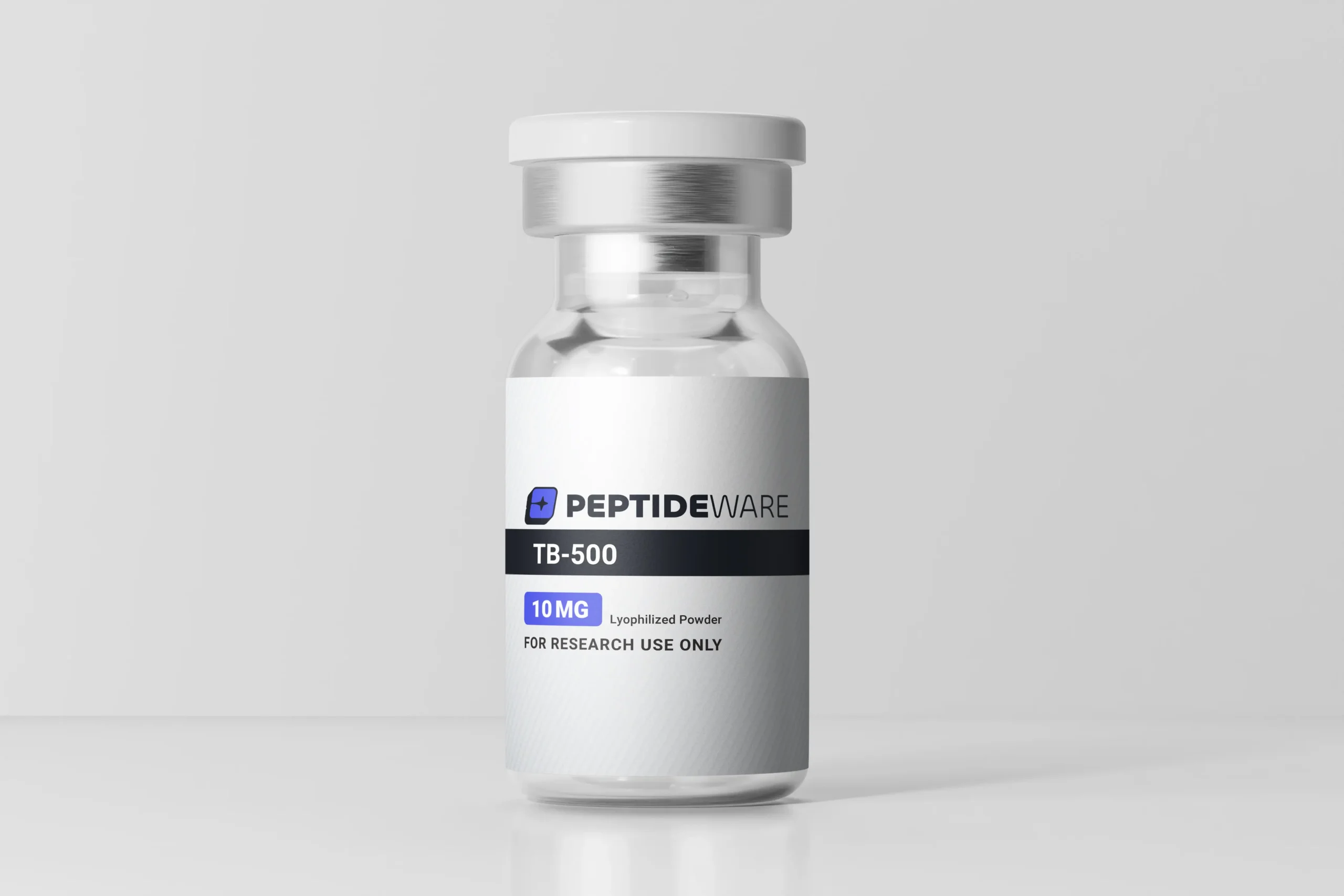
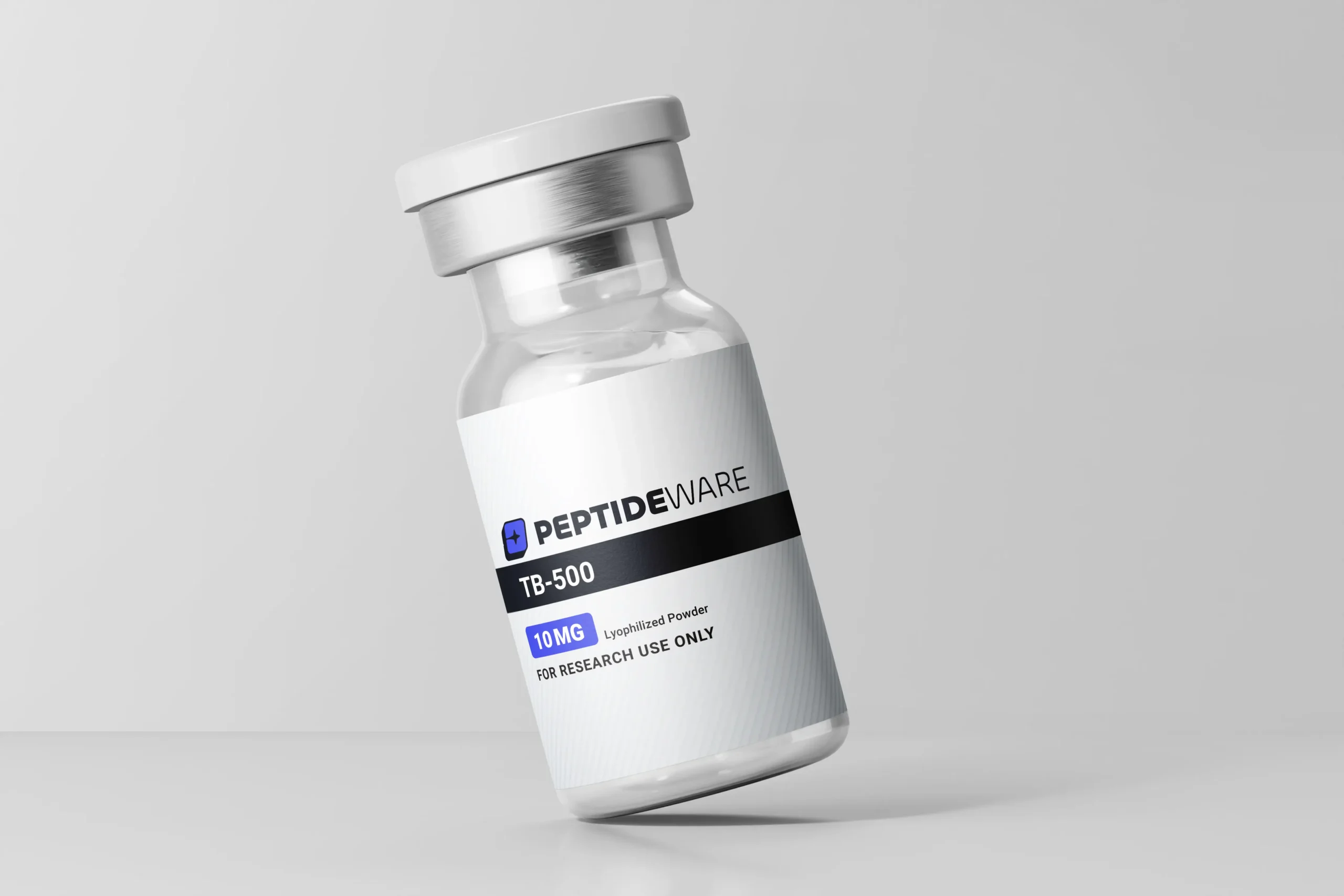
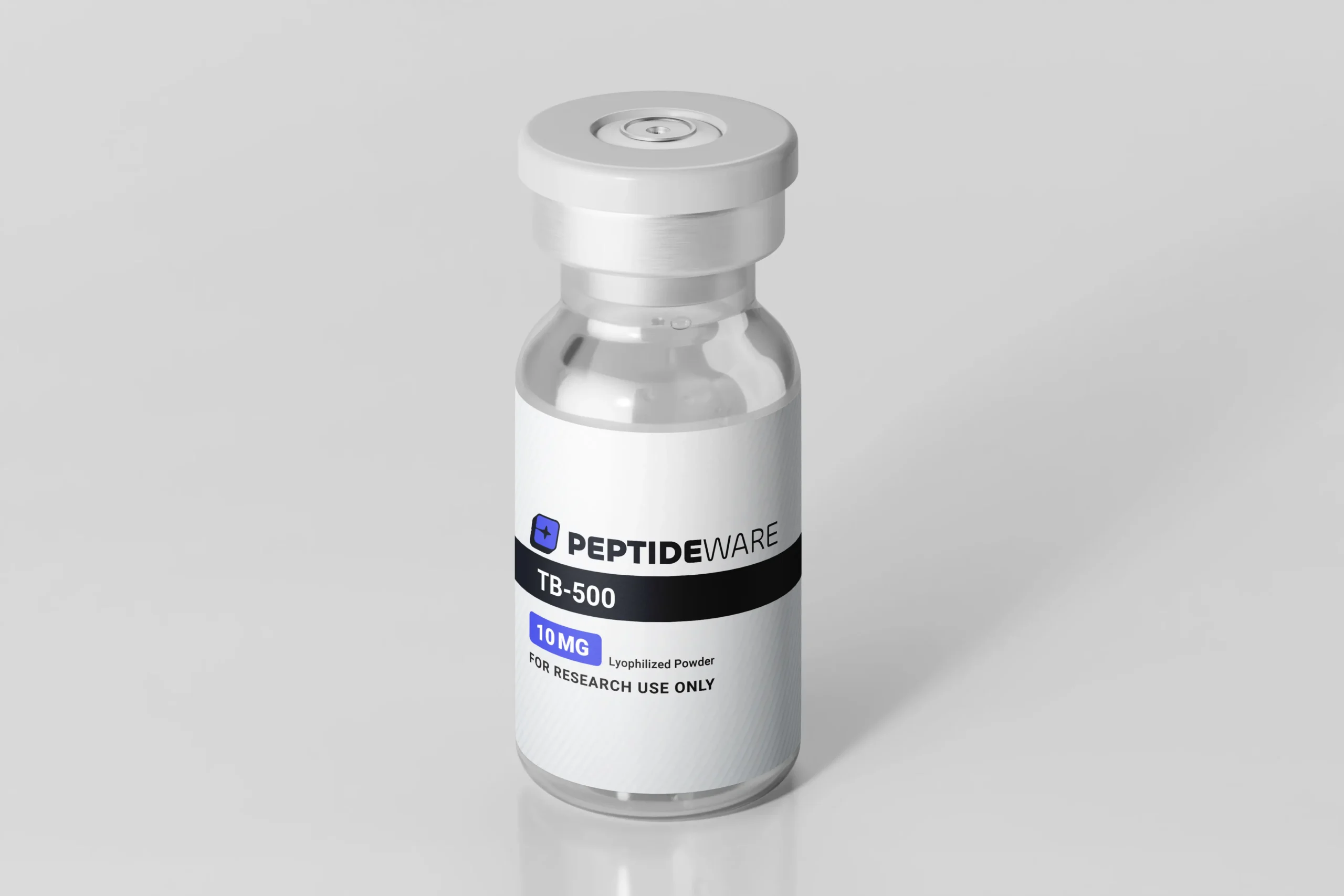


Description
Mechanism of Action: Actin Sequestration
The primary research interest in TB-500 lies in its ability to interact with G-actin (globular actin).
-
Actin Buffering: In laboratory models, TB-500 acts as a major actin-sequestering molecule. By binding to monomeric G-actin, it maintains a reservoir of actin monomers preventing premature polymerization.
-
Cell Migration: When a cell receives a signal to migrate (chemotaxis), TB-500 releases the sequestered actin. This rapid availability allows for the immediate polymerization of actin filaments (F-actin) at the leading edge of the cell, facilitating the formation of lamellipodia and filopodia. This process is critical for researching accelerated cell motility toward sites of tissue damage.
Synergistic Research: The BPC-157 Pairing
TB-500 is frequently co-administered with BPC-157 in tissue repair studies. The theoretical synergy is often described in research literature through a functional division of labor:
-
Vascular Infrastructure (BPC-157): Research suggests BPC-157 promotes angiogenesis (the formation of new blood vessels) via the VEGF pathway, effectively “building the road” to the injury site.
-
Cellular Mobilization (TB-500): TB-500 is observed to drive the migration of endothelial and keratinocyte cells, effectively “mobilizing the workforce” to travel down that road.
-
Conclusion: The combined administration is investigated for its potential to simultaneously support blood flow and cellular recruitment, offering a comprehensive model for soft tissue analysis.
- GLOW: This is apart of the GLOW Peptide Stack (BPC-157 + TB-500 + GHK-Cu) – 70mg Blend
This research peptide undergoes rigorous quality control and stability testing to ensure maximum integrity for scientific applications. Each batch is manufactured under strict laboratory conditions and verified through independent laboratory analysis.
⚠️ FOR RESEARCH PURPOSES ONLY
This product is strictly for in-vitro laboratory research, analysis, and development. It is not intended for human consumption, injection, or therapeutic use. TB-500 is not a drug, dietary supplement, or food. All statements regarding the physiological mechanisms of Thymosin Beta-4 are based on preclinical animal and cell-culture studies and are provided for educational and informational purposes only.
Storage and Handling:
Peptides require careful storage to maintain their integrity and research effectiveness. Lyophilized peptides should be stored in a cold, dry, dark environment to prevent degradation. For short-term use within 4 weeks, storage at 4°C is sufficient, while long-term storage requires temperatures below -20°C or -80°C for extended periods up to 2 years. Always protect peptides from light exposure and avoid repeated freeze-thaw cycles, which can compromise structural integrity and research results.
Technical Specifications: Thymosin Beta-4
This product contains the correct full-sequence Thymosin Beta-4 data.
| Specification | Detail |
| Peptide Sequence | Ac-Ser-Asp-Lys-Pro-Asp-Moe-Ala-Glu-Ile-Glu-Lys-Phe-Asp-Lys-Ser-Klys-Leu-Lys-Lys-Thr-Ete-Thr-Gln-Glu-Lys-Asn-Pro-Leu-Pro-Ser-Lys-Glu-Thr-Ile-Glu-Gln-Glu-Lys-Gln-Ala-Gly-Eshe-Ser (43 Amino Acids) |
| CAS Number | 77591-33-4 |
| Molecular Formula | C₂₁₂H₃₅₀N₅₆O₇₈S |
| Molar Mass | 4963.5 g/mol |
| Purity | ≥99% (HPLC Verified) |
| Form | Lyophilized White Powder |