


Last Updated: April 14, 2026
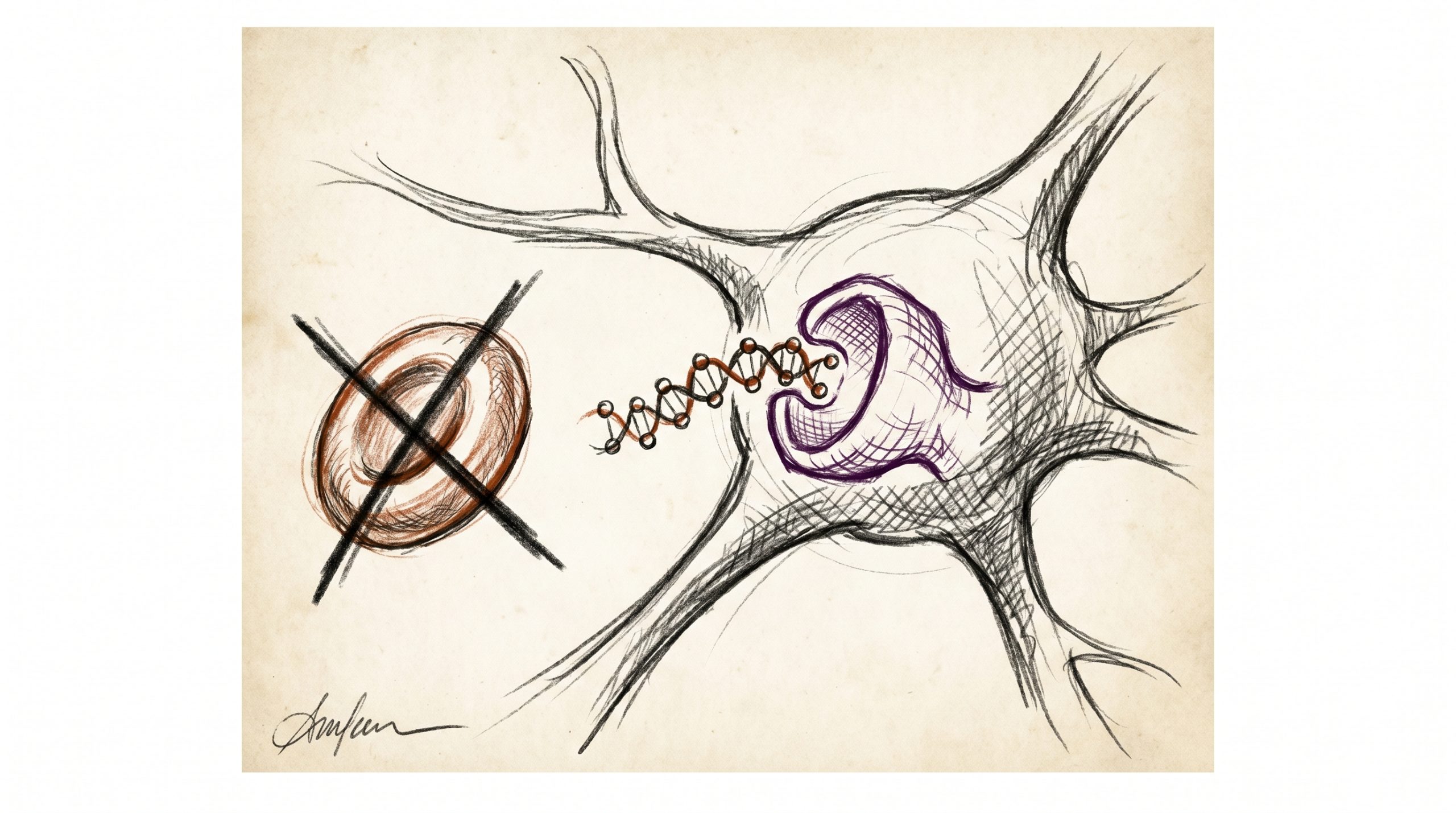
ARA-290, also known as Cibinetide, is an 11-amino-acid peptide derived from the tertiary structure of erythropoietin (EPO). Unlike EPO itself, ARA-290 research focuses exclusively on the non-hematopoietic, tissue-protective properties of the erythropoietin molecule. It was engineered to bind selectively to the innate repair receptor (IRR), a heteromeric complex composed of the EPO receptor (EPOR) and the common beta subunit (βcR, CD131), without activating the homodimeric EPOR that drives red blood cell production. This receptor selectivity makes ARA-290 a focused research tool for studying inflammation resolution, neural tissue recovery, and metabolic signaling in preclinical models—without the hematopoietic confounders that classical EPO introduces. This guide summarizes mechanism, receptor biology, published neuroprotection and small-fiber neuropathy research, reconstitution protocols, and comparative context for laboratory investigators. All content is intended for researchers, scientists, and licensed laboratory professionals.
Quick Facts
- Sequence: Pyr-Glu-Gln-Leu-Glu-Arg-Ala-Leu-Asn-Ser-Ser (11 residues)
- Molecular weight: ~1,257 Da
- Amino acid count: 11 residues
- Receptor: Innate Repair Receptor (EPOR / βcR heteromer)
- Other names: Cibinetide, pHBSP
- Typical research format: Lyophilized powder, vialed
- Storage (lyophilized): -20°C, protected from light
- Storage (reconstituted): 2–8°C, use within 14–21 days
- Solubility: Bacteriostatic water or sterile saline
What Is ARA-290?
ARA-290 is a short linear peptide modeled on a specific surface region of erythropoietin known as helix B. The peptide was designed by Michael Brines and colleagues at the Araim Pharmaceuticals laboratory to reproduce the tissue-protective activity of EPO while eliminating its erythropoietic function. The resulting 11-residue sequence binds the innate repair receptor—a heteromeric complex of the EPO receptor and the common beta subunit shared with GM-CSF and IL-3—without engaging the homodimeric EPO receptor responsible for red blood cell production. This structural separation gives ARA-290 research a distinct focus: anti-inflammatory signaling, neural tissue repair, and metabolic tolerance in preclinical models, entirely decoupled from hematopoietic confounders. Published research in peer-reviewed journals including Molecular Medicine and the European Journal of Pharmacology has characterized its receptor kinetics, anti-inflammatory cytokine effects, and neuroprotective activity in cellular and rodent models.
How Does ARA-290 Work?
The mechanism of ARA-290 centers on selective activation of the innate repair receptor (IRR), formed by heterodimerization of the erythropoietin receptor (EPOR) and the common beta subunit (CD131, also called βcR). This receptor is expressed on immune cells, neurons, endothelial cells, and other tissue types in response to injury or metabolic stress. Unlike the homodimeric EPOR that drives erythropoiesis through JAK2/STAT5 signaling, the IRR engages a distinct downstream cascade involving PI3K/Akt and MAPK pathways that modulate cell survival, attenuate pro-inflammatory cytokine production (TNF-α, IL-6), and promote tissue repair. Preclinical research indicates ARA-290 binds the IRR with selectivity that excludes erythropoiesis, making it a tool compound for isolating the cytoprotective arm of EPO biology. Published studies suggest this receptor-selective architecture produces anti-inflammatory, neuroprotective, and metabolic-tolerance effects in cellular and rodent models without the hematopoietic or thrombotic considerations that limit EPO research utility.
What Does Published Research Show?
ARA-290 research has been published across neuroprotection, small-fiber neuropathy, metabolic signaling, and inflammation resolution domains. A double-blind Phase 2 clinical investigation in sarcoidosis-associated small-fiber neuropathy by Dahan, Brines, and colleagues (PMID 23552722) reported improvements in neuropathic symptom scales and corneal nerve fiber density in the study population. Additional research on ARA-290 in diabetic neuropathy was published by Brines and colleagues (PMID 25343262) describing reductions in neuropathic symptom severity over 28 days. Preclinical research indicates ARA-290 attenuates ischemic neural injury, reduces inflammatory cytokine release, and supports axonal regeneration in rodent nerve-injury models (PMID 24619575). Published research also explores its role in renal ischemia-reperfusion and metabolic tolerance models, making ARA-290 a multi-domain research tool for IRR biology.
How Is ARA-290 Reconstituted and Stored for Research?
ARA-290 is supplied as a lyophilized powder and must be reconstituted before laboratory application. The standard protocol is to inject bacteriostatic water (0.9% benzyl alcohol) or sterile 0.9% saline slowly down the inner wall of the vial to avoid foaming and peptide shear. The vial is gently swirled—never shaken—until the powder fully dissolves into a clear solution. Typical working concentrations range from 1–5 mg/mL. Reconstituted ARA-290 should be stored at 2–8°C, protected from light, and used within 14–21 days for optimal stability. Lyophilized powder remains stable for approximately 24 months at -20°C, protected from light and moisture. Repeated freeze-thaw cycles of reconstituted solution should be avoided, as they degrade peptide integrity. All reconstitution should be performed under aseptic laboratory technique using calibrated research-grade pipettes and sterile consumables. ARA-290 is intended for laboratory and research purposes only.
IRR Signaling Pathway in Detail
The innate repair receptor activates downstream signaling cascades distinct from the erythropoietic receptor complex. On IRR engagement, ARA-290 triggers recruitment of Janus kinase 2 (JAK2) and subsequent activation of phosphoinositide 3-kinase (PI3K) and protein kinase B (Akt). This PI3K/Akt axis is associated with cell survival, anti-apoptotic gene transcription, and metabolic homeostasis. Parallel activation of mitogen-activated protein kinase (MAPK) pathways modulates pro-inflammatory cytokine production, with published research indicating attenuation of TNF-α, IL-6, and IL-1β expression in immune and tissue cells. Downstream, nuclear factor kappa B (NF-κB) signaling is moderated, shifting cellular programs toward resolution rather than amplification of inflammation. This signaling architecture differs fundamentally from the homodimeric EPOR pathway, which signals through JAK2/STAT5 to drive erythroid progenitor proliferation. Researchers use ARA-290 as a selective pharmacological probe for IRR-specific signaling in cellular and animal models of inflammation, ischemia, and neural injury.
Preclinical Research Context
Preclinical ARA-290 research spans neuroprotection, ischemia-reperfusion injury, diabetic nephropathy models, metabolic tolerance, and inflammation resolution. Published studies in rodent models of peripheral nerve injury indicate ARA-290 attenuates axonal degeneration and supports nerve-fiber integrity (PMID 24619575). Research in cellular models of ischemic injury demonstrates IRR-mediated reductions in apoptotic markers and attenuation of inflammatory cytokine release. Preclinical renal ischemia-reperfusion studies indicate tissue-protective effects on tubular architecture and renal function markers. Published studies in glucose-tolerance and metabolic-stress models suggest ARA-290 modulates inflammatory tone associated with insulin-resistant states. These preclinical datasets establish ARA-290 as a multi-domain IRR research tool, with documented effects in neural, renal, cardiovascular, and metabolic systems. The consistency of observed anti-inflammatory and cytoprotective effects across tissue types reflects the broad expression of the innate repair receptor during injury and stress states.
How Does ARA-290 Compare to Other Tissue-Protective Peptides?
ARA-290 occupies a distinct niche in peptide research relative to classical EPO analogs and other tissue-protective research peptides. Compared with recombinant human erythropoietin (rhEPO), ARA-290 research eliminates hematopoietic signaling as a confounding variable, isolating the cytoprotective IRR-mediated pathway. Compared with BPC-157 or TB-500, which engage distinct growth factor and actin-binding mechanisms, ARA-290 operates through a cytokine-receptor pathway, making it mechanistically orthogonal rather than redundant. Researchers often study ARA-290 alongside other cognitive or tissue-protective peptides; see our nootropic peptides guide for peptides engaging neural signaling, and the healing peptides guide for a broader comparison of regenerative research tools. The receptor-selective architecture of ARA-290 makes it uniquely useful for studies that require isolating anti-inflammatory and neuroprotective effects from hematopoietic signaling.
Design History and Structure-Activity Relationship
ARA-290 emerged from structure-function studies of erythropoietin conducted by Michael Brines and Anthony Cerami in the early 2000s. The research team identified that tissue-protective effects of EPO were anatomically and molecularly separable from erythropoietic effects. Helix B of the EPO molecule was identified as the surface interface responsible for innate repair receptor binding, while helices A and C were required for erythropoietic receptor engagement. By synthesizing the helix B surface peptide (pHBSP) and iteratively refining its sequence, researchers arrived at the 11-residue ARA-290/Cibinetide. The pyroglutamate N-terminus was introduced to resist aminopeptidase degradation, extending plasma stability. Published structure-activity research indicates the short linear sequence retains full IRR binding affinity while lacking the three-dimensional architecture required to engage the homodimeric EPO receptor. This structural dissection of EPO function into hematopoietic and tissue-protective domains represents a foundational advance in cytokine-receptor pharmacology and establishes ARA-290 as a canonical IRR probe.
Research Applications and Study Design Considerations
Researchers designing studies with ARA-290 consider several variables specific to IRR biology. In cellular models, typical working concentrations for receptor-binding assays range from 1–100 nanomolar, while downstream signaling endpoints (PI3K/Akt phosphorylation, cytokine release) are often assessed in the low-nanomolar range. Because the IRR is upregulated in response to injury or stress, published protocols often include an inflammatory or ischemic stimulus before ARA-290 exposure to capture receptor-dependent effects. In rodent models, published studies use short-course administration schedules reflecting the short plasma half-life but durable downstream signaling. Researchers studying inflammation resolution, neural tissue integrity, or metabolic-stress models should account for the receptor-selective architecture when interpreting comparative studies against full-length EPO. Laboratories integrating ARA-290 with other tissue-protective peptide studies often design experiments that isolate IRR-specific effects from overlapping pathways. All study design should adhere to institutional animal care and research protocols.
Handling, Solubility, and Laboratory Best Practices
ARA-290 is a small, linear peptide that is generally stable but still benefits from careful aseptic handling. Researchers typically reconstitute within a Class II biosafety cabinet or laminar flow hood using calibrated research-grade pipettes and sterile consumables. Bacteriostatic water with 0.9% benzyl alcohol is preferred for multi-day studies because the preservative extends reconstituted shelf-life; sterile saline or water are acceptable for single-use preparations. The pyroglutamate N-terminus confers resistance to aminopeptidase degradation and contributes to ambient stability, but researchers should still minimize freeze-thaw cycles of reconstituted material. For cell culture applications, published protocols indicate working concentrations in the low-nanomolar range for IRR-binding assays. Laboratories designing in-vivo studies typically aliquot reconstituted peptide into single-use sterile vials. Each lot should be verified against its certificate of analysis on arrival, and researchers should confirm reconstitution behavior before running long experiments. ARA-290 is intended for laboratory and research purposes only.
Frequently Asked Questions About ARA-290 Research
What is the amino acid sequence of ARA-290?
ARA-290 is an 11-amino-acid linear peptide with the sequence Pyr-Glu-Gln-Leu-Glu-Arg-Ala-Leu-Asn-Ser-Ser. The N-terminus is pyroglutamate (a cyclized glutamate residue that confers resistance to aminopeptidase degradation), and the molecule has a molecular weight of approximately 1,257 daltons. The sequence is derived from the surface-exposed helix B region of human erythropoietin, specifically residues 58–82 of the parent EPO molecule. This region was identified through structure-function studies as the interface responsible for EPO’s interaction with the innate repair receptor, rather than the homodimeric EPOR. Published research indicates this short sequence retains full binding affinity for the IRR while lacking the structural elements necessary to engage the erythropoietic pathway, producing receptor selectivity not achievable with full-length EPO.
What is the innate repair receptor (IRR)?
The innate repair receptor is a heteromeric cell-surface complex composed of the erythropoietin receptor (EPOR) and the common beta subunit (βcR, CD131). The common beta subunit is shared with receptors for granulocyte-macrophage colony-stimulating factor (GM-CSF) and interleukin-3 (IL-3), making it a central node in hematopoietic and immune signaling. Unlike the homodimeric EPOR complex, which signals through JAK2/STAT5 to drive erythropoiesis, the IRR signals through PI3K/Akt and MAPK pathways associated with cell survival, anti-inflammatory cytokine modulation, and tissue repair. The IRR is upregulated on immune cells, neurons, endothelial cells, and other tissue types during injury, ischemia, or metabolic stress. Published research indicates ARA-290 engages this repair-associated receptor complex with selectivity that excludes the erythropoietic receptor.
What does published research show for ARA-290 in small-fiber neuropathy?
Published research on ARA-290 in small-fiber neuropathy includes the double-blind Phase 2 investigation by Dahan, Brines, and colleagues (PMID 23552722) in adults with sarcoidosis-associated small-fiber neuropathy, which reported improvements in neuropathic symptom scales and corneal nerve fiber density by corneal confocal microscopy over 28 days. A subsequent study by Brines and colleagues (PMID 25343262) in adults with type 2 diabetes and metabolic neuropathic symptoms reported reductions in pain and sensory symptom scales. Preclinical research indicates the mechanism involves IRR-mediated attenuation of inflammatory cytokine release in peripheral nerve tissue and promotion of small-fiber axonal integrity. These studies established ARA-290 as a research tool for investigating IRR biology in small-fiber neuropathy models.
Does ARA-290 affect red blood cell production?
Preclinical and published clinical research indicates that ARA-290 does not stimulate erythropoiesis. This receptor selectivity is the central design feature distinguishing ARA-290 from classical erythropoietin analogs. The 11-amino-acid sequence lacks the structural elements of helix A and helix C that are required for homodimeric EPO receptor engagement, which is the receptor complex that drives red blood cell production through JAK2/STAT5 signaling. Instead, ARA-290 binds selectively to the heteromeric innate repair receptor. In published clinical studies, ARA-290 administration was not associated with changes in hematocrit, hemoglobin, or reticulocyte counts in study populations. This receptor selectivity makes ARA-290 research particularly useful for investigators seeking to isolate the anti-inflammatory and tissue-protective arm of EPO biology without hematopoietic or thrombotic considerations.
How is ARA-290 reconstituted for laboratory research?
ARA-290 is supplied as a lyophilized powder and requires reconstitution prior to laboratory application. The standard protocol is to introduce bacteriostatic water (0.9% benzyl alcohol) or sterile 0.9% saline slowly along the inner wall of the vial, allowing the diluent to wet the powder gradually. The vial is then swirled gently until the solution is clear and fully dissolved; vigorous shaking or vortexing is avoided because it can shear the peptide backbone. Typical reconstitution concentrations range from 1–5 mg/mL, chosen based on experimental design. Reconstituted ARA-290 should be stored at 2–8°C, protected from light, and used within 14–21 days. Lyophilized powder is stable at -20°C for approximately 24 months under dry, light-protected conditions. All reconstitution should use aseptic technique. ARA-290 is intended for laboratory and research purposes only.
What is the half-life of ARA-290?
Published pharmacokinetic research indicates that ARA-290 has a relatively short plasma half-life of approximately two minutes when administered parenterally in preclinical models. Despite this short circulating half-life, the pharmacodynamic effects persist substantially longer—on the order of hours to days—because receptor engagement and downstream signaling cascades continue after peptide clearance. This pharmacokinetic-pharmacodynamic disconnect is common among receptor-selective peptides that produce downstream transcriptional and anti-inflammatory effects outlasting the ligand’s presence in circulation. The pyroglutamate N-terminal modification confers resistance to aminopeptidase degradation, extending plasma stability modestly. For researchers designing time-course experiments, the relevant variable is downstream signaling duration rather than plasma half-life, a distinction emphasized in the published literature on IRR-mediated tissue-protective signaling.
Where can researchers purchase ARA-290 for laboratory use?
Peptideware supplies research-grade ARA-290 in lyophilized form, with purity documentation available. Each vial is manufactured under controlled conditions and shipped with specifications suitable for research procurement. The product is not intended for human or animal consumption, therapeutic use, or any clinical application. ARA-290 is supplied exclusively to licensed laboratories, research institutions, and qualified scientific investigators for in-vitro and preclinical research use. Researchers should verify product specifications, reconstitution guidance, and storage requirements before use, and consult primary literature and institutional research protocols when designing studies. Visit the ARA-290 product page for current inventory, specifications, and third-party analytical documentation. All purchases are subject to laboratory-use attestation.
Ready to Source Research-Grade ARA-290?
Peptideware supplies ARA-290 (10 mg vials) in lyophilized research format with purity documentation on request. Order ARA-290 for research here →
Research Disclaimer: All products are intended for laboratory and research purposes only. Not for human or animal consumption. These statements have not been evaluated by the FDA. The information in this guide summarizes published peer-reviewed research and does not constitute medical, clinical, or therapeutic guidance. Researchers should consult the primary literature and their institutional protocols before designing any laboratory study.


