


Last Updated: April 14, 2026
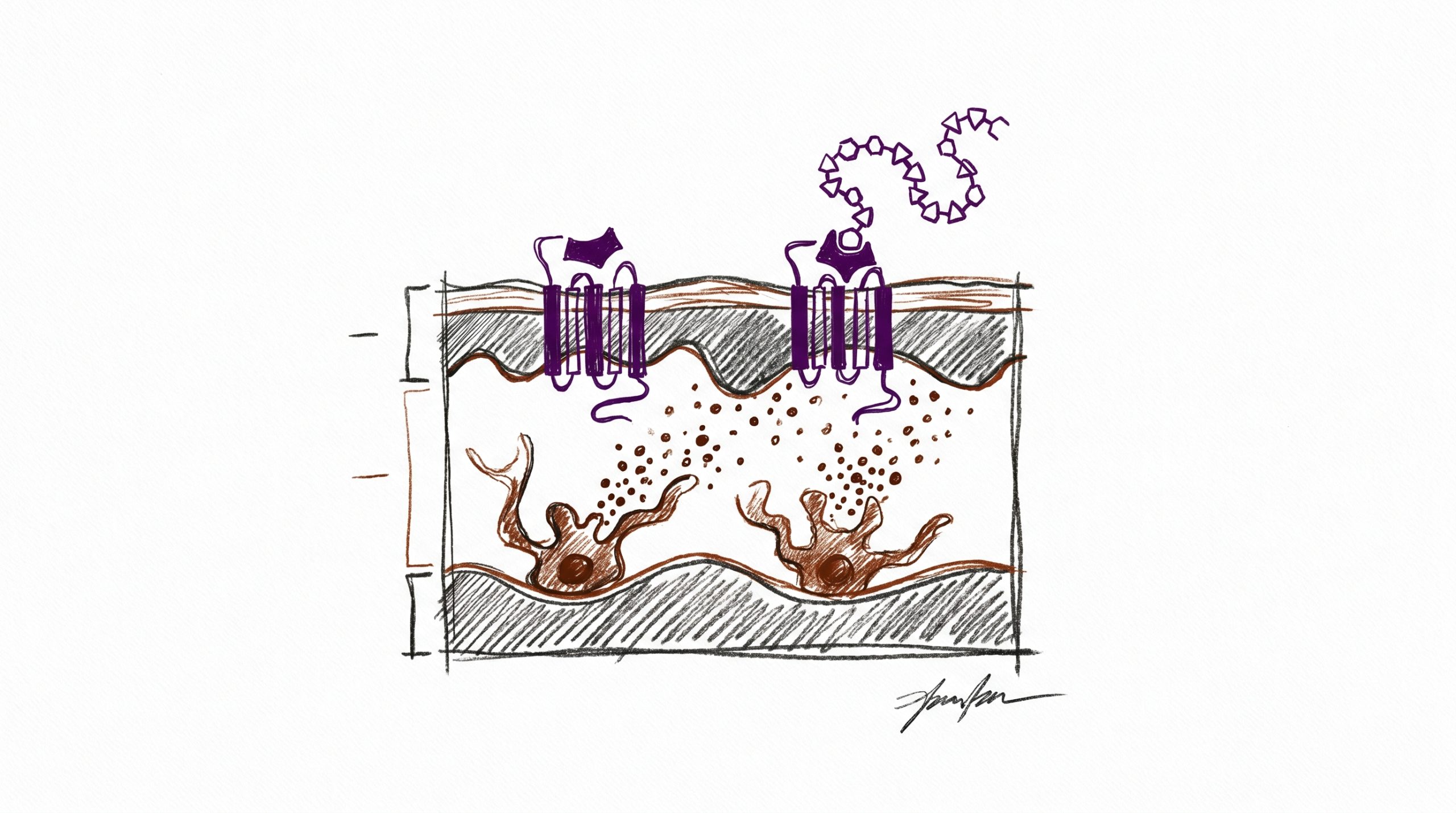
Melanotan II is a synthetic cyclic heptapeptide analog of alpha-melanocyte-stimulating hormone (α-MSH), engineered to exhibit enhanced metabolic stability and non-selective agonism at multiple melanocortin receptor subtypes. Developed in the late 1980s at the University of Arizona as part of a structure-activity program aimed at producing potent melanocortin receptor ligands, Melanotan II has become a widely referenced research tool for laboratory investigations of the melanocortin system. Melanotan II research spans pigmentation biology, neuroendocrine signaling, appetite and satiety regulation, sexual behavior circuitry, cardiovascular physiology, and inflammation. Published preclinical studies suggest that its cyclic lactam backbone confers resistance to proteolytic degradation and produces a substantially longer half-life than linear α-MSH, making it particularly useful for chronic dosing paradigms in rodent research protocols. As a non-selective pan-melanocortin agonist, Melanotan II engages MC1R through MC5R with comparable affinity in laboratory assays, providing investigators a broad pharmacological probe of the melanocortin receptor family.
Quick Facts
- Sequence: Ac-Nle-cyclo[Asp-His-D-Phe-Arg-Trp-Lys]-NH₂ (cyclic lactam)
- Molecular weight: ~1024.2 Da
- Classification: Non-selective melanocortin receptor agonist (MC1R-MC5R)
- Parent reference: α-MSH (cyclic analog with extended stability)
- Key developer institution: University of Arizona (Hruby laboratory, late 1980s)
- Primary research targets: MC1R (pigmentation), MC3R/MC4R (appetite, sexual behavior), MC5R (exocrine)
- Storage: Lyophilized at -20°C; reconstituted at 2-8°C
- Regulatory status: Research chemical; not for human or animal consumption
What is Melanotan II and how was it originally developed?
Melanotan II (MT-II) was synthesized as part of a rational peptide engineering program designed to overcome the limitations of native α-MSH, which suffers from rapid enzymatic degradation and short biological half-life. Researchers at the University of Arizona, led by Victor Hruby and colleagues, applied cyclic lactam constraint chemistry to lock the peptide backbone into a bioactive conformation that resembles the receptor-bound state of the parent hormone. The resulting structure—a seven-residue cyclic peptide incorporating a D-Phe residue at position 7 and an N-terminal norleucine (Nle) substitution—displays substantially improved metabolic stability and markedly enhanced potency at melanocortin receptors. Al-Obeidi et al. (PMID: 1304059) characterized the structural basis for this enhanced activity. Published studies established Melanotan II as a benchmark tool compound for melanocortin receptor research, and it has since been used in thousands of laboratory protocols investigating pigmentation, feeding behavior, and related physiological systems.
How does the cyclic lactam structure differ from linear α-MSH?
Native α-MSH is a 13-residue linear peptide containing the His-Phe-Arg-Trp (HFRW) pharmacophore flanked by additional N- and C-terminal residues. In aqueous solution, this linear structure samples many conformations, most of which are not optimal for receptor engagement, and its peptide bonds are readily cleaved by amino- and carboxypeptidases in biological fluids. Melanotan II’s cyclic lactam backbone—formed by an amide bond between the side chain of aspartate at position 2 and the side chain of lysine at position 7—pre-organizes the HFRW-like core into a receptor-preferred conformation. This rigidification yields roughly 1000-fold higher binding affinity at MC1R relative to α-MSH in published in vitro assays, along with substantially extended in vivo half-life. The D-Phe substitution at position 7 further protects the critical aromatic residue from chymotrypsin-like degradation. Together these modifications transform a labile endogenous hormone into a stable, potent research tool—but also produce non-selective receptor engagement that investigators must consider in experimental design.
How does Melanotan II engage the MC1-MC5 melanocortin receptors?
Preclinical research indicates that Melanotan II is a non-selective agonist at all five melanocortin receptor subtypes in mammalian systems. MC1R, expressed primarily on melanocytes, mediates pigmentation signaling through Gαs coupling and cAMP production. MC2R (the ACTH receptor) is generally considered less responsive to α-MSH-like ligands. MC3R and MC4R, expressed widely in the central nervous system, are implicated in feeding behavior, energy homeostasis, and sexual behavior circuitry, while MC5R is expressed in exocrine glands and peripheral tissues with putative roles in sebum production and thermoregulation. Melanotan II binds each of these receptors with comparable affinity in recombinant-receptor assays, which is both a strength (as a broad probe of melanocortin signaling) and a limitation (since it cannot be used to dissect receptor-specific effects without selective antagonists). Selective agonists such as setmelanotide (MC4R-selective) and afamelanotide (MC1R-focused) are often used in parallel laboratory protocols to complement Melanotan II research.
What does research reveal about Melanotan II and MC1R pigmentation signaling?
MC1R signaling drives eumelanin synthesis within melanocytes through a well-characterized cAMP–PKA–MITF–tyrosinase cascade. Published studies suggest that Melanotan II, via its potent MC1R agonism, robustly activates this pathway in cultured melanocytes and in rodent pigmentation research models. In laboratory protocols using C57BL/6 mice and other pigmented strains, administration of Melanotan II elevates tyrosinase expression and increases eumelanin content in hair and skin. Investigators studying variation in MC1R function—particularly in the context of red-hair-associated MC1R variants that reduce receptor signaling—use Melanotan II as a reference full agonist to characterize receptor pharmacology. Dorr et al. (PMID: 7720736) provided early preclinical documentation of Melanotan II’s melanotropic activity. These findings support its ongoing use as a pigmentation research reference compound in laboratory settings, where its well-characterized receptor engagement profile makes it a valuable positive control.
How do MC3R and MC4R contribute to appetite and neuroendocrine research?
The central melanocortin system—comprising hypothalamic POMC neurons that release α-MSH, and downstream MC3R/MC4R-expressing neurons—is one of the most extensively characterized circuits in energy homeostasis research. MC4R in particular is widely recognized as a critical regulator of food intake, and human genetic studies have identified MC4R mutations as the most common monogenic cause of severe obesity. Preclinical research indicates that Melanotan II, as an MC3R/MC4R agonist, suppresses feeding behavior in rodent models and produces reductions in cumulative food intake and body weight across chronic administration protocols. Published studies also examine effects on locomotor activity, energy expenditure, and metabolic substrate utilization. Beyond appetite, MC3R and MC4R signaling intersects with sexual behavior circuitry, grooming behavior, and autonomic output. Researchers studying obesity, feeding behavior, and central neuroendocrine integration frequently use Melanotan II in conjunction with selective MC4R agonists and antagonists to dissect pathway contributions. For broader context on aging and metabolic research, see the longevity peptides guide.
What cardiovascular and autonomic effects are observed in preclinical models?
Central melanocortin signaling engages autonomic outflow pathways, and published studies suggest that Melanotan II administration in rodents modulates blood pressure, heart rate, and sympathetic nervous activity in a dose-dependent fashion. These effects are thought to involve MC4R-expressing neurons in the paraventricular nucleus of the hypothalamus and brainstem autonomic centers. Research protocols examining cardiovascular physiology in rodents sometimes incorporate Melanotan II as a probe of melanocortin-mediated sympathetic drive. Investigators designing such studies typically use telemetry-based blood pressure and heart rate monitoring, combined with pharmacological receptor antagonism to establish receptor dependence. These cardiovascular observations underscore the importance of carefully selected dosing and control conditions in Melanotan II research and highlight why the compound is classified strictly as a research chemical. All cardiovascular research with Melanotan II should be performed in institutionally approved laboratory settings by qualified personnel following established animal welfare protocols.
Is Melanotan II currently available at Peptideware?
Availability of research peptides can fluctuate based on supply chain factors and quality control requirements. The Melanotan II 10mg research vial product page provides current stock status; researchers planning time-sensitive studies are encouraged to check the page directly or sign up for restock notifications if the product is listed as backordered. When in stock, each vial is supplied as a sterile lyophilized powder accompanied by a certificate of analysis documenting identity by mass spectrometry and purity by HPLC (typically ≥98%). Research laboratories that rely on Melanotan II for melanocortin system protocols may wish to maintain a modest buffer of inventory given the specialized nature of the compound and periodic supply constraints. All products at Peptideware are sold exclusively as research chemicals for laboratory use by qualified investigators; they are not intended and are not labeled for human or animal consumption.
How should Melanotan II be reconstituted and stored for research?
Melanotan II is shipped as a sterile lyophilized powder and should be stored at -20°C in its original sealed vial, protected from light and moisture, until reconstitution. For laboratory use, reconstitution is typically performed using bacteriostatic water for injection (0.9% benzyl alcohol), sterile water for injection, or phosphate-buffered saline, depending on the assay. Diluent should be added slowly against the inner wall of the vial, and the vial should be gently swirled—never shaken vigorously—until the powder is fully dissolved. Reconstituted solutions are commonly stored at 2-8°C and used within 28 days; aliquoting into single-use fractions minimizes freeze-thaw cycles. Stock concentrations of 1-10 mg/mL are typical. Label all vials with peptide name, concentration, diluent, date of reconstitution, and operator initials for traceability. All reconstitution and handling work should be performed in an appropriate laboratory environment by trained personnel. These products are for research purposes only and are not for human or animal consumption.
Frequently Asked Questions
1. What is Melanotan II and how does it differ from Melanotan I?
Melanotan II is a cyclic heptapeptide analog of α-MSH developed at the University of Arizona, characterized by high potency and non-selective agonism at all five melanocortin receptors (MC1R through MC5R). Melanotan I, by contrast, is a linear 13-residue peptide (also known as afamelanotide) that retains greater selectivity for MC1R and has been studied specifically for pigmentation-related research. MT-II’s cyclic lactam constraint delivers enhanced metabolic stability and substantially higher receptor affinity than α-MSH or Melanotan I, but produces broader pharmacology spanning appetite, sexual behavior, and cardiovascular endpoints. Researchers select between MT-I and MT-II based on whether they need pigmentation-focused MC1R research (MT-I favored) or broad pan-melanocortin receptor engagement (MT-II favored). Both compounds are sold as research chemicals intended for laboratory use only, not for human or animal consumption.
2. What is the half-life of Melanotan II in preclinical research models?
Published preclinical studies suggest that Melanotan II displays substantially greater metabolic stability than linear α-MSH, with reported plasma half-lives in rodent research models ranging from approximately 30 minutes to several hours depending on route of administration and assay methodology. This extended duration is attributable to the cyclic lactam backbone, which protects the peptide from amino- and carboxypeptidase degradation, as well as the N-terminal acetylation and C-terminal amidation that further stabilize the molecule. For research protocols requiring sustained receptor engagement, Melanotan II’s profile is generally preferred over linear α-MSH. Investigators conducting pharmacokinetic research should consult primary literature for their specific model and route. These pharmacokinetic characterizations are performed in laboratory research settings and do not constitute human pharmacokinetic data.
3. Which melanocortin receptors does Melanotan II engage and at what affinity?
Melanotan II is a non-selective agonist at MC1R, MC3R, MC4R, and MC5R, with more limited activity at MC2R (the dedicated ACTH receptor). Published in vitro studies report nanomolar to low-nanomolar EC50 values across MC1R, MC3R, MC4R, and MC5R in recombinant cell systems, substantially more potent than native α-MSH. This non-selective profile makes MT-II a useful broad probe of melanocortin signaling but requires careful interpretation when investigators aim to isolate receptor-specific effects. Selective receptor antagonists (such as SHU9119 or agouti-related peptide fragments) and selective agonists (such as setmelanotide for MC4R or afamelanotide for MC1R) are often used alongside MT-II in laboratory protocols to dissect pathway-specific contributions to experimental endpoints.
4. What rodent research models are typically used with Melanotan II?
Published research protocols commonly employ C57BL/6 and other pigmented mouse strains for pigmentation studies, diet-induced obese (DIO) rodents for appetite and energy balance research, and various genetic knockout/transgenic models (e.g., MC3R-null, MC4R-null) for receptor-specific mechanism studies. Studies of sexual behavior circuitry often use adult male rats with carefully defined behavioral testing protocols, while cardiovascular research typically employs radiotelemetry in freely moving rodents. Dosing ranges vary by endpoint and route but commonly fall between 0.1 and 2 mg/kg in rodent protocols. Investigators should consult the specific literature for their research question, obtain appropriate institutional animal care and use committee approvals, and adhere to all relevant ethical and biosafety standards when working with Melanotan II in laboratory research.
5. What solvents are compatible with Melanotan II for reconstitution?
Melanotan II is generally soluble in aqueous solvents including sterile water for injection, bacteriostatic water (0.9% benzyl alcohol), phosphate-buffered saline, and tissue culture media at working concentrations. For research protocols requiring higher stock concentrations, small amounts of acetic acid or DMSO are sometimes used, though excess DMSO can confound cellular assays and should be minimized. Stock concentrations of 1-10 mg/mL in bacteriostatic water are typical for rodent research protocols, with further dilution into saline or PBS for working solutions. All reconstitution should be performed under aseptic conditions using filter-sterilized diluents, and solutions should be inspected visually for clarity prior to use. Reconstituted Melanotan II is for laboratory research purposes only and is not intended for human or animal consumption.
6. How should Melanotan II be stored to maintain stability?
Lyophilized Melanotan II is best stored at -20°C (or colder) in its original sealed vial, protected from light and moisture. Under these conditions, multi-year stability is typical for high-purity research peptides, though laboratories should rely on the stability data provided in their specific lot’s certificate of analysis. Once reconstituted, solutions are commonly stored at 2-8°C for up to 28 days, or aliquoted into single-use fractions and stored at -20°C or -80°C for longer-term use. Avoid repeated freeze-thaw cycles, which can degrade peptide integrity through oxidation of tryptophan or other labile residues. Label all vials clearly with peptide identity, concentration, diluent, date, and operator initials to support research reproducibility. These storage practices apply to laboratory research handling; Melanotan II is not intended for human or animal consumption.
7. Where can researchers purchase Melanotan II for laboratory use?
Peptideware supplies Melanotan II as a sterile lyophilized research-grade peptide with a full certificate of analysis documenting identity (mass spectrometry) and purity (HPLC, typically ≥98%). Our Melanotan II 10mg research vial is intended for investigators studying melanocortin receptor pharmacology, pigmentation signaling, appetite regulation, and related preclinical research questions. Each order ships in temperature-controlled packaging to preserve peptide integrity, and stock status is kept current on the product page. If the product is listed as backordered at the time of purchase, customers can sign up for restock notifications. All products are sold strictly for laboratory and research purposes by qualified investigators and are not intended, labeled, or suitable for human or animal consumption. For broader research context, review our longevity peptides guide.
What contemporary directions are shaping Melanotan II research?
Current Melanotan II research spans several active areas. Selectivity engineering remains a priority: investigators continue to develop and benchmark receptor-subtype-selective analogs (particularly MC4R-selective and MC1R-selective probes) to complement the non-selective parent compound and enable cleaner dissection of individual receptor contributions. In obesity and feeding research, Melanotan II serves as a reference pan-melanocortin agonist alongside setmelanotide and other MC4R-selective tools. Cardiovascular research protocols increasingly integrate telemetry, cardiac MRI, and receptor-specific antagonism to map melanocortin-mediated autonomic control in rodent models. Sexual behavior research, historically a prominent area of melanocortin study, continues to examine central MC3R/MC4R circuitry using Melanotan II as a benchmark. Mechanistic work examines the downstream signaling from each melanocortin receptor subtype, including β-arrestin recruitment, biased agonism, and G-protein coupling diversity. Collectively these directions reinforce Melanotan II’s role as a cornerstone research reagent for the melanocortin field and ensure its continued utility as a well-characterized, highly potent laboratory probe for studying one of the most pharmacologically interesting GPCR families.
Order Melanotan II for Research
Access research-grade Melanotan II for laboratory protocols investigating melanocortin receptor pharmacology, pigmentation signaling, and central neuroendocrine research.
Order Melanotan II 10mg for Research →
Research Disclaimer: All products are intended for laboratory and research purposes only. Not for human or animal consumption. These statements have not been evaluated by the FDA. Products are not intended to diagnose, treat, cure, or prevent any disease. Use only in a certified research facility by qualified personnel following all applicable safety protocols and institutional guidelines.


