


Last Updated: April 14, 2026
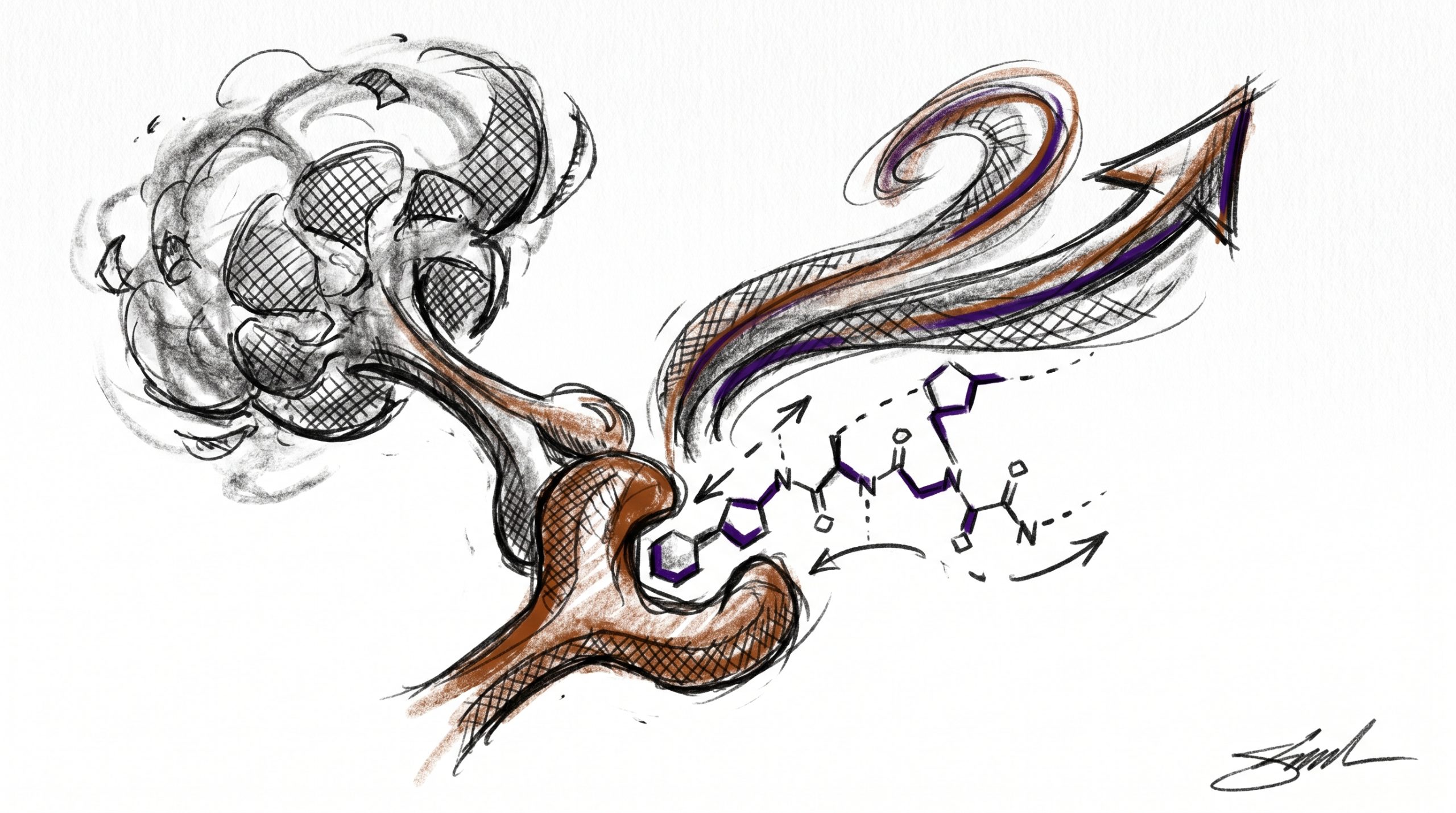
Ipamorelin is a selective growth hormone secretagogue and a third-generation growth hormone-releasing peptide (GHRP) used extensively in preclinical research. Developed in the late 1990s by Novo Nordisk, ipamorelin is a pentapeptide (Aib-His-D-2-Nal-D-Phe-Lys-NH2) that acts as a selective agonist at the ghrelin receptor (GHSR-1a) to stimulate pulsatile growth hormone (GH) release from the anterior pituitary. What sets ipamorelin apart in research protocols is its remarkably clean secretagogue profile: published studies suggest it elevates GH without meaningful increases in cortisol, prolactin, adrenocorticotropic hormone (ACTH), follicle-stimulating hormone (FSH), luteinizing hormone (LH), or thyroid-stimulating hormone (TSH). This selectivity makes ipamorelin research a useful model for isolating the effects of GH/IGF-1 axis stimulation from confounding hormonal noise. This guide summarizes the mechanism of action, comparative pharmacology, reconstitution protocols for laboratory use, and peer-reviewed literature relevant to ipamorelin research.
Quick Facts: Ipamorelin
- Class: Third-generation growth hormone-releasing peptide (GHRP); selective ghrelin mimetic
- Sequence: Aib-His-D-2-Nal-D-Phe-Lys-NH2 (pentapeptide)
- Target receptor: Growth hormone secretagogue receptor type 1a (GHSR-1a)
- Molecular weight: 711.86 g/mol
- Half-life (reported): Approximately 2 hours in preclinical models
- Developer: Novo Nordisk (reference compound NNC 26-0161)
- Research keyphrase: ipamorelin research
What is ipamorelin and how was it discovered?
Ipamorelin was first characterized by Raun and colleagues at Novo Nordisk in 1998 as part of a structure-activity program designed to identify a GH secretagogue without the off-target endocrine liabilities associated with earlier peptides such as GHRP-6 and GHRP-2. The published study (Raun et al., 1998, PubMed 9579894) reported that ipamorelin released GH in pentobarbital-anesthetized rats with a potency and efficacy comparable to GHRP-6 but without raising ACTH or cortisol. In swine, ipamorelin produced a dose-dependent GH response that rivaled growth hormone-releasing hormone (GHRH) itself. This specificity was the central innovation of the compound. For ipamorelin research, the Raun paper remains the foundational reference describing its pharmacological identity as a highly selective ghrelin mimetic within the GHRP class.
How does ipamorelin interact with the GHSR-1a receptor?
Ipamorelin is a synthetic agonist of the growth hormone secretagogue receptor type 1a (GHSR-1a), the same G-protein-coupled receptor targeted by the endogenous hormone ghrelin. GHSR-1a is expressed densely in the arcuate nucleus of the hypothalamus and on somatotroph cells in the anterior pituitary. When ipamorelin binds GHSR-1a, it activates the Gq/phospholipase C pathway, elevates intracellular calcium, and triggers GH vesicle release. Unlike GHRH, which acts through the separate GHRH receptor to amplify cAMP-mediated GH synthesis, ipamorelin works through a ghrelin-like pulsatile release mechanism. Preclinical research indicates that ipamorelin mimics the “hunger” signal of ghrelin at the pituitary level without the appetite-driving central nervous system effects seen with higher-dose ghrelin analogs, making it a cleaner experimental tool for isolating pituitary GH output in laboratory models.
Why is ipamorelin considered a selective GHRP?
Selectivity in the GHRP class refers to a peptide’s ability to stimulate GH release without co-releasing other anterior pituitary hormones. First-generation compounds like GHRP-6 and second-generation analogs such as GHRP-2 reliably elevate GH but also produce measurable increases in cortisol and prolactin, which complicates interpretation of downstream endpoints in research protocols. Ipamorelin’s selectivity profile (Raun et al., 1998) shows GH release equivalent to GHRP-6 but with cortisol and prolactin responses statistically indistinguishable from vehicle controls. Published studies suggest this is due to ipamorelin’s specific binding geometry at GHSR-1a, which appears to activate GH-releasing signaling without engaging the secondary pathways that drive ACTH or prolactin release. This makes ipamorelin research particularly well-suited to isolating the GH/IGF-1 axis in longevity and metabolic investigations.
How does ipamorelin synergize with CJC-1295?
The synergy between ipamorelin (a GHRP) and CJC-1295 (a GHRH analog) is one of the most-studied combinations in preclinical peptide literature. The two peptides act on different receptors: CJC-1295 binds the GHRH receptor to amplify GH synthesis and pulse amplitude, while ipamorelin binds GHSR-1a to trigger pulsatile release and suppress somatostatin tone. When co-administered in laboratory models, the combination produces a GH release response substantially greater than either peptide alone — a classic amplifier effect described in the GHRH/GHRP literature going back to Bowers and colleagues in the 1990s. For research protocols investigating the GH/IGF-1 axis, the ipamorelin + CJC-1295 (No DAC) pairing is often chosen because both peptides preserve pulsatile release patterns, which published studies suggest more closely resemble endogenous GH secretion than sustained elevation produced by long-acting analogs alone. See our CJC-1295 DAC vs No DAC guide for variant selection.
What does the preclinical literature show for ipamorelin?
Beyond the foundational Raun 1998 paper, ipamorelin has been characterized in bone, gastrointestinal, and pituitary research models. Svensson and colleagues (PubMed 10893423) investigated ipamorelin’s effects on bone mineral content in ovariectomized rat models, reporting increases in cortical bone formation markers with sustained administration. Greenwood and colleagues examined postoperative gastrointestinal motility in rodent models, where ipamorelin accelerated gastric emptying and small bowel transit via GHSR-1a activation in enteric neurons — a mechanism reviewed in the ghrelin receptor literature. Aghazadeh-Habashi and Jamali (PubMed 22383457) characterized ipamorelin pharmacokinetics and plasma stability. Collectively, this body of preclinical research indicates ipamorelin has pleiotropic effects mediated through GHSR-1a, with the GH-releasing action remaining the most extensively characterized and reproducible endpoint.
What are the reconstitution and storage protocols for laboratory use?
For laboratory research, ipamorelin lyophilized powder is typically reconstituted with bacteriostatic water (0.9% benzyl alcohol) or sterile water for injection at concentrations appropriate to the study design. A common research protocol for a 10 mg vial is reconstitution with 2 mL of diluent, yielding a stock concentration of 5 mg/mL. Lyophilized ipamorelin should be stored at -20°C or below in a sealed, desiccated container protected from light; the lyophilized form is generally stable at these conditions for 24+ months per manufacturer specifications. Once reconstituted for research, ipamorelin solutions should be refrigerated at 2-8°C and used within 30 days for stability. Multiple freeze-thaw cycles of reconstituted material should be avoided. All reconstitution work should be performed under aseptic technique appropriate to laboratory-use protocols.
How does ipamorelin compare to tesamorelin and sermorelin?
Ipamorelin, tesamorelin, and sermorelin are frequently compared in peptide research, but they act on distinct receptors. Sermorelin is a truncated GHRH analog (GHRH 1-29) that binds the GHRH receptor and has a short half-life (approximately 10-20 minutes). Tesamorelin is a stabilized GHRH analog with an N-terminal trans-3-hexenoyl modification, extending its plasma stability and allowing sustained GHRH receptor stimulation. Ipamorelin, by contrast, is a GHRP acting on GHSR-1a — a completely different receptor pathway. In research protocols, sermorelin and tesamorelin amplify pituitary GH synthesis via GHRH signaling, while ipamorelin triggers release via the ghrelin pathway. The mechanistic complementarity is why ipamorelin is often paired with a GHRH analog (e.g., CJC-1295 or tesamorelin) in combination studies rather than substituted for one. See our longevity peptides guide for a broader comparison of GH-axis research compounds.
What should researchers know about ipamorelin’s safety profile in preclinical data?
In the context of preclinical research, ipamorelin has been characterized across rodent and porcine models with a generally favorable tolerability profile. Published studies suggest no significant elevations in cortisol, prolactin, ACTH, or gonadotropins at doses producing robust GH release. Acute preclinical toxicology performed during development reported no findings of concern at multiples of pharmacologically active doses. However, readers should understand that preclinical research tolerability is distinct from clinical safety, and ipamorelin is not approved for human use by any major regulatory agency. All research discussion in the published literature is framed in the context of laboratory models and research protocols. Peptideware products are supplied strictly for laboratory and research purposes — researchers should consult primary literature and institutional protocols when designing studies.
How does ipamorelin modulate somatostatin tone in research models?
Endogenous GH secretion is governed by a dynamic balance between GHRH (stimulatory) and somatostatin (SST, inhibitory) at the pituitary level. One of the less-discussed but mechanistically important properties of the ghrelin/GHSR-1a pathway is its capacity to attenuate somatostatinergic tone at the hypothalamic and pituitary level. Preclinical research indicates that ipamorelin, through GHSR-1a activation, contributes to a transient reduction in somatostatin-mediated inhibition of somatotrophs, which in turn allows GH release to proceed unimpeded. This property is part of what gives GHRH analogs combined with GHRPs their amplifier effect: the GHRH analog provides a stimulatory signal, while the GHRP reduces the inhibitory brake. For researchers designing protocols to probe GH pulsatility, this interaction informs why the timing and pairing of compounds matters — blunted somatostatin tone at the moment of GHRH signaling produces larger pulses than either signal alone.
What role does ipamorelin play in IGF-1 axis research?
Because GH stimulates hepatic production of insulin-like growth factor 1 (IGF-1), any compound that reliably elevates GH will — with sufficient duration and frequency of pulses — elevate circulating IGF-1 as a downstream consequence. In research protocols, IGF-1 is often used as a more stable biomarker of cumulative GH exposure than direct GH measurements, which fluctuate rapidly with pulse kinetics. Published studies suggest that chronic administration of ipamorelin in preclinical models produces measurable IGF-1 elevation proportional to dose and frequency. Because ipamorelin does not independently stimulate IGF-1 through non-GH pathways, it functions as a clean experimental tool for investigating GH-mediated IGF-1 dynamics. When paired with a GHRH analog such as CJC-1295, the IGF-1 response is amplified further, reflecting the synergistic GH output from combined GHRH and ghrelin pathway activation.
How is ipamorelin purity and identity verified for laboratory research?
Research-grade ipamorelin supplied for laboratory use is typically produced via solid-phase peptide synthesis (SPPS) and characterized by reversed-phase high-performance liquid chromatography (RP-HPLC) for purity and by mass spectrometry (typically ESI-MS or MALDI-TOF) for molecular identity. Purity specifications for high-quality research material are generally above 98% by HPLC area percent, with mass accuracy confirming the expected monoisotopic mass of 711.4 Da. Third-party testing by an independent analytical laboratory provides Certificates of Analysis (CoA) documenting identity, purity, peptide content, water content, and endotoxin levels where relevant. For ipamorelin research reproducibility, working from characterized material with a CoA is important: variability in purity or the presence of synthesis-related impurities (e.g., deletion sequences or truncated analogs) can confound experimental outcomes, particularly in dose-response or receptor selectivity studies.
How does ipamorelin fit into broader longevity peptide research?
The GH/IGF-1 axis is a focal point of longevity research because of the well-documented age-related decline in GH pulsatility (somatopause), the relationship between IGF-1 and tissue repair, and the association between GH-axis signaling and sarcopenia, bone density loss, and metabolic function. Ipamorelin, as a selective ghrelin mimetic, is used in longevity research models to investigate whether restoring pulsatile GH release can reverse markers of age-related axis decline without the off-target endocrine disruption seen with earlier-generation secretagogues. Published studies suggest that pulsatile GH stimulation may produce different downstream tissue effects than sustained GH elevation, making ipamorelin a valuable tool for probing the question of whether the pulse pattern itself — not just integrated exposure — is biologically meaningful in aging models. Combined with a GHRH analog, ipamorelin research protocols can model a restored GH pulse architecture rather than simply elevating integrated GH exposure. For context on the broader research landscape, see our longevity peptides guide.
What future ipamorelin research directions are emerging?
Beyond the classical GH/IGF-1 axis studies that have defined the field for two decades, emerging ipamorelin research is exploring peripheral GHSR-1a signaling in tissues outside the pituitary. GHSR-1a is expressed in cardiac tissue, gastrointestinal enteric neurons, immune cells, and certain CNS regions, raising questions about whether ipamorelin’s selectivity at GHSR-1a translates to cleaner peripheral effects than ghrelin itself (which is subject to acylation and has additional non-receptor activities). Preclinical research indicates potential interest in gastrointestinal motility research (postoperative ileus models), cardiac signaling research, and sarcopenia models where GH-independent GHSR-1a effects may contribute to outcomes. Ipamorelin’s selectivity makes it an attractive probe for dissecting which effects are purely GH-mediated versus direct GHSR-1a-mediated in peripheral tissues. Researchers interested in this frontier should consult recent review literature and primary studies for the latest mechanistic findings.
Product Information
Ipamorelin No DAC 10mg
High-purity ipamorelin lyophilized powder, 10mg per vial, supplied for laboratory and research purposes only. Third-party tested for identity and purity.
Frequently Asked Questions
What is ipamorelin research focused on?
Ipamorelin research primarily investigates the selective activation of the growth hormone secretagogue receptor (GHSR-1a) and the resulting pulsatile GH release without co-activation of cortisol, prolactin, or ACTH pathways. Published studies also examine its role in GH/IGF-1 axis modulation, bone formation markers, gastrointestinal motility, and pituitary function in preclinical models.
How does ipamorelin differ from GHRP-6 and GHRP-2?
Ipamorelin, GHRP-6, and GHRP-2 all act on GHSR-1a, but ipamorelin is considered a third-generation GHRP with superior selectivity. Preclinical research indicates GHRP-6 and GHRP-2 elevate cortisol and prolactin alongside GH, while ipamorelin produces GH release without statistically significant increases in those hormones. This selectivity makes ipamorelin a cleaner experimental tool for isolating GH-axis effects.
Why is ipamorelin often paired with CJC-1295 in research protocols?
Ipamorelin and CJC-1295 act on different receptors (GHSR-1a and GHRH-R respectively) and produce a synergistic amplifier effect on GH release when co-administered. The CJC-1295 No DAC variant preserves pulsatile release, while DAC CJC-1295 sustains elevated GHRH tone. Either combination produces greater GH area-under-the-curve than monotherapy in preclinical models.
What is the typical half-life of ipamorelin in preclinical models?
Published pharmacokinetic studies report an ipamorelin half-life of approximately 2 hours in preclinical models, with peak plasma concentrations reached within 15-30 minutes following subcutaneous administration in research settings. This short half-life preserves pulsatile GH release patterns similar to endogenous secretion.
How is ipamorelin stored for laboratory research?
Lyophilized ipamorelin is stored at -20°C or below in a desiccated, light-protected container and is generally stable for 24+ months. Once reconstituted for research with bacteriostatic water, solutions are refrigerated at 2-8°C and typically used within 30 days. Freeze-thaw cycles of reconstituted material should be minimized.
Does ipamorelin affect cortisol or prolactin levels?
No — the defining feature of ipamorelin in the preclinical literature is its lack of effect on cortisol, prolactin, ACTH, FSH, LH, and TSH. The Raun 1998 study reported cortisol and prolactin responses statistically indistinguishable from vehicle controls, even at doses producing robust GH release. This selectivity is why ipamorelin is preferred over earlier GHRPs for research isolating the GH/IGF-1 axis.
Is ipamorelin approved for human use?
No. Ipamorelin has not received marketing approval from the FDA, EMA, or any other major regulatory agency. It remains an investigational compound available exclusively for laboratory and research purposes. All products supplied by Peptideware are strictly for research use — not for human or animal consumption.
Research Disclaimer: All products are intended for laboratory and research purposes only. Not for human or animal consumption. These statements have not been evaluated by the FDA. Information presented is drawn from published preclinical literature and is provided for educational purposes to qualified researchers.


