


Last Updated: April 14, 2026
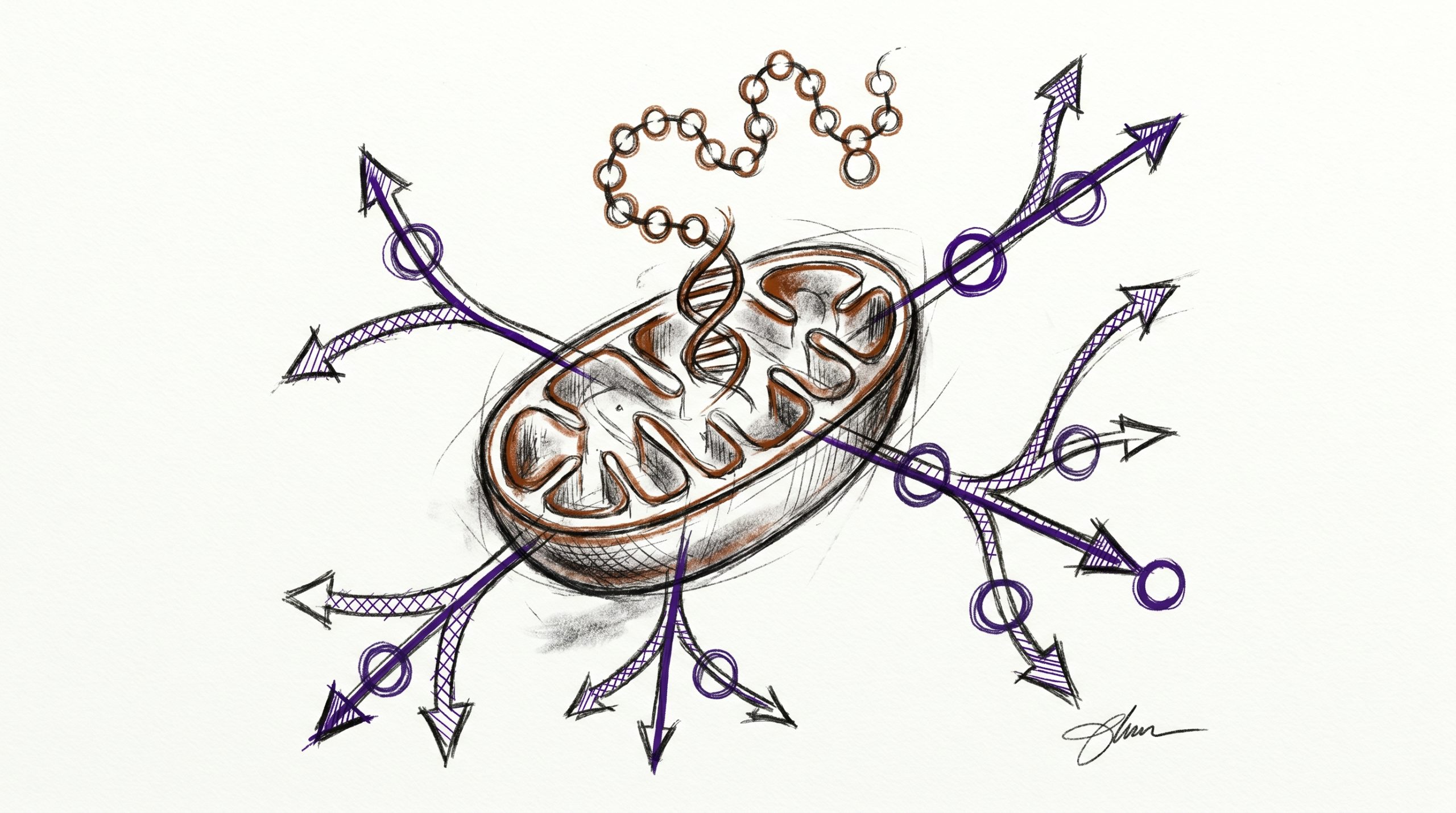
MOTS-c is a 16-amino acid mitochondrial-derived peptide (MDP) encoded within the 12S ribosomal RNA gene of mitochondrial DNA (mtDNA). Unlike nuclear-encoded peptides, MOTS-c originates from a short open reading frame inside the mitochondrial genome itself, making it one of a small and expanding class of signaling molecules that communicate metabolic status from the mitochondrion to the rest of the cell. Published studies suggest MOTS-c functions as a systemic regulator of metabolic homeostasis, primarily through activation of the AMPK (AMP-activated protein kinase) pathway. Preclinical research indicates MOTS-c modulates glucose uptake, fatty acid metabolism, and insulin sensitivity, and its plasma levels correlate with exercise output and age-related metabolic decline. MOTS-c with DAC (Drug Affinity Complex) is a modified research form designed to extend the effective half-life for laboratory use, allowing researchers to study prolonged AMPK signaling dynamics without repeated reconstitution. This guide summarizes the current research literature on MOTS-c biology, the rationale behind DAC modification, and standard reconstitution and storage protocols for laboratory research.
Quick Facts
- Peptide class: Mitochondrial-derived peptide (MDP)
- Amino acid length: 16 residues
- Molecular weight (native): approximately 2,174 Da
- Encoded by: 12S rRNA gene of mitochondrial DNA
- Primary mechanism: AMPK activation, folate-cycle / AICAR axis modulation
- Research format: Lyophilized powder; DAC-modified variant available
- Storage (lyophilized): -20 degrees C, sealed, desiccated
- Storage (reconstituted): 2-8 degrees C, use within 14-28 days
- Reconstitution solvent: Bacteriostatic water or sterile water for injection (laboratory grade)
What is MOTS-c and where does it come from?
MOTS-c (Mitochondrial Open-reading-frame of the Twelve S-rRNA type-c) was first characterized by Lee and colleagues in 2015 (PMID 25738459). It is one of the first biologically validated mitochondrial-derived peptides, joining humanin in a rapidly expanding family of mtDNA-encoded signaling molecules. MOTS-c is translated from a small open reading frame embedded within the 12S rRNA gene of the mitochondrial genome. Once translated, the peptide is released from the mitochondrion and detectable in plasma and cytosol. Published studies suggest that cellular stress, exercise, and metabolic challenge increase both the production and nuclear translocation of MOTS-c. Unlike classical hormones, which are produced by dedicated endocrine tissue, MOTS-c appears to function as a retrograde mitochondrial signal, informing the nucleus and distant tissues about mitochondrial energetic status. Preclinical research indicates circulating MOTS-c levels decline with age in both rodents and humans.
How does MOTS-c activate AMPK and why does it matter?
The best-characterized mechanism of MOTS-c involves activation of AMP-activated protein kinase (AMPK), the central cellular energy sensor. Research by Lee et al. (PMID 25738459) and follow-on work demonstrated that MOTS-c modulates the folate-methionine cycle, increasing intracellular AICAR (5-aminoimidazole-4-carboxamide ribonucleotide). AICAR mimics AMP and directly activates AMPK. Once activated, AMPK shifts cellular metabolism toward catabolic, ATP-generating pathways: glucose uptake, fatty acid oxidation, and mitochondrial biogenesis are all upregulated, while anabolic, ATP-consuming pathways such as lipogenesis and protein synthesis are dampened. Published studies suggest this AMPK-centric mode of action is why MOTS-c shares downstream signatures with metformin, caloric restriction, and endurance exercise. Preclinical research indicates AMPK activation via MOTS-c improves insulin sensitivity in diet-induced obese mouse models and increases glucose disposal during glucose-tolerance tests without inducing hypoglycemia at rest.
What does the research say about MOTS-c and metabolic homeostasis?
A substantial body of preclinical research indicates MOTS-c is a physiological regulator of whole-body metabolism. In the original Lee et al. study (PMID 25738459), MOTS-c administration prevented age-dependent and high-fat-diet-induced insulin resistance in mice, improved glucose handling, and reduced fat accumulation. Subsequent work (PMID 29212030 and related studies) extended these observations, demonstrating that MOTS-c translocates to the nucleus under metabolic stress and regulates adaptive nuclear gene expression, including antioxidant and metabolic genes. Published studies suggest that MOTS-c participates in a mitochondrial-nuclear communication axis, where mitochondrial energetic status directly influences nuclear transcription. Preclinical research indicates MOTS-c can attenuate markers of hepatic steatosis, improve lipid profiles, and reduce adipose tissue inflammation in obese rodent models. These findings position MOTS-c as a research target in metabolic syndrome, obesity, and age-related insulin resistance studies, though translation to humans remains an active research area.
Why is MOTS-c described as an exercise mimetic in the research literature?
Exercise is one of the most potent stimuli of endogenous MOTS-c production. Published studies suggest that acute exercise in humans rapidly increases circulating MOTS-c, and that habitually active individuals show higher baseline MOTS-c levels than sedentary counterparts. Mechanistically, many of the cellular adaptations induced by endurance exercise — AMPK activation, PGC-1 alpha-driven mitochondrial biogenesis, improved fatty acid oxidation, enhanced insulin sensitivity — overlap significantly with the pathways modulated by exogenous MOTS-c in preclinical research. This overlap has led researchers to describe MOTS-c as an “exercise mimetic” in the laboratory literature, meaning a molecule that reproduces select molecular adaptations of exercise in the absence of physical activity. Preclinical research indicates MOTS-c administration improves running capacity, increases skeletal muscle mitochondrial content, and supports metabolic flexibility in rodent models. This exercise-mimetic framing is particularly relevant to aging research, where sarcopenia and mitochondrial decline limit the feasibility of exercise interventions.
What is DAC modification and why does it extend research half-life?
Native MOTS-c, like many short peptides, has a relatively short circulating half-life due to rapid proteolytic degradation and renal clearance. DAC (Drug Affinity Complex) is a conjugation strategy that attaches a maleimidopropionic acid (MPA) linker to the peptide, allowing it to form a stable covalent bond with cysteine-34 of circulating serum albumin in vivo or in cell-culture media containing albumin. Because albumin has a long half-life, the MOTS-c-albumin complex is protected from rapid degradation and exhibits extended exposure relative to the unmodified peptide. Published studies on DAC-modified peptides in other contexts (notably GHRH analogs such as CJC-1295 with DAC) suggest the modification can extend effective half-life from minutes to days. For MOTS-c research, DAC modification allows investigators to study chronic AMPK signaling, cumulative metabolic effects, and prolonged pathway activation with less frequent reconstitution in laboratory studies. The modification is intended strictly for research convenience and pharmacokinetic characterization in preclinical models.
How should MOTS-c with DAC be reconstituted and stored for research?
MOTS-c with DAC is supplied as a lyophilized powder for research and should be handled under standard peptide-handling laboratory protocols. Reconstitute the vial using bacteriostatic water or sterile water for injection (laboratory grade), adding the diluent slowly down the inside wall of the vial rather than directly onto the peptide powder. Gently swirl — do not shake — until the powder fully dissolves. Reconstitute for research use only. Published peptide-handling guidance suggests that vigorous agitation can shear long peptide chains and introduce denaturation artifacts. Lyophilized MOTS-c with DAC should be stored at -20 degrees C, sealed and desiccated, where it is stable for extended periods. Once reconstituted, store the solution at 2-8 degrees C and use within 14-28 days depending on sterility conditions. For longer-term storage of reconstituted material, aliquot into sterile low-binding tubes and store at -20 degrees C or colder; avoid repeated freeze-thaw cycles, which can degrade peptide integrity and complicate research data interpretation.
How does MOTS-c fit into broader longevity and mitochondrial research?
Mitochondrial dysfunction is one of the recognized hallmarks of aging, and research interest in molecules that modulate mitochondrial health has grown substantially over the past decade. MOTS-c sits at the intersection of two of those hallmarks — mitochondrial dysfunction and deregulated nutrient sensing — because it is encoded by the mitochondrion itself and signals through AMPK, a master nutrient sensor. Published studies suggest that restoring MOTS-c levels in aged rodent models improves metabolic parameters, physical performance, and healthspan markers. Preclinical research indicates MOTS-c may interact synergistically with other longevity-associated pathways, including sirtuin signaling and mitophagy. MOTS-c research complements laboratory investigations of other longevity-relevant peptides and small molecules. For researchers building a broader view of this field, our longevity peptides guide provides context on how MOTS-c, Epithalon, GHK-Cu, and related research compounds compare across mechanisms, pathways, and published evidence.
Frequently Asked Questions
Is MOTS-c a peptide or a hormone?
MOTS-c is formally classified as a peptide — specifically a mitochondrial-derived peptide (MDP). It is 16 amino acids in length and is translated from a short open reading frame within the 12S rRNA gene of mitochondrial DNA. While MOTS-c exhibits some hormone-like properties in the research literature — it circulates in plasma, acts on distal tissues, and responds to physiological stimuli such as exercise — it does not fit the classical definition of a hormone produced by a dedicated endocrine gland. Published studies suggest MOTS-c is better understood as a mitokine: a signaling molecule released by mitochondria that communicates mitochondrial status to the rest of the cell and body. Preclinical research indicates MOTS-c operates alongside other mitokines such as humanin and FGF21 in an emerging mitochondrial-nuclear-systemic signaling axis relevant to metabolic and aging research.
How does MOTS-c with DAC differ from native MOTS-c in research applications?
Native MOTS-c and MOTS-c with DAC share the same core 16-amino-acid sequence and the same downstream AMPK-activating mechanism in published studies. The difference is pharmacokinetic. Native MOTS-c has a short effective half-life because it is rapidly cleared and degraded, which means research protocols using native MOTS-c typically require more frequent reconstitution in preclinical models to maintain exposure. DAC modification attaches a linker that covalently binds circulating or culture-medium albumin, producing a stable albumin-peptide complex with a markedly extended half-life. For laboratory research, this means MOTS-c with DAC is well-suited for studies investigating chronic AMPK signaling, sustained mitochondrial adaptation, or dose-frequency optimization. Published peptide-pharmacokinetic literature suggests DAC-modified peptides can extend effective exposure from minutes to days, depending on species and study design.
What published studies are most commonly cited in MOTS-c research?
Two foundational papers are frequently cited in MOTS-c research. The first is Lee et al. (2015), Cell Metabolism, PMID 25738459, which characterized MOTS-c as a mitochondrial-derived peptide, demonstrated AMPK-centric signaling, and showed protective effects against age- and diet-induced insulin resistance in mice. The second is the follow-on work (PMID 29212030) that demonstrated MOTS-c translocates to the nucleus under metabolic stress and regulates adaptive nuclear gene expression, establishing the mitochondrial-nuclear signaling axis. Beyond these, a growing body of preclinical research examines MOTS-c in skeletal muscle, liver, adipose, and cardiovascular tissues, and several small human observational studies report associations between plasma MOTS-c and fitness, insulin sensitivity, and chronological age. Published studies suggest this literature continues to expand rapidly as assay availability and analog development improve.
Does MOTS-c affect glucose and lipid metabolism in research models?
Preclinical research indicates MOTS-c modulates both glucose and lipid metabolism, consistent with its role as an AMPK activator. In rodent studies, MOTS-c administration improves glucose tolerance, increases insulin-stimulated glucose uptake in skeletal muscle, and reduces fasting hyperinsulinemia in diet-induced obese models. On the lipid side, published studies suggest MOTS-c promotes fatty acid oxidation, reduces hepatic steatosis markers, and supports lean mass preservation under high-fat dietary conditions. These effects appear to be mediated through AMPK-driven upregulation of catabolic pathways and mitochondrial biogenesis. Preclinical research indicates MOTS-c’s lipid and glucose effects are generally complementary rather than competing, which distinguishes it from some insulin-pathway modulators that improve glucose control at the cost of lipid-profile tradeoffs. These findings remain research observations; translation to human contexts is an active area of investigation.
Why is MOTS-c relevant to aging research specifically?
Published studies suggest three converging reasons MOTS-c is a recurring target in aging research. First, circulating MOTS-c levels decline with chronological age in both rodents and humans, paralleling the age-related decline in mitochondrial function. Second, exogenous MOTS-c restoration in aged mice reverses several age-associated metabolic deficits, including insulin resistance and reduced exercise capacity, in preclinical models. Third, MOTS-c signals through AMPK, a pathway repeatedly implicated in lifespan and healthspan studies across species. Preclinical research indicates AMPK activation, whether by caloric restriction, metformin, exercise, or mitochondrial-derived peptides, is a common node linking longevity interventions. MOTS-c is particularly interesting because it is an endogenous AMPK signal whose age-related decline may itself contribute to metabolic aging, creating a plausible restorative research hypothesis that continues to be tested in laboratory settings.
What reconstitution solvents are commonly used for MOTS-c in laboratory research?
The two most common reconstitution solvents for peptide research are bacteriostatic water (sterile water containing 0.9 percent benzyl alcohol) and sterile water for injection. Bacteriostatic water is typically preferred for reconstituted peptides that will be used over several weeks, because the benzyl alcohol suppresses microbial growth and extends usable shelf life at 2-8 degrees C. Sterile water for injection may be selected when researchers want to avoid any preservative-peptide interaction concerns in short-term protocols. Published peptide-handling guidance suggests adding the diluent slowly down the vial wall, swirling gently to dissolve, and avoiding vigorous agitation that can denature peptides. For MOTS-c with DAC specifically, the same protocol applies; reconstitute for research only, store at 2-8 degrees C after reconstitution, and aliquot if longer-term frozen storage is desired. Always use laboratory-grade consumables and work in a clean research environment.
How does MOTS-c compare to other mitochondrial-focused research peptides?
MOTS-c sits within a small but growing research category of mitochondrial-targeted peptides. Humanin, also mitochondrial-derived, is its most well-known relative and is primarily studied in cytoprotection and neuroscience research contexts rather than systemic metabolism. SS-31 (elamipretide) is a synthetic peptide that localizes to the inner mitochondrial membrane and stabilizes cardiolipin, a research target distinct from MOTS-c’s AMPK-signaling mode. Published studies suggest MOTS-c is unique in combining three attributes: it is endogenously encoded by mtDNA, it acts as a systemic mitokine, and it signals through a canonical nutrient-sensing pathway (AMPK). Preclinical research indicates MOTS-c’s metabolic-regulatory profile makes it particularly relevant to metabolic and longevity research, while humanin and SS-31 occupy adjacent but distinct research niches. Our longevity peptides guide covers these comparisons in more detail.
What are the known limitations of current MOTS-c research?
Published studies suggest MOTS-c research is promising but still early, and investigators should be aware of several limitations in the current literature. First, most metabolic and exercise-capacity findings derive from rodent models, and translation to human physiology remains incompletely characterized. Second, MOTS-c assays vary across laboratories, which can complicate comparison of absolute plasma concentrations between studies. Third, the downstream target specificity of MOTS-c beyond AMPK activation — including possible direct protein interactions and nuclear binding partners — is still being mapped in ongoing research. Preclinical research indicates that dosing regimens, formulation choices, and matching of endpoints (e.g., fasted glucose versus glucose-tolerance metrics) materially affect outcomes. Published studies suggest that DAC-modified versus native MOTS-c will exhibit different pharmacokinetic profiles, so research protocols should specify which form is used. These are normal limitations of an active research area, and they point to where continued laboratory investigation is most needed.
Research-Grade MOTS-c with DAC
Peptideware supplies MOTS-c with DAC as a lyophilized research-grade peptide for laboratory use. Each vial is intended for reconstitution and use in controlled research settings following standard peptide-handling protocols. Review the product page for current specifications, batch documentation, and laboratory-only terms of sale.
View MOTS-c with DAC research product →
Research disclaimer: All products are intended for laboratory and research purposes only. Not for human or animal consumption. These statements have not been evaluated by the FDA.


