


Last Updated: April 14, 2026
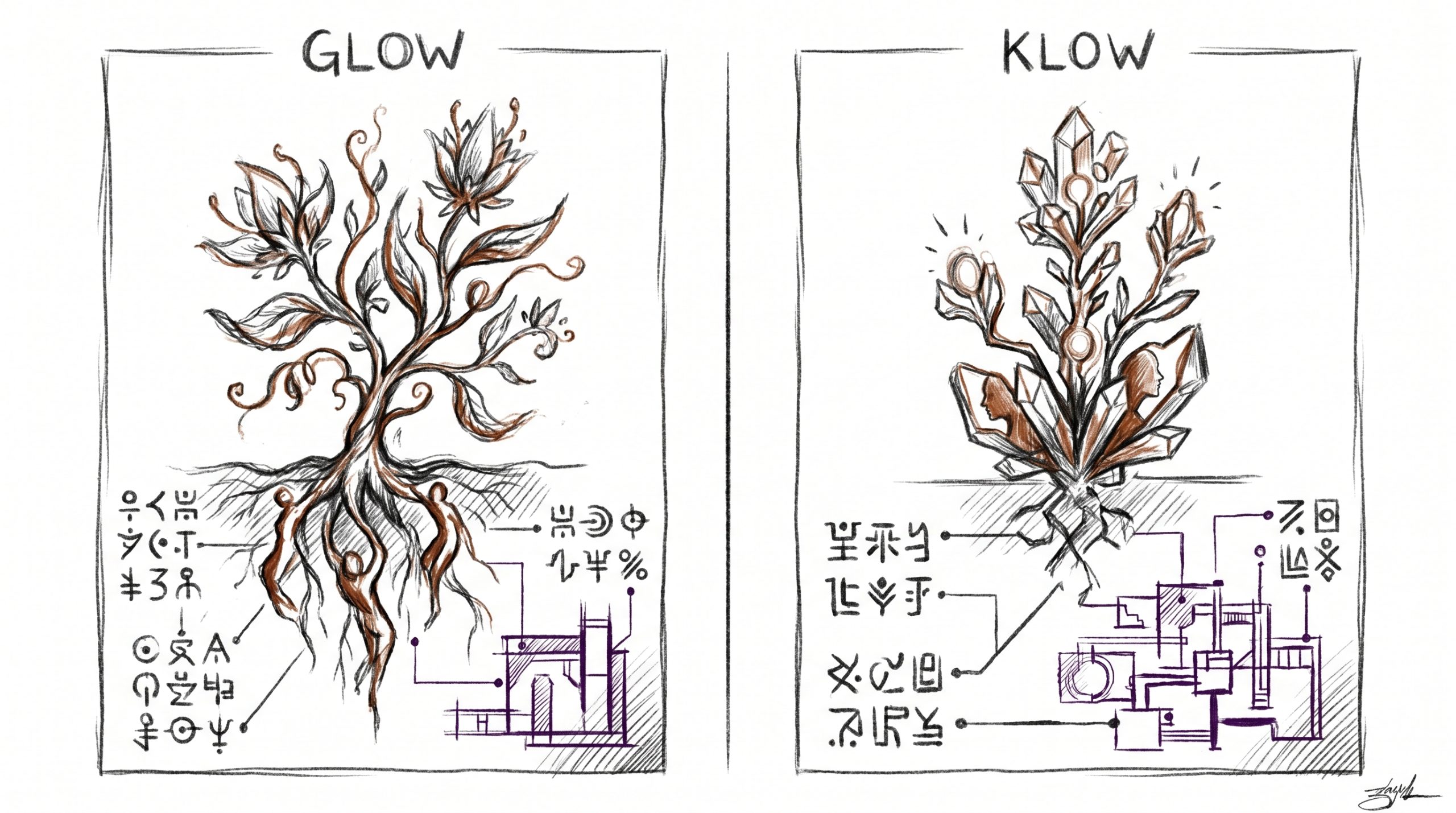
Researchers comparing GLOW vs KLOW blend formulations are typically evaluating two of the most popular multi-component regenerative research stacks available for laboratory use. Both blends combine peptides that have been investigated in preclinical research for tissue repair, wound healing in animal models, and connective tissue cytoprotection — but they differ in composition, total milligram loading, and the inclusion of a fourth anti-inflammatory compound. GLOW is a three-peptide stack (BPC-157 + TB-500 + GHK-Cu, 70mg total) focused on the classic regenerative triad. KLOW adds KPV, a tripeptide fragment of alpha-MSH, bringing the total to 80mg across four compounds with broader anti-inflammatory research coverage. This guide examines the component science, research rationale, and decision framework for selecting the right stack for specific preclinical research protocols.
Quick Comparison: GLOW vs KLOW Blend
| Attribute | GLOW Blend | KLOW Blend |
|---|---|---|
| Components | BPC-157 + TB-500 + GHK-Cu | GHK-Cu + BPC-157 + TB-500 + KPV |
| Total mg | 70mg per vial | 80mg per vial |
| Unique Compound | None (classic triad) | KPV (anti-inflammatory tripeptide) |
| Primary Research Focus | Tissue repair, connective tissue, collagen signaling in preclinical models | Tissue repair + anti-inflammatory and antimicrobial research pathways |
| Component Count | 3 peptides | 4 peptides |
| Best For | Wound healing and musculoskeletal regeneration models | Inflammatory-driven tissue repair and gut barrier research |
| Product Page | GLOW 70mg | KLOW 80mg |
What Are Regenerative Peptide Blends?
Regenerative peptide blends combine multiple synergistic compounds into a single lyophilized vial intended for laboratory use. The rationale behind multi-peptide stacks rests on three complementary mechanisms documented across preclinical research: systemic cytoprotection, cell migration and tissue remodeling, and dermal-level collagen signaling. When these pathways are activated in parallel in animal models, published studies suggest a broader regenerative cascade than any single peptide produces in isolation.
BPC-157 has been investigated for its role in angiogenic and cytoprotective signaling in rodent models. TB-500 (a synthetic fragment of Thymosin Beta-4) has been studied for actin binding and cell migration during tissue repair processes. GHK-Cu, the copper tripeptide, has been extensively characterized in dermal fibroblast research for its role in collagen and elastin gene expression (PubMed citations documenting ~4,000+ gene expression changes following GHK-Cu exposure in cultured fibroblasts). Combining these in a single blend allows research protocols to evaluate the coordinated activity of systemic, migratory, and dermal mechanisms simultaneously.
Researchers exploring the broader regenerative peptide category may also want to review the healing peptides pillar guide for full mechanistic context on each compound family.
What’s in the GLOW Blend?
The GLOW Blend (70mg) contains three peptides that form what preclinical researchers often call the regenerative triad. Each component addresses a different layer of the tissue repair cascade.
BPC-157 (10mg) — Cytoprotection and Angiogenesis. Body Protection Compound 157 is a 15-amino-acid fragment derived from a gastric protective protein. Preclinical research indicates BPC-157 supports angiogenic signaling and connective tissue cytoprotection in rodent tendon, ligament, and gastrointestinal injury models. Published studies (see PubMed) document accelerated healing in preclinical models of Achilles tendon transection and colitis.
TB-500 (10mg) — Cell Migration and Actin Dynamics. TB-500 is a synthetic fragment (amino acids 17-23) of Thymosin Beta-4. Research protocols have investigated its role in actin sequestration and directed cell migration, which are essential for reconstructing damaged tissue architecture. In preclinical cardiac injury models, TB-500 has been associated with epicardial cell recruitment.
GHK-Cu (50mg) — Collagen and Dermal Signaling. GHK-Cu represents the bulk of the GLOW formulation by mass. This copper tripeptide has been extensively studied in dermal fibroblast cultures for its influence on collagen, elastin, and glycosaminoglycan synthesis pathways.
For multi-vial research programs, the GLOW Peptide Protocol Bundle packages multiple vials for extended laboratory timelines, along with reconstitution supplies.
What’s in the KLOW Blend?
The KLOW Blend (80mg) contains the same three GLOW peptides plus a fourth compound: KPV. The “K” in KLOW denotes this addition. KPV is a tripeptide fragment (Lys-Pro-Val) derived from the C-terminal of alpha-melanocyte-stimulating hormone (alpha-MSH).
KPV (10mg) — Anti-Inflammatory and Antimicrobial Research. Preclinical research indicates KPV exhibits potent anti-inflammatory activity through NF-kB pathway modulation. Published studies in murine colitis models (see PubMed) have investigated KPV’s role in reducing intestinal inflammation markers. KPV has also been studied for antimicrobial activity against Candida albicans and Staphylococcus aureus in in-vitro settings.
The inclusion of KPV makes KLOW particularly relevant for research protocols where inflammation is a confounding variable or the primary research target. In preclinical models involving gut barrier studies, chronic inflammation pathways, or combined skin-barrier-inflammation research, the four-peptide stack offers broader mechanistic coverage than GLOW’s three-peptide composition.
For extended laboratory timelines, the KLOW Bundle (80mg) packages multiple vials with reconstitution supplies for research programs that require consistent batch-to-batch comparability.
Component Deep-Dive: Individual Peptide Research Context
Researchers may also evaluate blend composition by reviewing the individual component products, each with standalone research literature and product pages.
BPC-157 (10mg) — Investigated in rodent tendon, ligament, muscle, and gastrointestinal injury models. Preclinical research literature on PubMed includes studies on Achilles tendon transection, medial collateral ligament injury, and DSS-induced colitis. Cytoprotection and angiogenesis are the two most-cited mechanistic themes.
TB-500 (10mg) — Synthetic Thymosin Beta-4 fragment studied for actin binding and cell migration. Preclinical cardiac, dermal, and corneal injury models appear throughout the published research literature.
GHK-Cu (50mg) — The copper tripeptide with the broadest gene-expression research footprint. Published studies have characterized its effects on dermal fibroblast transcriptomes, wound healing in preclinical rodent models, and nerve tissue research applications.
KPV (10mg) — Alpha-MSH C-terminal tripeptide with anti-inflammatory research literature concentrated in colitis, arthritis, and dermatitis animal models. Also studied for antimicrobial activity in in-vitro assays.
Researchers who prefer modular control over stack composition may reconstitute individual vials separately, though blends offer convenience, reduced reconstitution labor, and consistent ratio fidelity across research batches.
Why These Ratios?
The 10:10:50 ratio in GLOW (BPC-157:TB-500:GHK-Cu) reflects the mass requirements of each component in the preclinical research literature. GHK-Cu is most commonly studied at higher total masses in dermal fibroblast cultures, whereas BPC-157 and TB-500 appear in preclinical literature at lower mass loadings. KLOW extends this framework by adding 10mg of KPV — matching the BPC-157 and TB-500 loadings — which aligns with KPV’s published research concentrations in murine colitis and dermatitis models. Researchers evaluating whether these ratios suit their specific research protocol should review component-level literature for each compound and determine whether the fixed blend ratios match the concentration profile their research model requires. If not, individual vials remain the more flexible option.
Storage and Stability Considerations
Lyophilized GLOW and KLOW vials store at standard laboratory peptide storage conditions (refrigerated, protected from light) prior to reconstitution. Once reconstituted for research, multi-peptide blends behave similarly to single-peptide reconstituted solutions in terms of stability — refrigerated storage and use within the laboratory’s validated timeframe. Copper-containing formulations (GHK-Cu presence in both blends) have documented stability in standard reconstitution conditions. Research protocols that require extended reconstituted stability should validate their specific storage conditions and timeframes against component-level stability literature.
Which Stack for Which Research?
The choice between GLOW and KLOW depends on the research question being investigated. Below is a decision framework based on common preclinical research categories.
Choose GLOW for classic tissue repair research. If the research protocol focuses on musculoskeletal injury models, tendon or ligament repair studies, general wound healing in preclinical rodents, or collagen signaling in dermal fibroblast cultures, the three-peptide GLOW composition provides full coverage without the additional variable of a fourth compound. Research teams running comparative studies against the existing BPC-157 / TB-500 / GHK-Cu literature will find GLOW aligns most directly with those historical protocols.
Choose KLOW for inflammation-driven tissue repair research. When the research model involves a significant inflammatory component — colitis models, arthritis research, dermatitis preclinical studies, or gut barrier integrity research — KPV’s documented NF-kB modulation and anti-inflammatory footprint makes KLOW the more mechanistically complete stack. KLOW is also preferred for antimicrobial-adjacent research where KPV’s in-vitro antimicrobial activity may be relevant.
Choose individual peptides for dose-response research. If the protocol requires precise control over individual peptide ratios, or if the research question specifically isolates one compound’s contribution, individual vials of BPC-157, TB-500, GHK-Cu, or KPV offer the modularity that pre-blended products cannot.
Choose bundles for longitudinal research. Research programs that require multiple vials from the same production batch benefit from the GLOW Bundle or KLOW Bundle, which ship multi-vial quantities with reconstitution supplies and maintain lot consistency across the full research timeline.
Frequently Asked Questions
What does KPV add over GLOW?
KPV is the defining addition in KLOW that is absent from GLOW. It is a tripeptide (Lys-Pro-Val) derived from the C-terminal of alpha-MSH and has been investigated in preclinical research for anti-inflammatory activity via NF-kB pathway modulation. Published studies in murine colitis models suggest KPV reduces inflammatory cytokine markers, and in-vitro research has documented activity against Candida albicans and Staphylococcus aureus. In the context of KLOW, KPV broadens the stack’s research coverage beyond the tissue-repair-focused GLOW triad into inflammation-modulation and antimicrobial research territory. For research protocols where inflammation is a primary variable or confounding factor, KPV’s inclusion makes KLOW mechanistically more complete. For protocols focused purely on musculoskeletal or dermal regeneration, GLOW’s three-peptide composition is often sufficient.
Can researchers combine individual peptides instead of using a blend?
Yes. Purchasing BPC-157, TB-500, GHK-Cu, and KPV as individual vials and reconstituting them separately allows full modular control over ratios, concentrations, and experimental variables. This approach is preferred for dose-response research, isolated-mechanism studies, or research protocols that require deviating from the fixed GLOW or KLOW ratios. The tradeoff is additional reconstitution labor, more vials to track, and slightly higher per-milligram cost compared to pre-blended products. Blends such as GLOW and KLOW are optimized for research protocols that use the full stack at its designed ratios — common in regenerative, wound healing, and tissue repair preclinical models — where reconstitution efficiency and batch consistency outweigh the flexibility of modular dosing.
How are GLOW and KLOW blends reconstituted for research?
Both GLOW and KLOW ship as lyophilized (freeze-dried) powder in sealed vials for laboratory use. Reconstitution for research follows standard laboratory peptide protocols: bacteriostatic water or sterile water is drawn into a syringe, injected slowly down the vial wall to avoid foaming, and the vial is gently swirled (not shaken) until the powder fully dissolves. Typical reconstitution volumes for 70-80mg blends range from 2-5mL depending on the research protocol’s concentration requirements. Reconstituted vials are stored refrigerated at 2-8°C and used within the timeframe established by each research laboratory’s standard operating procedures. All reconstitution and laboratory handling is for research purposes only and not for human or animal consumption.
Is the total mg difference between GLOW and KLOW meaningful?
The 10mg difference between GLOW (70mg) and KLOW (80mg) is entirely accounted for by KPV’s addition. The BPC-157, TB-500, and GHK-Cu quantities remain identical between the two blends — 10mg, 10mg, and 50mg respectively. This means researchers comparing GLOW against KLOW in preclinical models are effectively comparing “three-peptide triad” against “three-peptide triad plus KPV” rather than comparing fundamentally different compositions. The choice between the two is therefore primarily about whether KPV’s anti-inflammatory research profile is relevant to the specific research question, not about different loadings of the shared three peptides.
Which blend is better for wound healing research in preclinical models?
Both blends have published research support for wound healing pathways in preclinical models, and the choice depends on the specific model design. For classic incisional or excisional wound healing in rodent skin models without a significant inflammatory component, GLOW’s three-peptide composition aligns with the historical literature base most directly. For wound healing models that include chronic inflammation, diabetic-wound analogs, or gut barrier integrity research, KLOW’s added KPV may provide additional mechanistic coverage. Preclinical research indicates both GHK-Cu and BPC-157 individually support wound healing pathways, and TB-500 supports the cell migration phase of tissue repair — these three are shared between GLOW and KLOW, making either blend a defensible choice for standard wound healing research protocols.
What research literature supports these peptide combinations?
Individual component literature on PubMed is extensive for each of the four compounds. BPC-157 has hundreds of published preclinical studies covering tendon, ligament, gastrointestinal, and neural research. TB-500 / Thymosin Beta-4 has a substantial cardiac, corneal, and dermal research literature. GHK-Cu has one of the largest gene-expression research footprints of any small peptide, with studies documenting thousands of transcriptional changes in dermal fibroblasts. KPV has a focused but robust literature in colitis, dermatitis, and antimicrobial in-vitro research. Combination research on the specific GLOW or KLOW ratios is less common in the published literature — most published studies isolate individual peptides — so researchers working with blends should document their protocols carefully and cite component-level literature when framing hypotheses.
Further Reading: For a comprehensive overview of the regenerative peptide research category, see the Healing Peptides Research Guide.
All products are intended for laboratory and research purposes only. Not for human or animal consumption. These statements have not been evaluated by the FDA.


